.svg&w=384&q=75 "GoalGist logo")
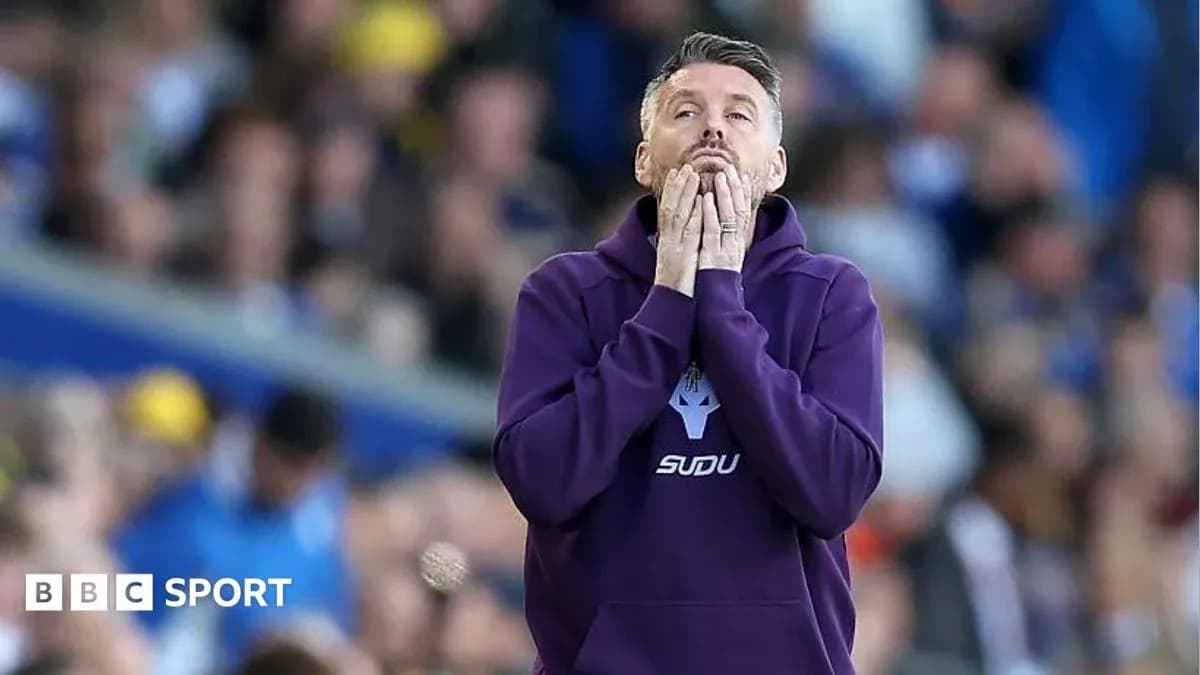
Wolves Sack Rob Edwards Amid Relegation Crisis
Wolverhampton Wanderers have sacked head coach Rob Edwards just seven months into his tenure, cutting short a bruising spell that ended with the club marooned at the bottom of the Premier League.
The 43-year-old arrived at Molineux in November, leaving a Championship promotion push with Middlesbrough to replace Vitor Pereira. He walked into a crisis. He leaves with a record that underlines just how deep the problems ran: five wins in 30 games in all competitions, 16 defeats, and a team that never escaped the division’s basement.
For months, Wolves tried to project calm. The hierarchy spoke of unity, of long-term plans, of alignment behind their new man. Technical director Matt Jackson was emphatic only weeks ago.
“The plan and the goal is to get promoted straight away but we understand a lot of change has to take place,” Jackson said. “If there isn't alignment here, we're dead in the water before we start, so that discussion has been going on for months already.”
Publicly, the club backed Edwards. Privately, the numbers kept getting worse.
A rebuild already in motion
The decision comes just as Wolves had begun to sketch out life back in the Championship with Edwards at the heart of that strategy.
Kieran Trippier agreed to join on a free transfer from Newcastle, a significant coup for a relegated side and a move in which Edwards played a key role. Raul Jimenez is also set to return to Molineux, with his Fulham contract expiring at the end of the month. Those deals pointed to a manager trusted to reshape an unbalanced squad.
Now the club must decide whether those plans survive without the man who helped put them in place.
Cesar Peixoto, who steered Gil Vicente to sixth in Portugal’s Primeira Liga in the season just finished, has already been linked with the vacancy. His name will not be the last. Wolves know they cannot afford a misstep in their next appointment with parachute money ticking down and the Championship as unforgiving as it has ever been.
Brutal honesty, brutal outcome
Edwards never tried to sugar-coat the scale of the task. In public, he spoke with a bluntness that cut through the usual end-of-season platitudes.
“We're a collective and I'll take responsibility of course but it's not an effort thing, it's the fact that we're the worst team in the league. That's the bottom line,” he told supporters at a Q&A hosted by BBC WM last month.
He did not spare the squad, or the club’s recent decision-making.
“I'll be careful what I say because I've got to work with the boys as well for the next couple of weeks but we're not good enough,” he admitted. “That's the situation we came into. I knew coming here in November, I might be sitting here in front of a lot of very angry people because this place is in a mess. I wanted to come here, I wanted to try and help.”
Those words now read like the epitaph of his short reign: a manager who walked into chaos, tried to confront it head-on, and ultimately could not turn the tide.
Wolves, once established in the Premier League and flirting with European football, now face a stark reset. The next head coach inherits a relegated squad, a fanbase running low on patience, and a club that has already burned through its margin for error.
The question is no longer whether Wolves can bounce straight back. It is whether they can stop the slide before the fall becomes something far more damaging.

