.svg&w=384&q=75 "GoalGist logo")
Vancouver Prepares for FIFA World Cup 2026: Changes in Public Space
Vancouver is bracing for a World Cup it has never seen before – and residents will soon feel it in their streets, their parks, and their nights.
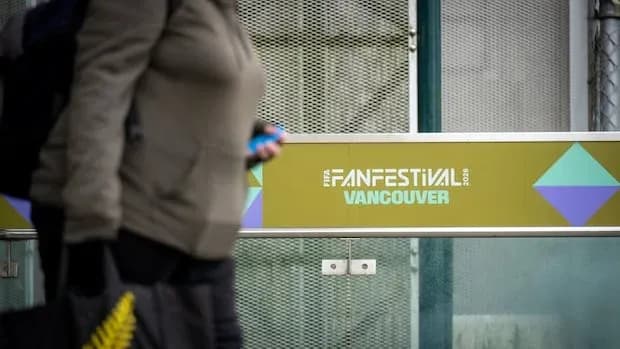
On Wednesday, the city officially enters the FIFA World Cup 2026 "event period," triggering a sweeping set of temporary rules that will reshape daily life around B.C. Place and the FIFA Fan Festival at Hastings Park. The province expects roughly 350,000 visitors to pass through B.C. Place during the tournament. City hall wants that experience to look, sound, and feel controlled.
The price of that ambition is steep. Vancouver is preparing to spend between $532 million and $624 million to host seven matches, with the city itself on the hook for up to $281 million. The bylaw now in force is part of the cost.
A new rulebook for the city’s core
The FIFA World Cup 2026 Bylaw hands Vancouver expanded powers from May 13 to July 20, 2026, covering advertising, vending, noise, graffiti removal, and how public space is used.
Most of the changes are concentrated in a two‑kilometre “controlled area” around B.C. Place and Hastings Park. Inside that ring, the city can move faster and hit harder.
Temporary event infrastructure will go up under relaxed rules: fan zones, branded signage, and other installations can be built more easily near key sites. Street life, though, will be more tightly managed. Street vending, busking, and certain types of advertising face new restrictions in designated event areas, with bylaw officers able to issue tickets from $250 to $1,000 for common violations.
Brand protection sits at the heart of the framework. Unauthorized commercial signs can be stripped away quickly to clear the visual field for official FIFA partners. Noise rules are also being stretched, with extended allowances to match international broadcast windows and late‑running event operations.
Even the flow of goods will change. Truck routes and delivery patterns in parts of the downtown core may be reworked to accommodate security plans and tournament logistics.
Enforcement falls to a familiar pairing: the City of Vancouver and the Vancouver Police Department will jointly police the new regime.
The official line is clear. City leaders describe the changes as necessary tools to host one of the world’s biggest sporting events and to deliver a “clean, safe, and organized” tournament.
Not everyone sees it that way.
Fears of who gets moved, and who gets seen
Housing advocates and legal experts warn that the language of “cleanliness” and “beautification” carries a sharper edge for people already living at the margins.
“This is basically the privatization of public space,” said Penny Gurstein, professor emeritus at the University of British Columbia’s School of Community and Regional Planning. She argues that residents experiencing homelessness, already pushed to the fringes, face even more pressure as global cameras arrive.
The city insists its approach does not strip away existing protections for unhoused residents. Officials say people experiencing unsheltered homelessness will still be allowed to erect temporary overnight shelter in parks where current bylaws permit it.
On beautification, city hall stresses that the term refers to bricks and mortar: repairing sidewalks, tidying up physical infrastructure, decorating construction sites. In its view, this work has “no assessed impact on human rights.”
That reassurance has not settled the debate.
Margot Young, a constitutional law professor at UBC’s Allard School of Law, frames the World Cup as an uneven experience, one that will land very differently depending on who you are and where you live.
“There will be disruption, but that disruption will be different for different groups in the city depending really upon their … social and economic status,” she said.
For wealthier residents, the tournament may feel like a month‑long festival – tickets to matches, packed fan zones, late‑night parties. For those at the bottom of the income and wealth ladder, Young warns, the same event could mean being pushed around as FIFA’s footprint rearranges city space.
“They will be moved around by the reordering of city space by FIFA,” she said, questioning whether the city’s promises of “trauma‑informed” enforcement will hold up once the tournament is in full swing. Her concern runs deeper than policy language.
“There’s no system in place to sort of monitor what is happening with respect to the vulnerable populations,” she said.
Services promised, spotlight guaranteed
City officials say they are not stepping back from social supports during the World Cup. Homelessness services and outreach programs, they insist, will continue throughout the tournament.
Vancouver currently counts more than 1,500 shelter beds and approximately 8,100 supportive housing units, supported by outreach teams, hygiene services, and storage programs. Those numbers form the backbone of the city’s argument that it can both host the world and maintain a safety net.
In a written statement, the city called the World Cup a “once‑in‑a‑generation opportunity” to showcase Vancouver.
Over the next two months, that phrase will be tested on the ground: in the roar around B.C. Place, in the glow of fan festivals at Hastings Park, and in the quieter corners where residents with the least power will find out what a global tournament really means for their share of the city.