.svg&w=384&q=75 "GoalGist logo")
Tottenham's Final Day Ordeal: Relegation Battle Looms
The last day. Ten games kicking off together, nerves shredded across the country, radios crackling with half-heard updates from somewhere else. Tables “as it stands” changing with every goal, every groan, every roar. One absurd 5-4 between two teams who have been on the beach since March. It always delivers something unhinged.
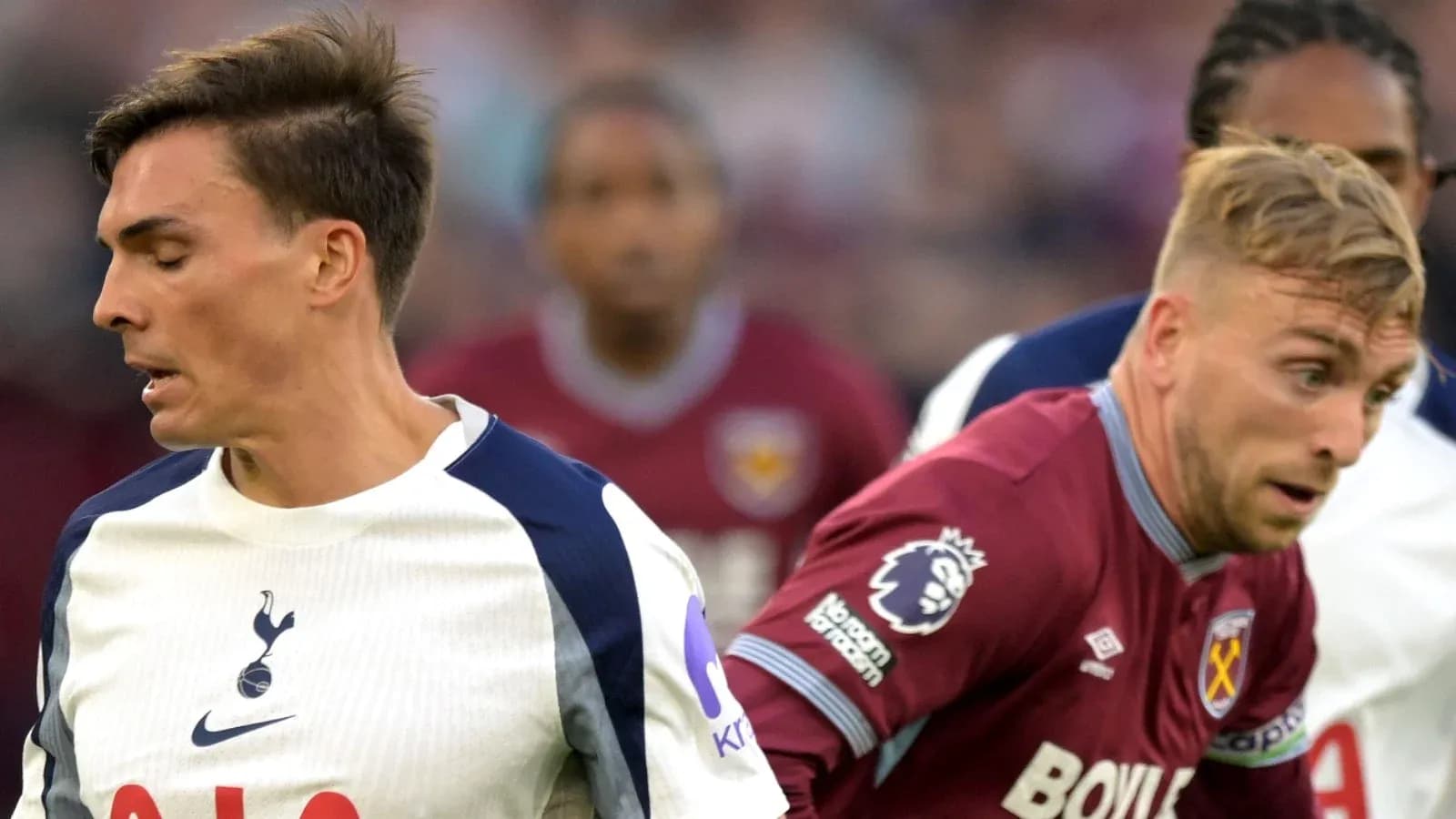
The title is already in the books. Europe will sort itself out with a shrug. The real theatre sits at the bottom, where Tottenham – Tottenham – have managed to drag themselves into a relegation scrap that should never have involved them.
They have turned the final day into an ordeal. Of course they have.
Game to watch: Tottenham v Everton
James Maddison called it “embarrassing”. He wasn’t wrong. Tottenham, a club that spent last spring coasting in 17th with the same points tally they have now, suddenly find that this time the trapdoor might actually open.
Last year, three clubs were cut adrift. Spurs were safe for months. They could afford to pivot to the Europa League, however much that was used as a flimsy excuse for a collapse in form. This season there are only two no-hopers at the bottom. The margin for error has vanished, and Tottenham have spent the year testing its limits.
The one defence they can cling to is the injury list, which has been brutal. But even that comes with its own indictment. The squad was already ravaged in January. The response? Do nothing. No decisive surgery, no bold signing, no calculated gamble. Just a fear of being accused of “panicking” while the season bled out.
The right wing tells the story. Brennan Johnson sold early in the window for good money. Unusual for Spurs, but entirely logical. Nothing he did in the first half of the season, or since at Crystal Palace, suggests they misjudged that call. Then came the sight of Mohammad Kudus suffering a serious injury in the very next game – and Tottenham simply standing still for the remaining three weeks of the window, not truly trying to replace either player.
If the worst happens on Sunday, that January inertia will sit at the heart of the inquest. Truthfully, even if they stay up, it should. Chief executive Vinai Venkatesham and sporting director Johan Lange have presided over a season of strategic failure that defies belief. Scraping survival should not spare them.
Roberto De Zerbi has at least dragged some coherence from the wreckage. Spurs are better coached now, more structured, more purposeful. But he is working with a forward line that looks like it has been assembled from the bargain bin in a power cut. Once again, he is likely to send out a front three of Richarlison, Mathys Tel and the woefully out-of-sorts Randal Kolo Muani and hope that Maddison, half-fit and half-sharp, can change something from the bench.
Maddison’s recent cameos against Leeds and Chelsea have been instructive. Twenty minutes here, twenty minutes there, and Tottenham suddenly look like a team with ideas again. He is nowhere near full fitness, his touch heavy at times, his legs not yet tuned to the tempo. Yet the contrast with what comes before him is damning.
The maths is simple enough. A point keeps Spurs up, barring the kind of absurdity that would require West Ham to put 12 past Leeds. Even by Tottenham standards, that level of cosmic cruelty feels a stretch. On paper, Everton look like the right opponents. They haven’t won since early March. Their push for Europe has fizzled out. The legs have gone a little, the spark dulled.
But who trusts this Tottenham side with “on paper”?
They are brittle. Under De Zerbi they have already folded at Sunderland and Chelsea after conceding first, games in which they were previously comfortable. Leeds’ equaliser at the Tottenham Hotspur Stadium turned a match they controlled into another panicked scramble. Any setback, however small, seems to drain every ounce of belief from them.
That is why the first goal feels enormous. If Spurs strike first, they calm themselves and quieten the anxiety that will hang over the stadium like fog. If they fall behind, or if word seeps through of a West Ham goal, the place will turn into a pressure cooker. You can picture it already: groans at every misplaced pass, players shrinking into their shirts, the tension almost audible.
There are nine possible combinations of results from Tottenham v Everton and West Ham v Leeds that decide who goes down. Eight of them keep Spurs safe. One sends them under.
It is Tottenham. Of course people are staring at that one.
If they find a way to lose – and they absolutely could – then all eyes swing to…
Team to watch: West Ham
West Ham can’t control what happens in north London. They can only make sure that, if Tottenham stumble, they are close enough to trip them properly.
Their task is not straightforward. On form, Leeds are a far tougher opponent than Everton. West Ham limp into the final day on the back of three straight defeats, each more dispiriting than the last, capped by an abject surrender at Newcastle. A week ago, they would have settled for what they have now: a chance, nothing more.
That chance depends heavily on Leeds’ mindset. With nothing tangible to play for, Leeds could, in theory, turn up in flip-flops. Yet last weekend they had nothing on the line either and still took down a Brighton team chasing something real. This is not a group that has shown much appetite for coasting.
So West Ham must do what they failed to do at St James’ Park: treat this like an all-or-nothing occasion. No hedging, no half-measures. They need to land the first punch, put a goal on the board, and then let the tension seep into the Tottenham Hotspur Stadium.
If West Ham score early, every murmur from the stands in north London grows louder. Every sideways pass feels heavier. Every Everton counter-attack takes on a different weight. That is their route in: take care of their own job and hope the fragility at Spurs does the rest.
It is a long shot. But long shots have a habit of landing on days like this.
Manager to watch: Pep Guardiola
At the other end of the table, a different kind of farewell. Pep Guardiola steps onto a Premier League touchline for the final time, as unimaginable a sight in another club’s colours as Ferguson, Wenger or Klopp ever were.
The game itself, against Europa League winners Aston Villa, carries no real edge. Manchester City’s draw at Bournemouth in midweek – laboured, and arguably generous to them – killed off any lingering hope of hauling in Arsenal and turning the champions’ lap of honour into a stumble.
Guardiola leaves with a domestic cup double and a squad in transition that still found a way to win things. By normal standards, that is a success. By the standards he set – six league titles in seven seasons, 95 points as the going rate for a genuine title tilt – it feels something less.
Two seasons without a proper title challenge, then a ropey one that never truly convinced, will gnaw at him. He is wired that way. Yet he walks away as the second-greatest manager this league has ever seen.
Given who occupies top spot, that is not a bad place to stand.
Player to watch: Mohamed Salah
Another goodbye, this one laced with more friction than fondness. Mohamed Salah’s final season at Liverpool has played out with a sour edge: the body language, the sulks, the awkward post-match comments, the social media sniping. Without Trent Alexander-Arnold dovetailing behind him, he has often looked isolated, even lost.
It is a strange end for a player who has been one of the defining forwards of the Premier League era, and an all-time Liverpool great. Twelve months on from Alexander-Arnold’s own stormy Anfield exit, another pillar of that great side is slipping away under a cloud that never needed to form.
From a purely neutral perspective, though, his situation offers clarity. Usually, picking a “player to watch” on the final day is a hostage to fortune. Injuries, rotation, suspensions – the best-laid plans end up watching from the bench in a tracksuit.
Salah, in contrast, will be the story whatever happens. Liverpool need a point to secure Champions League football. Whether he starts, sulks among the substitutes, comes on to change the game or doesn’t feature at all, the cameras will find him. His reaction, his body language, the way Anfield responds – it will all be scrutinised.
On a day of ten simultaneous kick-offs, Salah remains the player you can’t ignore, even if he never sets foot on the pitch.
Football League game to watch: Hull City v Southampton Middlesbrough
Wembley’s Championship play-off final never lacks drama. The prize – promotion and its £200m windfall – is enough on its own. This year, though, the spectacle arrives with an extra layer of farce, courtesy of Spygate.
Southampton’s punishment for their astonishingly amateur attempt at gaining an edge has been severe. No covert drones, no cutting-edge surveillance. Just an intern, a phone, and not even the sense to blend in as a golf-club regular before being caught. For a stunt that may have cost the club a fortune, it was hilariously small-time.
Middlesbrough sit in a strange space: victims of the spying, beneficiaries of the fallout. Their reprieve has been debated as fiercely as Southampton’s penalty. While everyone argues over whether justice has truly been served, one club stands out as the real innocent party.
Hull City.
Hull did it the old-fashioned way. Two-legged semi-final, job done, no controversy. They qualified cleanly and professionally. Yet they are the ones who have had their preparations thrown into chaos, left waiting to discover who they would face until less than 72 hours before the final.
Southampton cheated. Middlesbrough lost. Ordinarily, that would be that. Hull would face the winners and the losers would go home. Instead, the losers have been dragged back into the richest game in football.
And you can almost feel the gravitational pull of football’s sense of humour. The script writes itself: Middlesbrough, the first play-off semi-final losers ever to be promoted, walking away with the £200m prize while Hull, the one team who did everything right, look on.
European game to watch: Bayern Munich v Stuttgart
Across the border, Harry Kane steps into another final. Bayern Munich, runaway Bundesliga champions again, meet holders Stuttgart in the DFB Pokal showpiece.
On the surface, it looks like the usual script: Bayern, the giants, chasing another domestic trophy. Yet this is not quite routine. They have not lifted the Pokal since 2020, their 20th triumph in the competition. They have not even reached the final in the five seasons since.
Stuttgart arrive as defending champions, chasing back-to-back Pokal wins for the first time in their history. They have four titles to their name and a long memory of Bayern on this stage, having lost finals to them in 1986 and 2013.
For Bayern, it is a chance to restore a sense of domestic dominance in a competition that has quietly slipped away from them. For Stuttgart, it is an opportunity to turn a good era into something that looks like a golden one.
For Kane, once more, it is a cup final, a trophy on the line, and another test of whether this season ends with his hands on silverware or his eyes fixed on what might come next.

