.svg&w=384&q=75 "GoalGist logo")
U.S. Faces Australia: Key World Cup Match Ahead
The best World Cup performance in nearly a century is in the rearview mirror. The real question for the United States now is what comes next.
On Friday, it’s Australia. And to get ready, the U.S. has gone back to a night when things were far less comfortable.
Remembering the rant
Seven months ago, the U.S. met Australia in what the schedule called a friendly. Nothing about it felt friendly. The Socceroos flew into tackles, pressed high, and turned a low-stakes match into a scrap from the opening whistle.
At halftime, with the score 1-1, Mauricio Pochettino had seen enough.
The U.S. players still talk about what happened in that dressing room. Midfielder Sebastian Berhalter calls it a “rant.” Pochettino called out his team’s edge, or lack of it, and hammered home a simple point: Australia comes to fight. When would the U.S. answer that?
They did that night, grinding out a 2-1 win. The result mattered less than the message. It has followed them into this World Cup.
“I think one is that we’re American, we don’t take s---,” Berhalter said this week, reflecting on Pochettino’s words. He described how the Argentine coach, a year into the job at that time, drilled a mentality into the squad: this is who we are, this is what we do, this is what America is about.
Seven months later, that edge is now wrapped around a team playing some of the most fluid football it has produced on this stage in generations.
From statement win to serious test
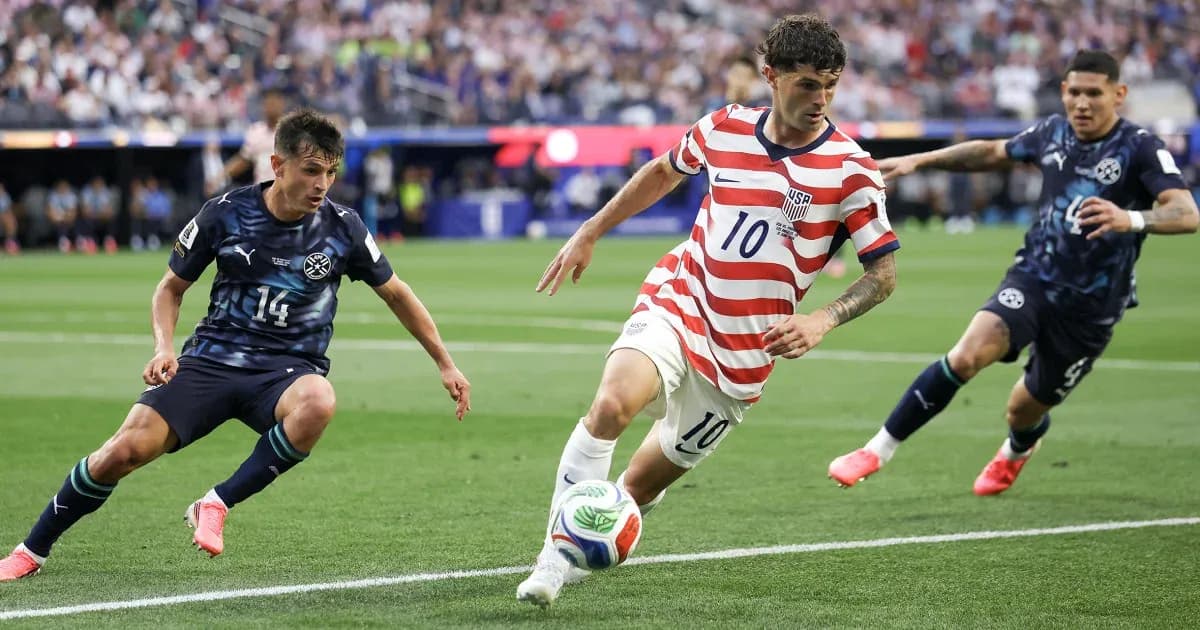
The U.S. opened this World Cup by smashing Paraguay 4-1, tying the largest margin of victory in the country’s tournament history. It wasn’t just the scoreline. It was the way they did it.
Folarin Balogun struck twice, becoming the first American to score multiple goals in a World Cup match since 1930. The attack flowed, the press bit, the confidence was unmistakable.
Pochettino’s postgame tone? Proud, Haji Wright said. But measured. One group game, nothing more.
Australia also arrive with three points in their pocket after a 1-0 start to the tournament and a 2-0 warm-up win over Turkey last weekend. The equation is simple: whoever wins on Friday books a place in the knockout rounds.
Tyler Adams, who has lived the ups and downs of this team’s evolution, made it clear there is no interest in getting carried away.
“There’s been moments throughout the process where things weren’t going amazing,” the midfielder said. “Now all of a sudden, some people consider [our play] amazing, whatever it is, but we’ve stayed completely humble in our approach to every single game and trusted the process of what we’re going through.”
Trust the process, respect the opponent, remember the bruises from last time. That’s the mood.
Australia’s threat, America’s warning
Wright watched Australia’s win over Turkey and saw a trap the U.S. cannot fall into.
“They’re tough to break down, they’re dangerous on counterattacks, they have good players at the top of the pitch, and they were able to be effective and damage Turkey,” he said. “I think Turkey kind of came into the game a bit overconfident, and I think we won’t make that same mistake.”
This is exactly the kind of opponent Pochettino had in mind when he demanded more bite last fall. Australia do not dazzle; they drag you into battles. They love the duels, the second balls, the long runs in transition. They punish arrogance.
The U.S. arrive with momentum and a swagger they haven’t always carried at this level. The challenge is to keep the edge without losing control, to play like a team that expects to win but still fights as if it has everything to prove.
The Pulisic question
The one sour note from the Paraguay rout came wrapped in a familiar concern: Christian Pulisic’s health.
The U.S. star, who carved open the defense with his runs and passing and helped set up the first two goals, did not come out for the second half. He had struggled to warm up properly at the break. Pochettino later explained that Pulisic had taken a knock to his left leg days earlier and was kicked again during the first half.
This week, Pulisic has trained away from the main group, Tim Weah said. His status for Australia remains uncertain. Pochettino’s update on Thursday was deliberately vague: “We’ll see.”
Inside the camp, there is hope and a hint of anxiety. “I’m just praying to God that he feels 100% fit,” Weah admitted.
Adams, as captain and emotional barometer, tried to cool the temperature.
“Christian will be ready, everyone, let’s relax,” he said. “He’ll be fine.”
Whether “fine” means starting, finishing, or simply being available as a weapon off the bench is the looming unknown around this match. This U.S. team has more depth than in past cycles, but Pulisic remains the player who bends defenses and shapes game plans.
A different kind of benchmark
The U.S. have already delivered a performance to echo through their World Cup history. But the Paraguay game, for all its fireworks, did not test their nerve in the way Australia almost certainly will.
This is the kind of night that defines whether a bright start becomes something more serious. A physical opponent that knows how to spoil. A high-stakes group match where the margins tighten. A memory of a coach’s halftime fury still hanging in the air.
Pochettino once asked his players, “When are we going to fix that?” against a team that came to fight.
On Friday, against the same opponent with a knockout place on the line, we find out how deep that answer really runs.

