.svg&w=384&q=75 "GoalGist logo")
Tottenham's Pitch Investigation: Are Injuries Rising?
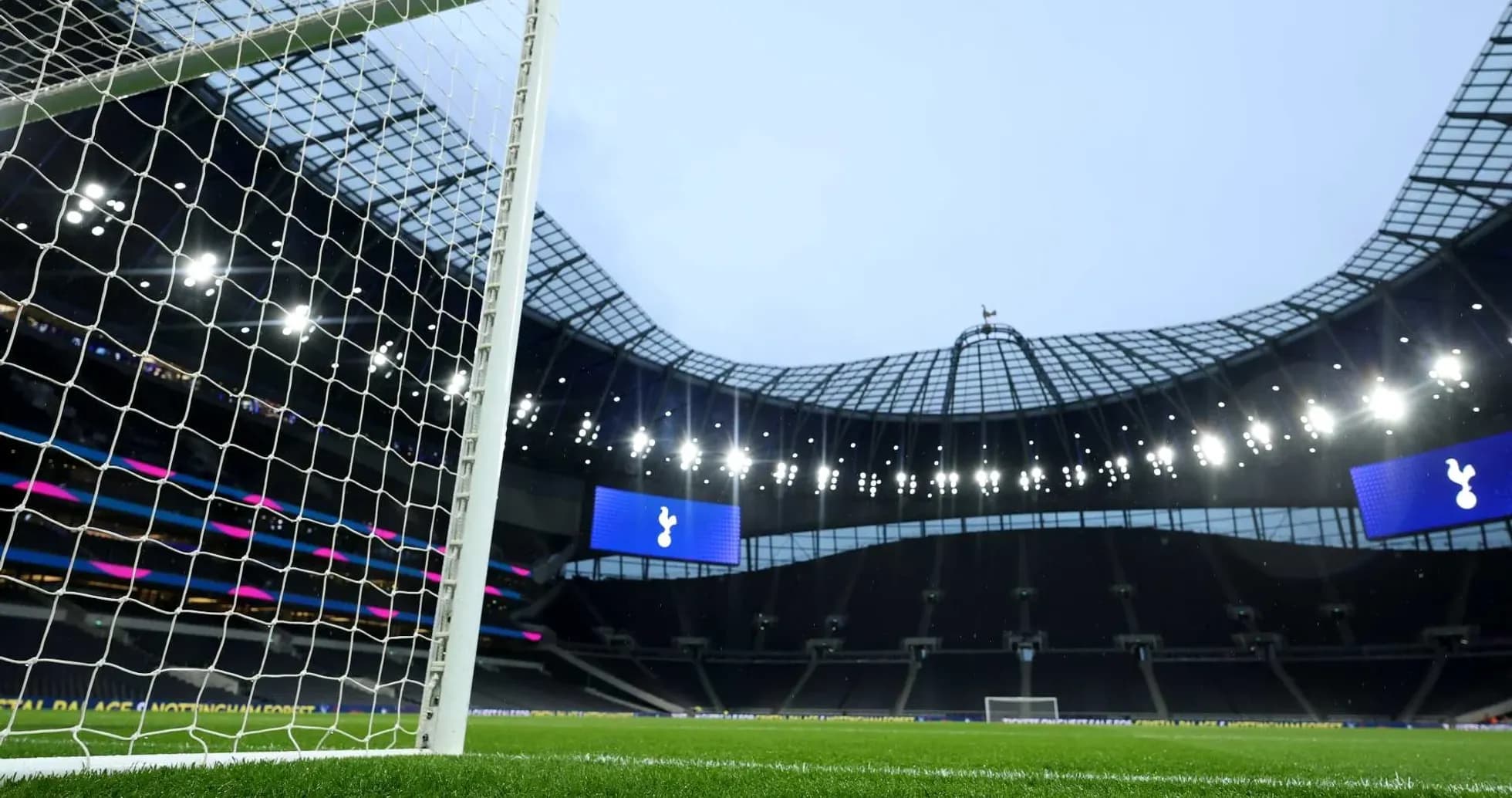
The Tottenham Hotspur Stadium was built to be a showpiece of modern engineering. A sliding grass pitch glides away to reveal a synthetic NFL field, concerts roll in, the lights dim, the money flows. It is the kind of innovation clubs boast about on stadium tours.
Now Tottenham are asking a far more basic question: is this pitch hurting their players?
New performance director Dan Lewindon has launched a detailed investigation into whether the club’s dual-surface technology is playing a part in a worrying spike in serious leg and ligament injuries at home. Independent testing has already measured bounce, surface tension and other metrics. The data, though, has offered no clear verdict, forcing Spurs to widen the study and benchmark their surface against others across the Premier League.
The concern is not abstract. It is personal, painful and piling up in N17.
Dejan Kulusevski, Radu Dragusin and Wilson Odobert have all suffered major setbacks on home turf. James Maddison partially tore his ACL in a home game against Bodo/Glimt before later rupturing it completely. When the same stadium keeps appearing in the medical notes, questions follow.
Tottenham are not alone in their anxiety. Real Madrid, who installed a retractable pitch as part of the Santiago Bernabeu’s lavish renovation, are also reviewing a spate of ACL injuries. Two of Europe’s most modern arenas now sit under the microscope for the oldest worry in football: the ground under players’ feet.
A club looking inward
Lewindon’s work has not stopped at the touchline. His three‑month review has cut into the structure of Tottenham’s performance department and, according to reports, the findings are uncomfortable.
Inside the club, there is a growing belief that poor integration between medical and coaching staff has created a loop of recurring injuries. Decisions have been made in silos, information has not always flowed cleanly, and players have too often found themselves back on the treatment table.
Spurs’ response is to go smaller, not bigger. They plan to introduce a “small‑team approach”, assigning specific physios to groups of just six players. The idea is simple: tighter relationships, more tailored training plans, and a sharper understanding of each player’s physical profile. Less conveyor belt, more bespoke care.
The coaching carousel has hardly helped. Four different head coaches in a single year – Ange Postecoglou, Thomas Frank, Igor Tudor and Roberto De Zerbi – have dragged the squad through wildly different training loads and tactical demands. Every new manager brings new drills, new intensity, new expectations. The body doesn’t always keep up.
At Tottenham, that churn has a physical cost. Players have been asked to adapt to shifting regimes at high speed, and the club believes that instability has increased the risk of breakdowns.
The Xavi Simons flashpoint
The scrutiny has not only focused on the grass and the structure. It has landed squarely on the club’s medical staff as well.
The handling of Xavi Simons’ season-ending injury at Wolves drew fierce criticism. During a win at Molineux, the midfielder went down, received ice spray, then returned to the pitch. Minutes later, he left on a stretcher with a ruptured ACL. For many supporters, the optics were damning.
Inside the club, the view is very different. Tottenham have defended their medical team’s actions, and Lewindon is understood to have been “very satisfied” with how the situation was managed. Simons wanted to continue. With a proper ACL test notoriously difficult to perform pitchside in the heat of a Premier League match, the decision to let him try to carry on has been deemed correct by those involved.
Crucially, Spurs insist his brief return did not cause any additional damage to the ligament. In their eyes, the outcome would have been the same whether he walked straight down the tunnel or tried to play on.
For De Zerbi, that incident was only part of a brutal introduction. Within his first three matches, Cristian Romero and Destiny Udogie also suffered serious injuries. The Italian has pushed for a more robust support network around the squad, including the appointment of a team psychologist to improve communication between performance, medical and coaching departments. The message is clear: this is not just about muscles and ligaments, but about how information and pressure move through the club.
Maddison’s blunt verdict
Inside the dressing room, frustration has spilled into the open. Maddison, sidelined for months with his own ACL nightmare, has been one of the most candid voices on the crisis.
“Our situation with the injuries has been worse than any other club,” he said. “People try and say, ‘Oh, but we’ve got this and that’. But ours is astronomical, and we need to look at why that is.”
He is not buying every theory doing the rounds. “Sometimes it can just be unlucky, sometimes it can be a coincidence, like me doing my ACL or [Dejan] Kulusevski getting a horrendous knock off [Marc] Guehi. That’s not the medical team, that’s not the pitch or all the theories that you see, sometimes that’s rubbish.”
Even so, he is convinced the sheer volume of absences dragged Spurs into trouble as they battled to stay out of the relegation zone.
“We’ve been a bit unlucky,” he added. “But like I said, the big names that we’ve missed, it does affect you and you can’t just deny that. Myself, Kulusevski and [Mohammed] Kudus, and [Rodrigo] Bentancur missed three months and whatnot. If you had had them for the whole season, we wouldn’t have been in this situation, I strongly believe. That’s just not me being naive, that’s just a fact. But it is the situation we find ourselves in, and I am just proud of the lads to dig deep today.”
The numbers back up the emotion: key players, out for long stretches, in a season where margins at the bottom were razor-thin.
A marvel under suspicion
So Tottenham’s stadium, once hailed as a technological marvel, now stands as a symbol of a more awkward debate. Has the pursuit of versatility – Premier League on one surface, NFL on another, concerts in between – come with an unseen cost? Or is the pitch a convenient target for a deeper, more complex web of structural and managerial issues?
Lewindon’s review will not answer everything. It cannot undo ruptured ligaments or replay the season without its injuries. But it will shape what Tottenham do next: how they train, how they staff their departments, how they manage risk in an era when the calendar is relentless and the demands on players only grow.
For a club that built one of the most advanced arenas in world football, the question now is brutally simple: can they finally build a squad that survives 90 minutes on their own pitch?