.svg&w=384&q=75 "GoalGist logo")
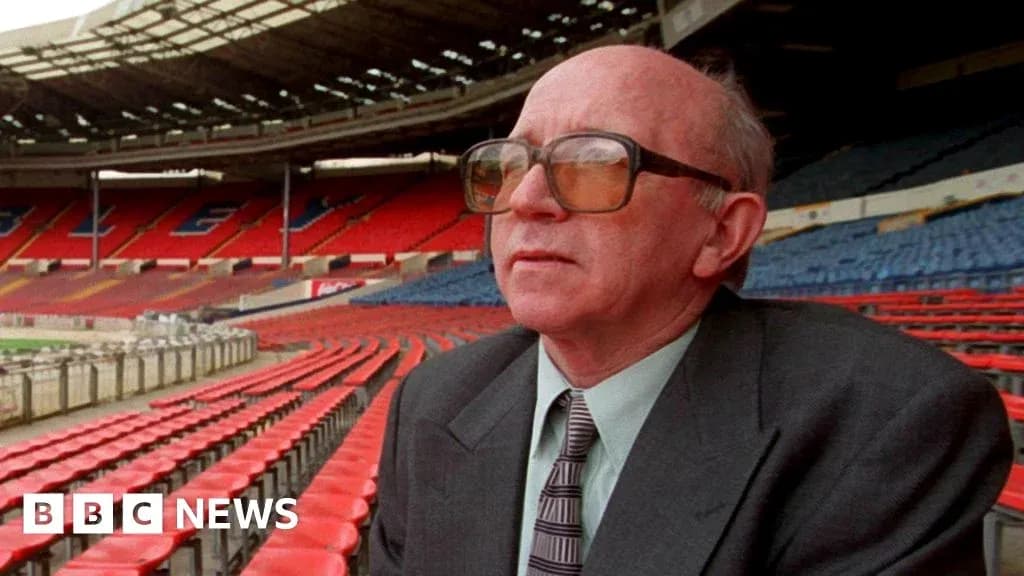
Nobby Stiles Inquest into Brain Injury Ordered
The image of Nobby Stiles dancing across Wembley with the Jules Rimet trophy in one hand and his false teeth in the other is stitched into English football folklore. Now, nearly six decades on from that summer of 1966, his name is at the centre of a very different story – one that cuts to the heart of the sport’s duty of care to its own.
A coroner has ruled that an inquest must be held into the death of the former Manchester United and England midfielder, after evidence showed he died with a traumatic brain injury.
Stiles, who died in 2020 aged 78, was found to have chronic traumatic encephalopathy (CTE), a degenerative brain condition associated with repeated head impacts. It is the same disease that has haunted debates around contact sports across the world and has become a growing fault line in football’s relationship with its past.
Coroner Orders Full Inquest
At Stockport coroner’s court, Chris Morris, area coroner for Greater Manchester South, confirmed that a full inquest would now take place after a brain expert reviewed Stiles’s medical records.
Morris said Stiles’s death had been contributed to by high-stage CTE, alongside what was described as “stage three limbic predominant age related TDP-43” and small vessel cerebrovascular disease. Crucially, he highlighted the presence of a traumatic injury in the cause of death.
“On the basis of that cause of death, particularly the inclusion of a traumatic injury included in the cause of death, I'm satisfied an inquest is required into the sad death of Mr Stiles,” he told the court.
The coroner also revealed that Stiles’s death had not originally been reported to his office when the former player died four years ago.
“For reasons not entirely clear to me,” Morris said, the case only came to the coroner’s attention after information was provided by Stiles’s family, prompting the current investigation. A full inquest hearing is scheduled for Wednesday at the same court.
From World Champion to Test Case
Norbert “Nobby” Stiles was born in Manchester in 1942 and came to embody the hard edge of English football in the 1960s. A ferocious, uncompromising defensive midfielder, he won 28 caps for England and played nearly 400 games for Manchester United, anchoring both Sir Alf Ramsey’s World Cup winners and Sir Matt Busby’s European champions.
His combative style, his willingness to put his head where others would not put their boots, turned him into a hero. It may also, his family believe, have played a devastating role in his decline.
Since his death, Stiles’s relatives have been among the most vocal in calling for football’s authorities to confront the long-term consequences of repeated head impacts, particularly heading the ball in training and matches. They argue that the sport has been too slow, too reluctant, to protect those who built the modern game.
Families Take the Fight to Football’s Authorities
John Stiles, Nobby’s son, now leads Football Families for Justice (FFJ), a group pressing for stronger support for former players living with neurodegenerative disease and for accountability from those who run the game.
He is one of dozens of former players and family members involved in legal action against the Football Association, the Football Association of Wales and the English Football League. The claimants argue that the governing bodies were “negligent and in breach of their duty of care” to the players.
Lawyers for the families say football’s leaders knew, or should have known, that repeated heading and concussive blows carried a serious risk of brain injury, and that those risks had been flagged for decades. The allegation is stark: that the game’s institutions ignored or downplayed dangers while generations of professionals put their bodies – and their futures – on the line.
The governing bodies reject that characterisation. In March, lawyers for The Football Association told the High Court that it has “not been established by science” that heading a ball or “occasional” concussion can lead to permanent brain damage. The legal and medical arguments remain fiercely contested, but the human stories behind them keep piling up.
A Pattern That’s Hard to Ignore
Stiles’s case does not stand alone. In January, an inquest into the death of Gordon McQueen, the former Scotland, Manchester United and Leeds United defender, concluded that heading the ball was “likely” to have contributed to a brain injury that played a part in his death at 70.
Each ruling adds another layer of pressure. Each inquest draws a clearer line between the way the game was played and the price some of its most loyal servants are now paying.
For years, heading was a badge of courage, a basic requirement for centre-halves and midfield enforcers alike. Balls were heavier, training was relentless, and nobody spoke of brain scans or rest protocols. Players like Stiles were celebrated for their bravery, not warned about the possible cost.
Now the sport is being forced to look back, and to answer questions that grow more uncomfortable with every inquest.
On Wednesday, when the court in Stockport hears the full details of Nobby Stiles’s final years, the conversation around football and brain injury will move another step forward. The game can no longer pretend it does not know the stakes.

