.svg&w=384&q=75 "GoalGist logo")
Tottenham's Journey: From European Ambitions to Premier League Survival
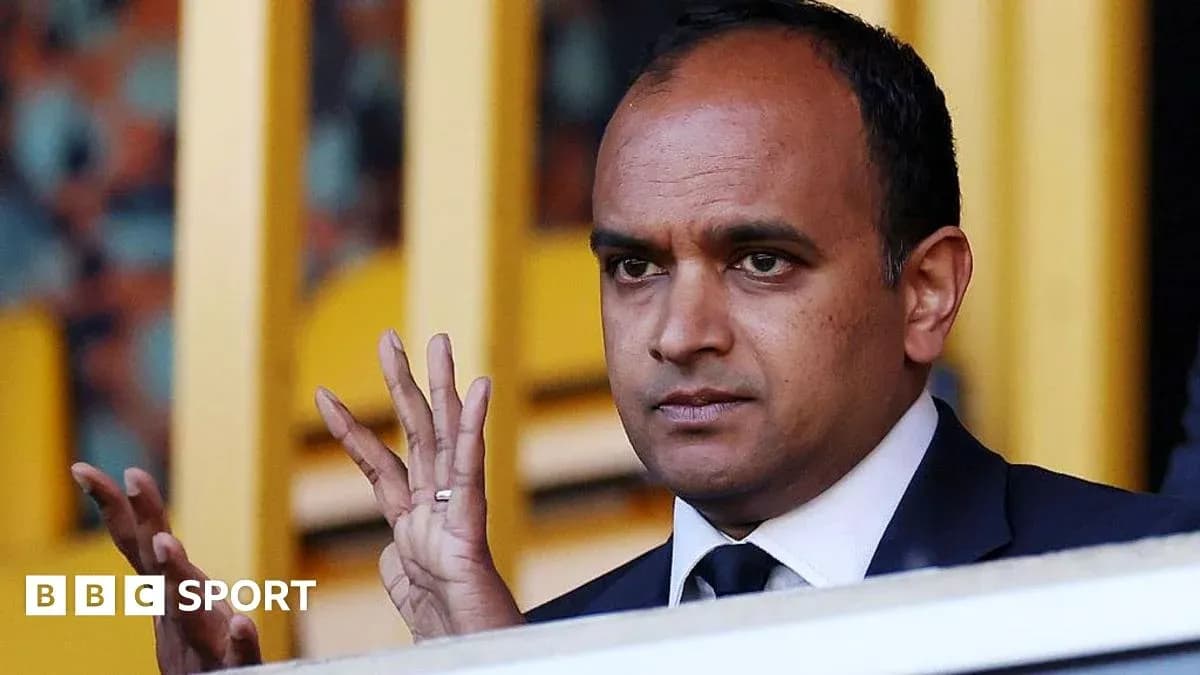
Vinai Venkatesham walked into Tottenham Hotspur last June talking about Europe. He ended his first season clinging to the Premier League.
The mood swing has been brutal.
On the final day, a tense win over Everton dragged Spurs over the line and kept them in the top flight. It brought relief, not joy. Certainly not satisfaction.
“I think it was just a huge outpouring of relief,” Venkatesham told BBC Sport, reflecting on a campaign that went to the last few minutes. He stressed that no staff would have been made redundant had the club gone down, but he knows that is hardly the point. “Feeling relief at the end of the season is nowhere near the standard of the football club.”
He is right. For a club that lifted the Europa League only a year ago, back-to-back 17th-place finishes are a damning indictment.
From European talk to a “complete reset”
When Venkatesham started on 1 June, the picture looked challenging but far from catastrophic. Spurs had stumbled to 17th under Ange Postecoglou, but they had a European trophy in the cabinet and a squad full of experienced internationals. The new chief executive set what he thought was a reasonable bar.
“On my very first day, what I thought would be a realistic target for the men's first team would be competing for European places,” he said.
Within months, that idea felt detached from reality.
“If you'd have asked me a few months after I joined, when I was no longer an outsider, I would have told you the club was in a significantly worse state in some places than I thought,” he admitted.
He found a club split in two. Off the pitch, particularly around stadium operations and commercial, Spurs looked strong. On it, they had been overtaken.
Across five years, the Premier League’s top clubs have accelerated. Tottenham, in Venkatesham’s view, simply had not kept pace in crucial football departments. “There was a significant gap. In some areas really quite worryingly so,” he said. The phrase he kept coming back to was stark: this was not about a turnaround. It was “really a complete reset”.
He spoke of a lack of “relentless obsession with football success” and a training centre that “looks more like a five-star hotel than it does a performance environment”. That, he promised, will change this summer. Expertise, he said bluntly, has been missing in too many key areas.
The diagnosis is harsh. It also explains why this season spiralled the way it did.
Thomas Frank: patience, pressure and a call made too late
On paper, Thomas Frank’s reign did not begin in crisis. After his appointment last June, Tottenham lost just one of their first 10 games in all competitions. Results masked deeper problems.
By the time the club finally sacked him in February, the only real question among supporters was why it had taken so long. Venkatesham and sporting director Johan Lange were hammered for that delay.
“There's been plenty of coverage that the club was passive during this period. And that's absolutely not true,” Venkatesham insisted.
Inside the boardroom, Spurs weighed everything: results, the likelihood of Frank reversing the slide, the risk of changing managers in January, the impact on the transfer window, the congested fixture list, even the difficulty of finding a credible interim head coach mid-season.
The pressure kept building. Patience, from the stands at least, snapped first.
The De Zerbi pursuit and the Tudor gamble
Once Frank went, Tottenham aimed high. Venkatesham confirmed the club tried to tempt Roberto de Zerbi, on his way out of Marseille, to take the job on a permanent basis in February.
They failed. The Italian did not want to walk into that situation mid-season.
So Spurs turned to the interim market. The choice was Igor Tudor, a left-field appointment that never settled. Seven games later, he was gone by mutual consent.
“We were very disappointed when it became clear that we wouldn't be appointing Roberto on a permanent basis [in February],” Venkatesham said. That disappointment pushed them into a shallow pool of short-term options.
Why Tudor? Venkatesham listed the logic. He had worked in “very high-profile and high-pressure environments”. They wanted someone who would not “wilt under that pressure”. He had a reputation for making an immediate impact. He had managed big clubs. He brought a very different personality to Frank, and the hierarchy felt the dressing room needed that jolt.
The glaring issue was obvious from day one. “Of course we were really aware he had no Premier League experience. Was it a risk in appointing him? Absolutely.”
Would he call it a mistake? “It didn't work out,” Venkatesham replied. “I think it's very clear it didn't work out. And I don't think that is in question.”
For a fanbase already on edge, it felt like another wrong turn in a season full of them.
Levy gone, anger redirected
For a quarter of a century, Daniel Levy absorbed most of the fury when things went wrong at Tottenham. His departure in September removed that lightning rod.
The anger did not disappear. It moved.
This season, Venkatesham has become the focus for a growing section of supporters. The abuse has been loud, personal and, at times, vicious.
“I understand the frustration around supporters,” he said. “I think Tottenham supporters have been frustrated for some time. This is two 17th-place finishes in a row. It's clearly not good enough.”
He did not try to dress it up. The football side of the club has “serious challenges”. He believes the hierarchy knows what they are and is addressing them, but he accepts the damage has been years in the making and cannot be undone overnight.
“I wish I could wave my magic wand and fix them overnight, but that is not possible,” he said. “It takes some time to fix those issues. So I have complete confidence in what we're doing, how we're doing it. But supporters are rightly impatient. So I have to weather that storm.”
Venkatesham, who spent 15 years in football before arriving at Spurs, including a long spell at Arsenal, knows the terrain. “You have to develop a thick skin,” he said. Criticism, he accepts, is part of the job. The problem, in his view, is when it “frequently goes way past the line” for players, referees and executives.
Right now, he is standing in the middle of that storm.
De Zerbi’s impact and the rebuild ahead
Inside the club, a very different name is on people’s lips. De Zerbi finally arrived at Spurs late in the season and, by all accounts, has transformed the mood.
On the pitch, the numbers are simple: 11 points from seven games, just enough to keep Tottenham in the Premier League. Off it, his influence has been deeper.
“I think he has made an extraordinary impact so far,” Venkatesham said. The challenge he walked into was “hard to underestimate” and “hard to describe”, but the effect in the dressing room has been immediate. Belief, absent for too long, has started to return.
“I think he's an excellent coach, and we think that he plays the style of football that our supporters and the broader football public want to see,” Venkatesham added.
This summer, De Zerbi is expected to be heavily involved in recruitment. Tottenham have spoken to former Borussia Dortmund sporting director Sebastian Kehl as they reshape the football department, and Venkatesham confirmed the club has raised its wage ceiling to attract a higher calibre of player.
It is an admission as much as a strategy. The current squad, he said, “needs work and the squad hasn't got the right balance”.
They want experience. Leadership. Physical robustness to survive and compete in what Venkatesham called “the most demanding league that exists”. The rebuild will take “multiple transfer windows”, but he did not hide from the stakes.
“This transfer window, in particular, is going to be critical,” he said.
Tottenham have escaped once. With De Zerbi now at the helm and a reset promised from top to bottom, the real question is whether they are finally ready to stop surviving and start acting like the club they still insist they want to be.

