.svg&w=384&q=75 "GoalGist logo")
Sunderland Secures First Win of the Season Against Fulham
Álvaro Arbeloa stood still at the end, staring into the middle distance, replaying it all in his head. On the opposite bench, Régis Le Bris simply exhaled. Relief suited him. This was a game gripped less by ambition than by the fear of losing, and in the end it was decided by two men who did not even start it.
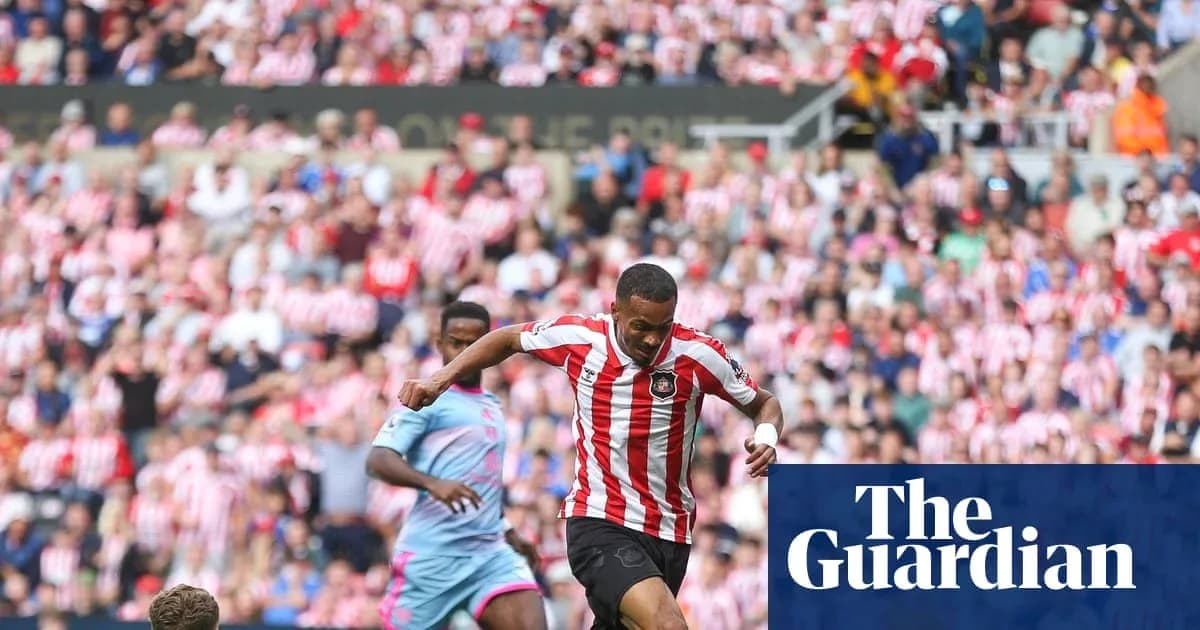
Habib Diarra and Wilson Isidor came off the Sunderland bench in the second half and ripped up the script. One crossed, the other finished, and with that single, clean strike Isidor delivered Sunderland’s first win of the season, left Arbeloa’s Fulham without a point and finally snapped a 17-year wait for a Premier League victory over this opponent. Seventeen years, gone in a flash of movement across the box.
Sadiki sets the tone
The opening 45 minutes rarely rose above a wary stalemate. Sunderland had the ball, plenty of it, but carried all the threat of a blunted blade. Fulham sat, watched and waited, and Bernd Leno could have almost taken notes on the game such was his lack of involvement.
What rhythm there was came from Noah Sadiki. The Sunderland midfielder played as if the centre circle belonged to him. Time and again the Democratic Republic of the Congo international stepped in, smothering counters before they could form, shutting down angles, forcing Fulham back into areas where they never truly looked comfortable.
Fulham’s only real chance before the interval underlined how little they had offered. Alex Iwobi conjured a clever opening, sliding a pass into Josh King, who found himself squeezed by the byline and the near post. King’s finish deserted him; geometry won. Robin Roefs, otherwise, had an undisturbed first half in the Sunderland goal.
So the game drifted into a slightly nervous impasse. Sunderland circulated the ball, probing, but the final pass lacked bite. Fulham’s back line held its shape, and with no real incision from the home side, the match became a tactical puzzle rather than a contest of penalty-box chaos.
High in the stands, Sunderland owner Kyril-Louis Dreyfus watched on with interest. If Le Bris needed a live demonstration of why he wants a specialist right‑winger and another striker before the transfer window closes, this was it: dominance of the ball, but little to truly frighten a Premier League defence.
Mukiele’s warning tackle
There was at least one reassuring sight for Le Bris. Nordi Mukiele, back from injury, returned to the heart of Sunderland’s defence and wasted no time showing why he matters on Wearside.
Early in the second half, Sander Berge split the back line with a superb through ball, sending Gonzalo García racing clear. García, who had scored in each of his first two competitive games for Fulham since arriving from Real Madrid, looked certain to continue that run. Then Mukiele arrived, sliding in with perfect timing to block what seemed a near-certain goal. One tackle, one statement: Sunderland would not be brushed aside.
Yet that moment also signalled a shift. Fulham began to find pockets of space. García drifted, probed, tried to decode a defence that suddenly had more questions to answer. Arbeloa’s side started to gain a foothold, and the mood around the Stadium of Light tightened.
Le Bris felt it. Rather than wait for the game to tilt completely, he moved first.
Double change, double impact
On came Habib Diarra and Wilson Isidor, replacing the ineffective Nilson Angulo and Brian Brobbey. The change injected exactly what Sunderland had lacked: direct running, sharper movement, a hint of risk.
The effect was almost immediate. Enzo Le Fée, alive to the new energy ahead of him, swept a gorgeous first-time ball across the face of goal. It begged to be finished. Isidor stormed in at pace and, with the net yawning, somehow clipped his shot against the base of the post.
Le Bris dropped to his knees in disbelief. Isidor froze, mortified, staring at the woodwork as if it had personally wronged him. Sunderland had just spurned the clearest opening of the night.
But the miss did something important. It rattled Fulham. Their high defensive line, already flirting with danger, suddenly looked exposed. Sunderland sensed it. They pushed again.
This time Diarra took responsibility. Breaking down the right, he whipped another excellent ball across the area. Isidor read it early, surged into the gap and met it with a fierce, precise finish. The shot flew past Leno before the goalkeeper could set himself. No post, no reprieve for Fulham. Just a clean, ruthless conclusion.
From anguish to atonement in a matter of minutes. The stadium roared, Le Bris turned from despair to delight, and Isidor finally allowed himself a release of emotion rather than a wince.
Job done, points banked
Diarra and Isidor had transformed Sunderland, stretching Fulham’s back line and exploiting that risky high line with the kind of vertical running the game had lacked for an hour. The visitors, who had grown into the contest, were suddenly scrambling.
Diarra’s night, though, did not last long. An injury cut short what had been an outstanding cameo, forcing Le Bris to turn to Chris Rigg. The momentum, by then, was already set. The damage to Fulham was done.
Sunderland saw it out with a new edge to their play and a new confidence in their substitutions. Fulham, still pointless, walked away with the look of a team that knows this kind of narrow defeat can become a habit if not checked quickly.
For Sunderland, the story is different. A long, awkward wait for a league win over Fulham is finally over, the first victory of the season is in the bank, and two substitutes have changed the mood around the club. The question now is simple: was this a one-off spark, or the first sign that Le Bris’s Sunderland can turn control of games into something far more ruthless?