.svg&w=384&q=75 "GoalGist logo")
Spain Wins World Cup: A Night of Glory and Political Intrigue
The 2026 World Cup final in North America already carried enough storylines: Euro 2024 champions Spain against Lionel Messi’s Argentina, a global audience locked in, and a place in football history on the line. Then came the subplots.
On July 19, Spain edged a tight, tense final to claim their first World Cup since 2010, a 1-0 win sealed by Ferran Torres. One clean strike, one trophy, and another golden chapter for a nation that has grown used to rewriting the sport’s modern era.
High above the pitch, US President Donald Trump watched on. Down on the turf, referee Slavko Vincic experienced the night from a far more intimate angle – one now shared with the world.
A referee with a camera and a front-row seat to Messi
Vincic, the man in the middle for the showpiece, wore a camera during the final, capturing his perspective from the day. The footage, shared by The Athletic, revealed the noise, the pressure, and the human moments that usually stay hidden behind the whistle.
Among them: an exchange with Messi, as Vincic told the Argentina captain to “control” a teammate during a flashpoint. Even in a World Cup final, with emotions running high and legacies on the line, the referee’s job remains the same – manage the chaos, keep the biggest stars in check, and let the football decide the outcome.
Spain did exactly that. Torres’ goal stood as the difference, a single moment that split joy and heartbreak, sending the Spanish players racing into history while Messi’s Argentina were left one step short of another world title.
Trump’s message to the man in the middle
Once the final whistle went and the celebrations began, the spotlight shifted from the pitch to the podium.
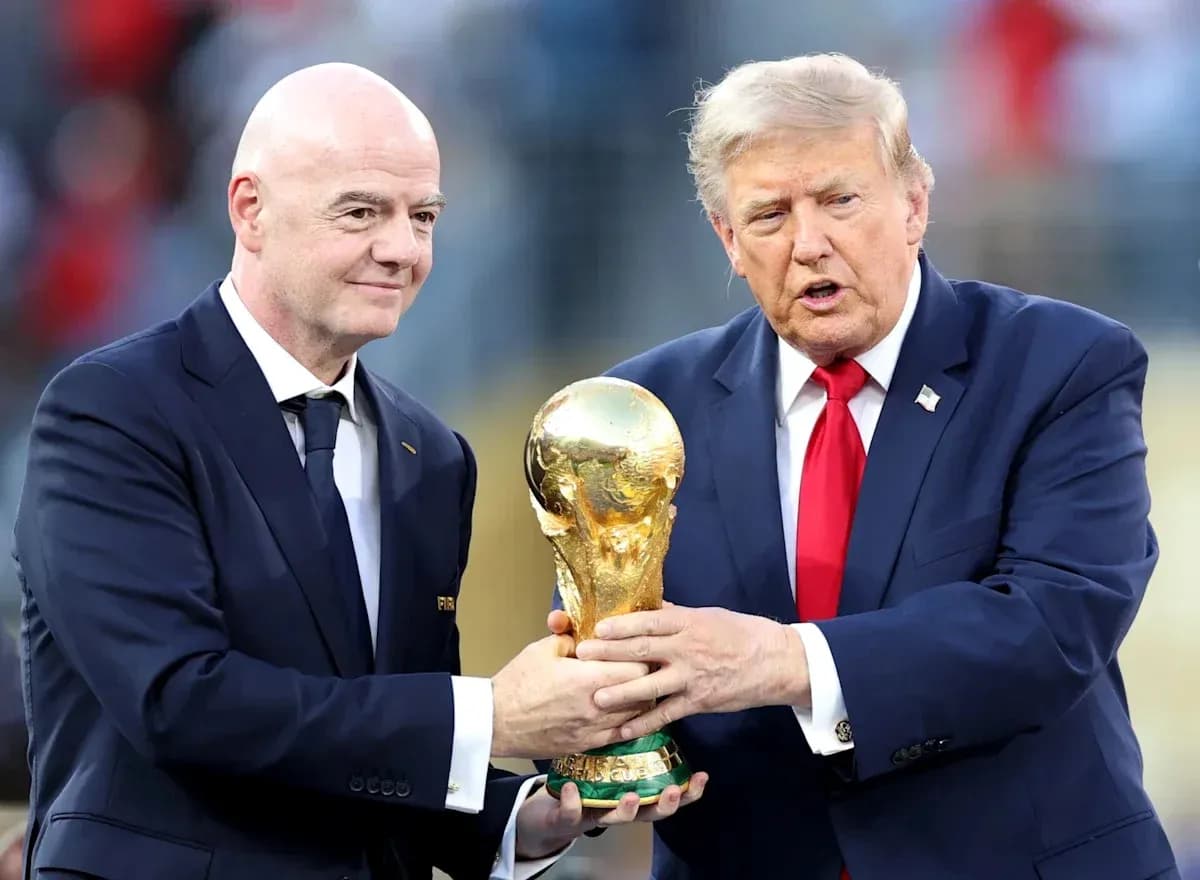
As is tradition, the officials joined the players in making their way up to receive their medals, greeting FIFA president Gianni Infantino and Trump. When Vincic stepped forward, the President placed the medal around his neck and offered a simple verdict on his performance.
“You did a great job,” Trump told him. Then he said it again.
For a referee, praise is rare, especially on a stage like this. The moment was brief, but it underlined how closely the political and sporting worlds had intertwined on this particular night.
Trump stayed on the podium as the medals kept coming, watching the flow of players and staff. But when Spain were ready to lift the trophy, he was moved aside to clear the stage for the champions and their defining image.
The World Cup belonged to Spain. The spotlight, at that crucial second, belonged to them alone.
‘Make Spain Great Again’ and a presidential reaction
The political thread didn’t end on the podium.
In the aftermath of the tournament, Ferran Torres – the match-winner and new national hero – was seen during Spain’s celebrations wearing a cap that read “Make Spain Great Again.” The slogan drew instant comparisons to Trump’s own “Make America Great Again” branding.
The President later weighed in, calling it “essentially” a MAGA cap and taking it as a nod in his direction.
“He is a great player,” Trump said. “He was wearing essentially a Make America Great Again cap, so it was a nice tribute. And I think he meant that very nicely; we appreciate it.
“We have, we’ve made America great. We’re the greatest country in the world now. I will say this, we, a year and a half ago, two years ago, this country was in deep trouble.”
So a World Cup final that should be remembered for Spain’s tactical control, Torres’ decisive finish and Messi’s latest tilt at immortality now carries an extra layer: a referee’s camera, a President’s praise, and a cap that turned a victory parade into a talking point far beyond football.
Spain left with the trophy. Torres left with a goal and a slogan. The images from that night will linger, on and off the pitch, long after the confetti has blown away.