.svg&w=384&q=75 "GoalGist logo")
Spain's World Cup Squad: Barcelona Dominates, No Real Madrid Players
Spain boss Luis de la Fuente has drawn a hard line before a ball is even kicked in the World Cup: the national badge comes first, and every club crest – even Real Madrid’s – sits beneath it.
His 26-man squad, announced with the calm of a man who knew the storm was coming, leans heavily towards Barcelona. Eight players from the Catalan giants. Not a single one from Real Madrid. For the first time, the European champions will go to a World Cup without a representative from the capital’s dominant club.
In Spain, that is never just a list of names. It is a fault line.
A World Cup squad painted in blaugrana
The spine of De la Fuente’s group runs through Barcelona’s dressing room: Joan Garcia, Pau Cubarsi, Eric Garcia, Gavi, Pedri, Dani Olmo, Lamine Yamal and Ferran Torres. Seven others arrive from the Premier League. None from the reigning European champions at club level.
Dean Huijsen and Dani Carvajal are among the Real Madrid players left at home, watching on as Spain chase a second World Cup crown to go with their 2010 triumph in South Africa.
The omission of any Madrid player would always ignite debate. Doing it with a Barcelona-heavy squad, and with Spain entering the tournament as one of the favourites, guarantees it.
De la Fuente didn’t flinch.
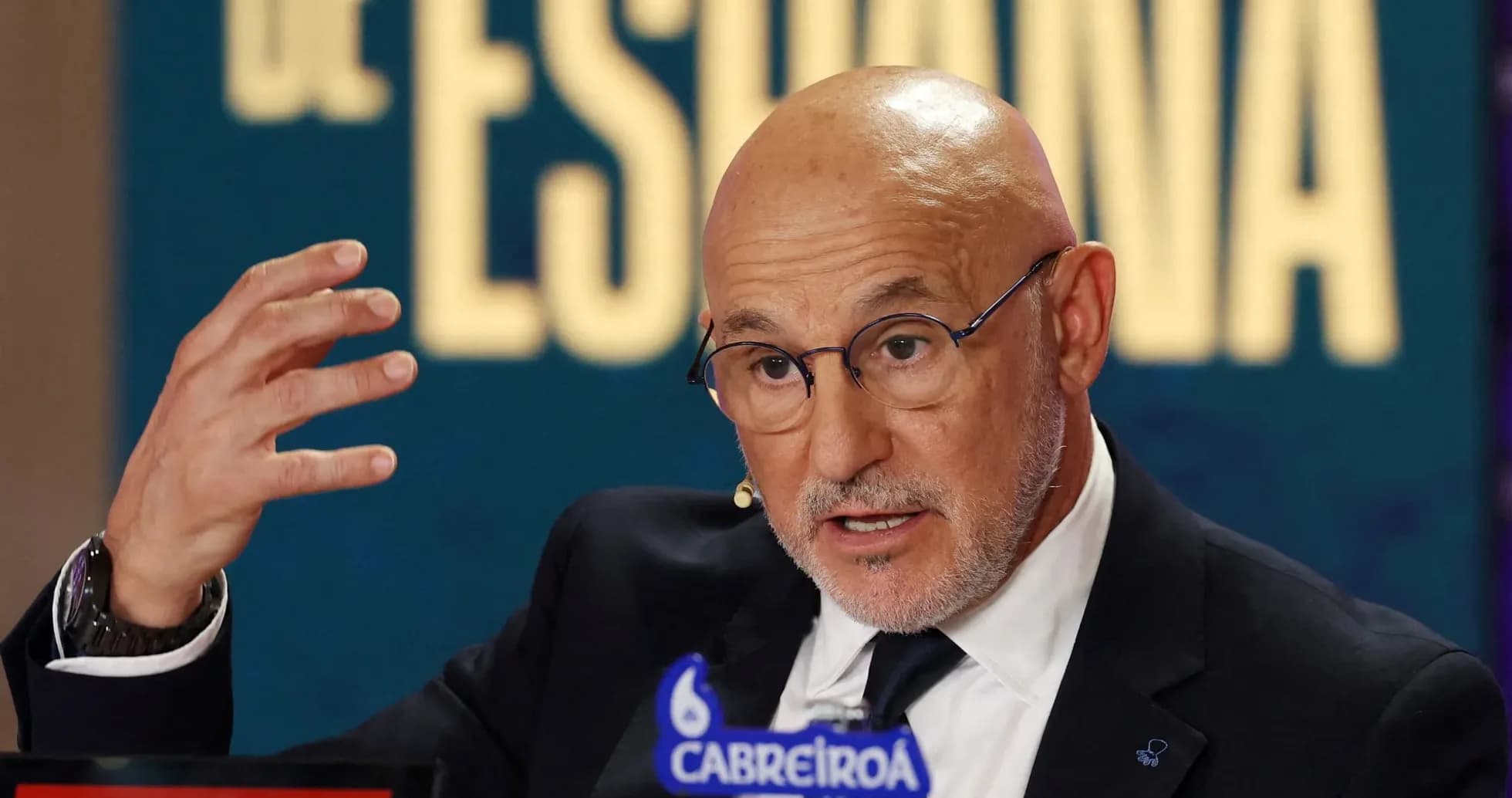
“For me, the greatest team there is – the very greatest – is the Spanish national team,” he told reporters at a breakfast organised by RTVE and EFE. No caveats. No nod to club sensitivities.
“I don’t look at where players come from or their background. What matters are Spanish players who are proud to represent their country’s national team and to be part of a united nation.”
The message was as much for the stands as for the dressing room: El Clasico stays at the door.
Selection with risk attached
De la Fuente insisted his choices were purely sporting. No political play, no nod to any club. Just his idea of the best 26.
“The day I make a mistake, fail to make the right choice, or act in a way that might be beneficial just to get a result, I’m putting my job on the line,” he said.
He knows the stakes. Spain arrive as European champions, expected to go deep. They open Group H against Cape Verde, then face Saudi Arabia and Uruguay. On paper, a manageable path. In reality, a minefield if the squad balance is wrong or key players are not fully fit.
That’s where the risk sharpens.
Lamine Yamal, Nico Williams and Mikel Merino all come into the tournament off the back of fitness issues. They are central to Spain’s attacking and midfield structure. Lose one, and the system bends. Lose two, and it creaks.
De la Fuente sounded relaxed, but not naïve.
“We’re in contact with all the clubs,” he said. “We know that these players are in good physical shape; each one is making good progress in their recovery process. I’m very optimistic; I think they’ll be available for the first match.”
Optimism is one thing. Tournament football is another.
“If we have to take a risk, mate, we’ll take it in a World Cup,” he added, letting a flash of dressing-room language slip through. “But… our view goes beyond the first match and also the second. So, if we have to wait a little longer, we’ll wait.”
The calculation is clear: better to have Yamal, Williams and Merino at full throttle in the knockouts than limping through the group.
Yamal’s moment
At the heart of the excitement, and the anxiety, is Lamine Yamal.
Eighteen years old. Barcelona winger. The player many expect to carry Spain’s attacking threat on the biggest stage.
De la Fuente spoke of him with a mix of admiration and certainty, not as a kid being eased in but as a central figure.
“Yamal is absolutely thrilled and raring to go,” he said. “He’s a very young lad, just 18, but he has a remarkable sense of maturity and knows that this is his moment.
“You have to seize the moment. And he knows this is his moment.”
For Spain, that is the gamble and the promise rolled into one. A World Cup campaign built on a Barcelona core, with no Real Madrid presence, riding on the shoulders of an 18-year-old who plays as if the stage belongs to him.
The badge, De la Fuente insists, is all that matters. The next month will reveal whether the rest of Spain is willing to believe him.

