.svg&w=384&q=75 "GoalGist logo")
Sheffield United Faces High Court Showdown Over £35m Debt
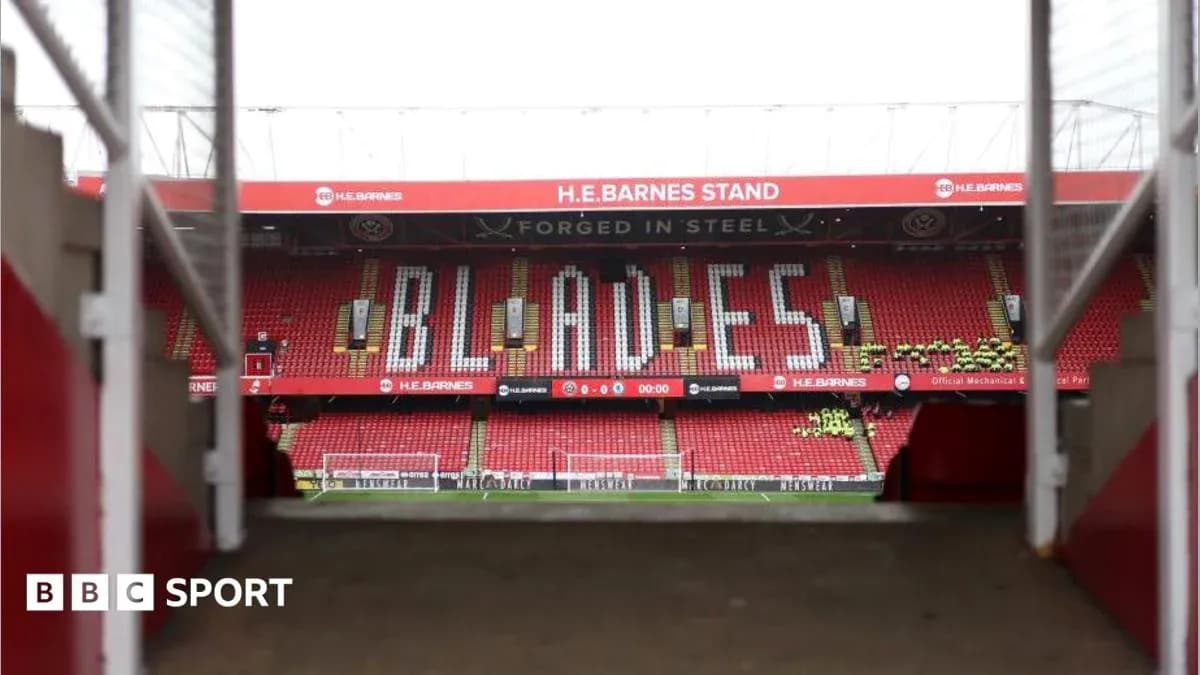
Sheffield United are staring at a High Court showdown on Wednesday that could leave their Championship season shredded before it has properly begun.
At the heart of it: a £35m debt, a bitter ownership feud, and the threat of a 12-point deduction.
A £100m deal with a £35m hole
The case centres on COH Sports Bidco Limited (CSBL), the American-led consortium that agreed to buy Sheffield United from United World in December 2024 for just over £100m.
United World, the vehicle through which Saudi Arabian Prince Abdullah bin Mosaad Al Saud owned the club, insists more than £35m from that deal remains unpaid. CSBL has not disputed that the money is outstanding.
A winding-up petition was lodged against CSBL – not the football club – on 8 July. That petition reaches the High Court on Wednesday. If the £35m is not paid, or a settlement is not reached, CSBL could be wound up.
On paper, it sounds simple. In reality, the picture around Bramall Lane is anything but.
New owners, old problems
Prince Abdullah first arrived at Sheffield United in 2013, buying 50% of the club before eventually winning full control in 2019 after a protracted High Court battle. His reign brought Premier League football, but also turbulence.
Last season, the Blades were docked two Championship points for missed transfer payments under Prince Abdullah during the 2022-23 campaign. That punishment landed before CSBL’s takeover had even fully settled.
CSBL did make an initial payment when the sale completed. The first instalment due afterwards, though, arrived late and only after a statutory demand – and even then, it was wired on the deadline.
Now the dispute has escalated to the £35m balance. United World wants its money. CSBL has not denied it owes it. And the EFL is watching a complicated corporate structure unfold.
The 1919 Partners twist
The real tangle begins with a move made in June.
That month, shares in Sheffield United were transferred out of CSBL and into a new US-based company, 1919 Partners LLC. On paper, 1919 Partners became the “parent company of Sheffield United”.
In practical terms, CSBL no longer controls the club.
Yet the people behind CSBL have not gone away. Businessmen Steven Rosen and Helmy Eltoukhy, who lead CSBL, remain on Sheffield United’s board as co-chairmen via 1919 Partners.
So while the winding-up petition targets CSBL, not Sheffield United, the lines between old and new ownership are anything but clean.
United World seized on that point in a statement on Monday, claiming 1919 Partners was created “as an attempt to avoid paying CSBL’s creditors”. It said no offer had been made to settle the debt since the winding-up order was issued and accused Rosen and Eltoukhy of “trying to take the club without paying for it”.
War of words
Sources close to the current ownership fired back with a statement that swerved the specific allegations but attacked Prince Abdullah’s motives.
“We are disappointed Prince Abdullah is trying to hurt the club and its supporters with publicity stunts,” it read.
“The deal between sophisticated parties in 2024 was well-advised by his financial advisors.
“Sheffield United is financially healthy, unlike under Prince Abdullah when the club incurred a points deduction for missing payments to football creditors.
“Nonetheless, Helmy Eltoukhy and Steven Rosen invited Abdullah to reinvest in the club and join the ownership of Sheffield United and to help use his skills to support our promotion efforts.
“Helmy and Steve are focused on the sustainability of the club and the season ahead.”
United World answered again on Tuesday, tightening the screws.
“Sophisticated and well-advised parties pay the price they agreed,” its statement said. Offering shares instead of the cash owed “was not part of the agreed deal and is not payment”.
“If Sheffield United is as financially healthy as its owners claim, and the owners themselves have the means they are widely reported to have, then the money can be paid.
“Paying it would answer all questions about the club’s situation at once. Instead, the owners are running a club they have not paid for and the club’s financial health, such as it is, is the result of the owners’ scheme to avoid paying for the club.”
Behind the legal language, the accusation is blunt: you’ve taken control, now pay the bill.
What the EFL is weighing up
For now, neither the EFL nor the Independent Football Regulator (IFR) has commented publicly on the share transfer to 1919 Partners.
The IFR did confirm on Tuesday that it is in contact with the club and “relevant organisations” regarding the winding-up petition against CSBL, adding it could not comment further.
The key question for the EFL is whether an insolvency event at CSBL – a “group undertaking” rather than the club itself – should trigger sporting sanctions.
When a club goes into administration, the rules are clear. When a related company does, the regulations ask the EFL board to consider several factors, including “the need to protect the integrity and continuity of the competition” and “the reputation of the league”.
If the High Court winds up CSBL, the league must decide whether the owners effectively shifted the club’s shares into a fresh company, leaving a large purchase debt behind in the old one to be written off. That kind of manoeuvre could be seen as a breach of the rules.
The EFL board has the power to treat it as an insolvency event and impose a 12-point deduction.
There is precedent, if not a perfect one. In 2009, Southampton were docked 10 points when their parent company entered administration. An investigation concluded the club and its parent were “inextricably linked as one economic entity”, triggering a mandatory penalty.
Sheffield United’s situation is different in structure, but the echo is hard to ignore.
High Court first, EFL next
United World insists it does not want the club dragged through months of uncertainty, but says it has been left with no choice.
“As the former owners of SUFC, United World does not want to see SUFC facing months of uncertainty that will follow the winding-up order being granted on 19 August,” its statement said.
“But in the absence of Eltoukhy and Rosen, both billionaires, agreeing to pay what they owe, we have no alternative but to take all legal steps to protect our interests.”
Everything now funnels into Wednesday’s hearing.
If a compromise emerges before the judge rules, the immediate danger could recede. If the winding-up order is granted against CSBL, the EFL will be forced to show how far its powers reach when owners move the pieces on the board but leave a debt behind.
For Sheffield United, chasing promotion on the pitch, the real battle this week is in a courtroom. And whatever happens there, this story is nowhere near full-time.