.svg&w=384&q=75 "GoalGist logo")
Scottish Football's New Season: Hope or Reckoning?
Only the most devoted optimists can convince themselves Scottish football is about to spring lightly from a summer of discontent. The calendar says renewal. The mood says reckoning.
A new Premiership season usually brings a clean slate, fresh kits, and familiar hope. This year it drags behind it the wreckage of a World Cup campaign that stripped bare the fragility of the national game. The silence since has been deafening.
The Scottish FA has offered no serious explanation, no roadmap, no sense that anyone at Hampden truly grasps how bleak the United States turned out to be. Mike Mulraney, the president, last appeared not in front of his own supporters but peering from behind Gianni Infantino and the US president at Trump Tower. Ian Maxwell, the chief executive, surfaced briefly after Steve Clarke walked away, choosing to rail against “hysterical commentary” rather than address why Scotland had folded on the biggest stage.
This, remember, from the same hierarchy that chuckled off concerns about handing Clarke a four-year contract on the eve of the World Cup. A needless gamble, they were told. They laughed. Nobody is laughing now.
Maybe Mulraney and Maxwell are buried in the search for Clarke’s successor, poring over CVs and video clips. They should be. The next head coach must manage a transition that has been ducked for too long in a Scotland squad creaking with age. Yet the vacuum around them – no admission of failure, no coherent plan – feeds a broader anger that is already crackling around the domestic game.
This season has all the ingredients to turn sour.
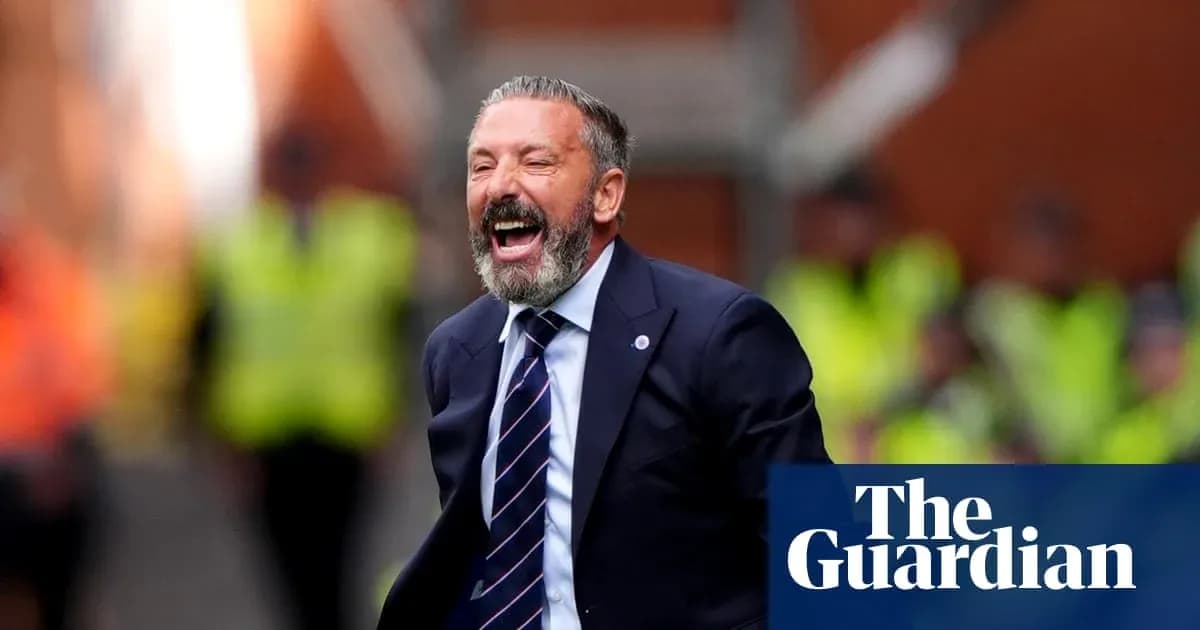
Celtic’s support is still simmering, convinced their club’s board is too comfortable, too detached from the demands of a fanbase that expects ambition, not just profit. Across the city, Rangers have turned to Derek McInnes, a manager who has long coveted the Ibrox job but who arrives with deep hostility waiting for him in the east end.
The bitterness does not stop there. Hearts fans remain raw from the way 2025‑26 ended, a title dream ripped away in agonising fashion. The worst of it came on 11 June, when the Scottish Professional Football League finally published the disciplinary outcome from the pitch invasion that cut short Celtic’s title-clinching match against Hearts. Folded into a list of token punishments for Hamilton Academical, Inverness and Stenhousemuir was a modest fine for Celtic and a suspended, flimsy ticket reduction. For Hearts followers, it felt like insult on top of injury.
Rangers supporters, who rarely need an excuse to feel persecuted by officialdom, were relatively muted for a spell. That changed when McInnes picked up a touchline ban for comments on a refereeing decision. The club has already taken aim at parts of an independent report into the scenes that followed their Scottish Cup defeat to Celtic in March. Motherwell, meanwhile, have gone to the lawyers over a Scottish FA fine for a social media video.
The discontent is not confined to the courtroom. Hibs’ 2-0 loss in Kosovo in a European qualifier last week sent their fans into online meltdown. These results used to shock. Now they barely raise an eyebrow, another data point in a long-running story of Scottish clubs falling short in Europe.
Yet this is not a landscape of pure gloom. Some clubs have reasons to feel the pulse quicken.
Celtic’s capture of Kasper Høgh for a club-record fee was a statement – the kind of financial muscle many fans have long demanded. It is also the most intriguing transfer of the summer. Doubts linger over how far players can stretch beyond the carefully curated environment of Bodø/Glimt. Without those questions, and at a price that would hardly trouble many Championship sides, Høgh would have moved long ago. Still, at 25, with his physical frame and direct, uncomplicated style, he looks built for Scottish football.
The challenge for Celtic’s hierarchy lies elsewhere. They must be ready to replace key figures such as Arne Engels and Alistair Johnston if irresistible offers land, and do it without hiding behind glossy balance sheets. Supporters have welcomed Høgh. They expect more than one headline arrival and a tidy set of accounts.
Across the divide, Rangers have spent heavily in recent seasons and watched others parade the silverware. The money has gone, the trophies have not arrived, and the Ibrox stands have grown ever more unforgiving. New American ownership has, oddly, chosen not to confront the culture of fury that now surrounds the club.
McInnes steps into that environment with his eyes wide open. Rangers open the league campaign away to Dundee United on Friday night, with a manager who understands the club’s demands and culture better than many of his predecessors. Vanja Dragojevic, signed from Partizan Belgrade, looks a shrewd addition in midfield. The squad still lacks genuine attacking electricity, but McInnes’s first instinct was to harden the team’s spine, to make Rangers harder to play through and easier to predict in a positive sense.
This is the job he has always wanted. He will not be short on drive or hours in the office. Rangers should be stronger, more coherent, less fragile. Yet when the conversation turns to the title, Celtic remain favourites by sheer force of habit and history.
In Edinburgh, Hearts are still trying to catch their breath. Nobody connected with the club could reasonably be expected to have processed how close they came to a first championship in 66 years, only to see it evaporate in the final minutes. McInnes’s exit for Rangers, the arrival of Wouter Vrancken with a radically different approach, and a sharp rise in expectations have combined to create a volatile mix.
Hearts’ surge to the brink of glory came ahead of schedule. It has, however, put them in the minds of people who previously paid Scottish football little attention. The reality check arrived in the form of a comprehensive Champions League qualifying defeat to Sturm Graz, a reminder of the work Vrancken still faces. Knee-jerk judgment would be foolish. Hearts need time to grow into their new status.
Elsewhere, Motherwell have offered a template for clubs outside the traditional elite. Under Jens Berthel Askou and in the period that followed, they proved the rest of the division does not have to cling on grimly just to survive. The football was expansive, the crowds grew, and markets beyond Scotland took note. The big-money sales of Elijah Just and Elliot Watt validate a model that dares to be inventive.
St Mirren talk openly about blooding more young players and playing with greater flair. Kilmarnock showed signs of that same intent under Neil McCann at the tail end of last season. Aberdeen, under Stephen Robinson, should be a more serious force this time around. Even the grass underfoot offers a small victory: only one artificial pitch remains in the top flight.
The obsession endures. Scottish football still dominates conversations, still fills weekends, still matters in a way few other sports can match in this country. Yet the game itself feels like a patient in need of urgent care, propped up by habit and loyalty rather than clarity and vision.
A new season has arrived. The question is not whether people will turn up. They will. The question is whether anyone in charge is brave enough to offer something genuinely new.

