.svg&w=384&q=75 "GoalGist logo")
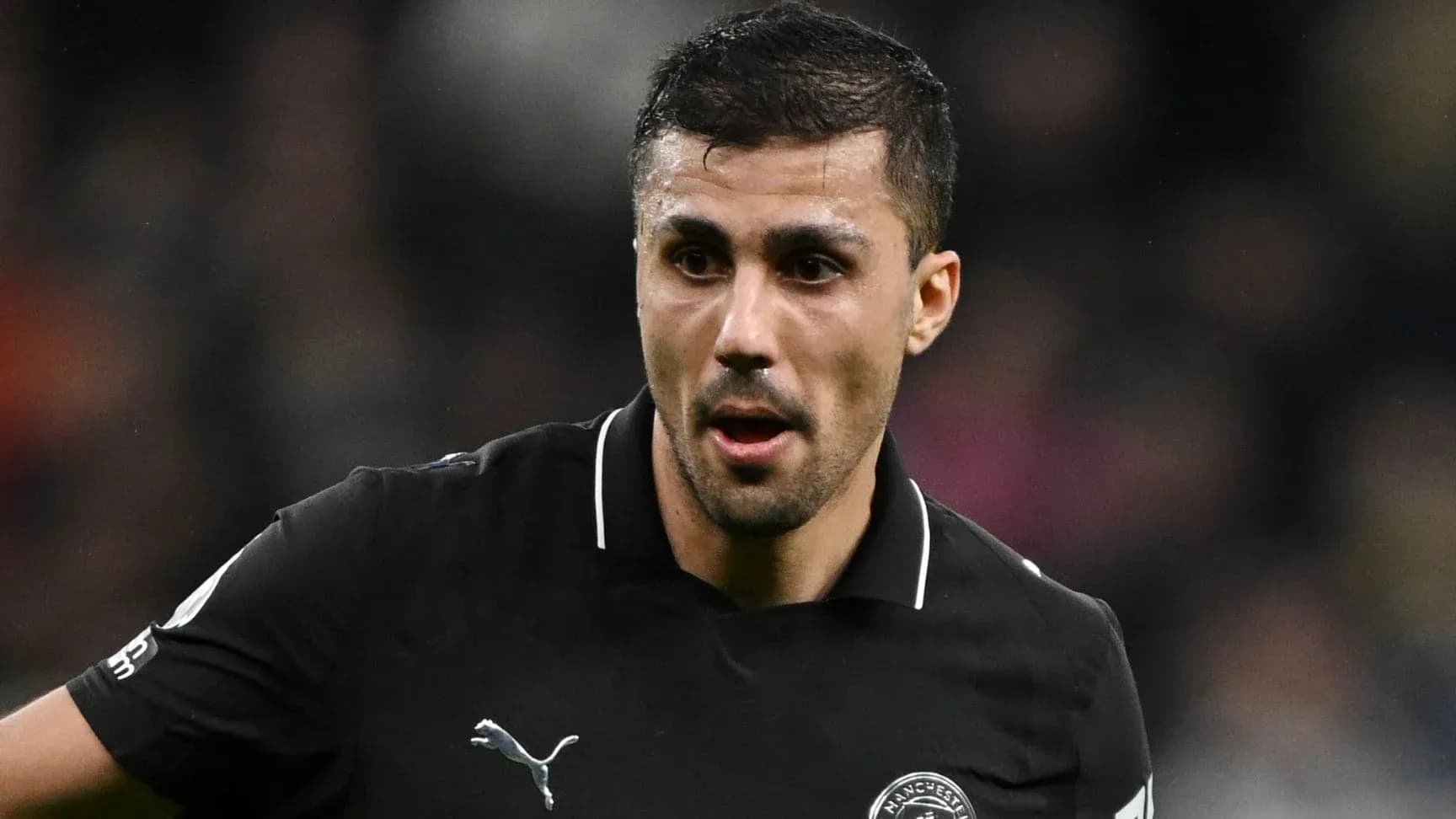
Rodri's Journey: From Real Madrid Hopeful to Barcelona's Key Player
Rodri once waited for Real Madrid. Really waited.
During his Atlético Madrid days, as reported by Marca, the midfielder held out until the last possible moment, hoping the call from the Bernabéu would come before he sealed his move to Manchester City. It never did. With Toni Kroos, Luka Modric and Casemiro ruling Real’s midfield, the club saw no need to move. Rodri triggered his release clause and boarded Pep Guardiola’s project instead.
That decision changed everything. Under Guardiola, Rodri evolved from promising pivot to the game’s reference point in his position, the metronome of a side that dominated England and Europe.
Years later, the story circled back.
This summer, a large part of the Real Madrid fanbase wanted him. The board did not. At least not at first, according to Marca. Inside Valdebebas, doubts lingered.
Then came the World Cup.
Rodri produced a tournament for the ages. He set a record for completed passes in a single edition, finishing with a success rate above 93%. He controlled matches, dictated tempo, and walked away as one of the symbols of Spain’s title. With his contract running down and Guardiola gone from Manchester City, the window opened again. For Real Madrid, it was a chance they rarely get: a world-class midfielder, in his prime, suddenly within reach.
The club moved, but not with its usual conviction. Rodri sensed it.
Marca reported a striking line, repeated in internal conversations at the club: “Rodri slows the pace of the ball down too much, and that is not what we are looking for.” The verdict was clear. The sporting department wanted a more explosive, more vertical profile in midfield, even in the face of the numbers and the World Cup evidence.
Contacts did happen. Florentino Pérez and José Ángel Sánchez spoke with the player, testing the ground for a deal. Yet the talks never reached the decisive phase that usually defines Real Madrid’s big operations. No blitz, no all-or-nothing push.
Barcelona went the other way.
The Catalan club threw its full weight behind the chase. Deco led the sporting pitch, president Joan Laporta stepped in, and coach Hansi Flick added his voice. Several players also called Rodri directly, underlining just how central he was to their plans. The message from Barcelona was simple: you are the cornerstone of what we want to build.
Money did not decide it. Marca underlined that the financial offers from Real Madrid and Barcelona were very similar. The difference lay in the football.
Rodri saw in Barcelona a project that looked and felt like Spain’s. A team built around possession, structure, and clear positional play. An identity he already knew, a framework tailored to his strengths. At 30, with one big move left, he chose certainty over experiment.
Real Madrid, in his eyes, still sat in a phase of transition. A squad in flux, an idea of play not yet fully settled. For a player who lives off control and clarity, the fit did not convince him enough.
Once his mind was made up, Rodri picked up the phone. As Marca tells it, he called José Ángel Sánchez to thank Real Madrid for the respect shown during talks. No drama, no bridge burned. Just a polite closure to a story that started years ago with that first, unanswered hope at Atlético.
Then he waited.
Barcelona still had to crack the hardest part: Manchester City. It took five separate approaches before the English club finally agreed to let him go. Five attempts to prise away the midfielder Guardiola had turned into a reference point.
In the end, Rodri chose the project that mirrored the football he already plays. Real Madrid let him slip twice. Barcelona made sure they did not.