.svg&w=384&q=75 "GoalGist logo")
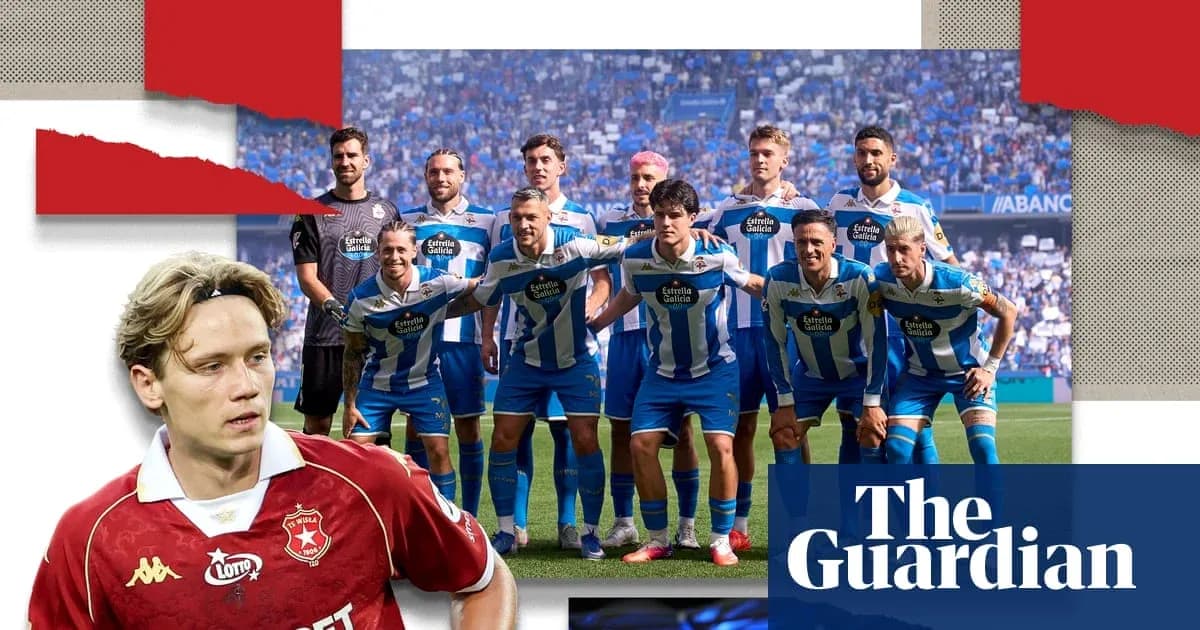
The Return of Football’s Lost Voices: Clubs Reclaiming Their Stories
They come back changed. All of them. Some arrive with money, some with scars, some with both. This season’s promoted clubs are not just new names on a fixture list – they are stories that refused to end when the game tried to write them off.
From Galicia to Diyarbakir, from Saarland to the Circuit de la Sarthe, old powers and unlikely upstarts are stepping back into the light.
Deportivo La Coruña – Ghosts of a Golden Age
For a decade, Deportivo La Coruña were the club that made Spain’s giants sweat.
Between 1993 and 2004 they finished in La Liga’s top three nine times. They tore up the script, won the title in 1999 and came within a tie of a Champions League final, only to run into José Mourinho’s Porto in the 2004 semi-finals. For a while, Spain’s “big four” meant Barcelona, Real Madrid, Valencia – and Dépor.
Then the lights dimmed. The superclub era hardened, the margins shrank and Deportivo slipped first into mid-table, then out of the top flight altogether. In 2020, the club that once toyed with Europe’s elite dropped into the regional third tier. It felt less like relegation, more like exile.
Four years later, the climb has finally brought them back within sight of the summit. Promotion to the second tier was one thing; the leap from 15th place in 2024-25 to automatic promotion last season was another. This was not nostalgia. It was a hard reset.
The days of Juan Carlos Valerón gliding between the lines and Diego Tristán bullying defences are long gone, but the intent is familiar. Deportivo are not tiptoeing back into La Liga. They are spending with purpose. Mallorca goalkeeper Leo Román has arrived to anchor the back line, while veteran striker Pierre-Emerick Aubameyang brings goals, profile and a reminder that Dépor still see themselves as a club that belongs on big stages.
The target is modest – survival, stability, a foothold. The ambition behind it is not. For a fanbase that has lived the full cycle, from miracles to meltdown, simply hearing the club’s name read out on a La Liga weekend again will sound like a small revolution.
They are not alone in that feeling. Racing Santander, champions of the Segunda, return after 15 years away. Málaga, another club that vanished into the third tier in 2023-24 after going down in 2018, are back as well. Spain’s top division is starting to look like a reunion, but every guest has paid a heavy price for their invite.
Elversberg – The Village That Took on the Bundesliga
The Bundesliga promotion race last season was framed as a clash of worlds: Schalke, with their vast fanbase and heavy history, against Elversberg, a club from a town small enough to fit inside the Veltins Arena four times over.
Schalke did what Schalke were expected to do. They won the second-tier title and finally escaped a division they have occupied in four of the last five campaigns. Elversberg did what nobody expected. They came second.
Three years ago, they were still in the regional leagues. In 2021-22, they were just another modest side from Saarland, far from the TV cameras, far from the national conversation. Under coach Horst Steffen, they took off. Promotion, consolidation, then a run to the brink of the Bundesliga, only to fall short in the playoff.
The story could have ended there. It didn’t. Steffen left last summer for Werder Bremen, a reward for his work and a risk for both sides. He lasted only nine months in his new job. Elversberg, meanwhile, barely flinched.
Vincent Wagner stepped in, plucked from Hoffenheim’s second team, and the rise continued. No grandstanding, no swagger – just a squad that kept learning faster than the league could catch up.
Now the club are racing to make their surroundings match their status. The stadium will be expanded during the season to hit the 15,000-capacity threshold required at this level. The building work will be gradual. The football education will not be.
Leverkusen and Bayern Munich are their first two visitors. No time to breathe, no soft landing. For a town that has spent decades on the margins of German football, the biggest names in the country will now be looking for parking spaces down the road.
Elversberg are not a fairytale. They are something more awkward for the established order: proof that a well-run, small club can crash the party and refuse to leave.
Le Mans – From Financial Wreckage to a New Engine
Le Mans is a city used to noise, speed and endurance. The football club has had to master all three just to survive.
Their stadium sits inside the famous Circuit de la Sarthe, where the 24-hour race has made the town a global motorsport landmark. On the pitch, though, Le Mans’ own top-flight spell in the 2010s was brief and brittle. Financial ruin followed. They slid down the divisions, another French club swallowed by bad decisions and unpaid bills.
The climb back to Ligue 2 took time. It also brought a new kind of attention. Last August, a Brazilian consortium called OutField took over, and with them came a cast list that reads like a VIP lounge: Novak Djokovic, Thibaut Courtois, Felipe Massa, Kevin Magnussen. Football club as investment vehicle, yes – but with a twist of star power.
In a league increasingly shaped by heavyweight backers – from Paris FC’s billionaire support to BlueCo’s ownership of Strasbourg – Le Mans fit the new profile. The difference lies in the plan.
Rather than spray money at the market, the club have gone the other way. They are reopening the academy, committing to youth, betting on potential rather than headlines. The gears have shifted quickly, but the driving philosophy is cautious. Build, don’t burn.
With City Football Group’s promoted Troyes also joining the top flight, and partner club Lommel stepping into Belgium’s elite, Le Mans enter a Ligue 1 environment that looks more like an investors’ summit every season. To survive, they will need to prove that a club can be globally backed yet locally rooted, that the academy can matter as much as the boardroom.
The track outside the stadium measures endurance in laps. Inside, Le Mans will measure it in seasons.
Amedspor – Football on the Faultline
Some promotions are about football. Amedspor’s is about identity, risk and the limits of what a club badge can carry.
Officially Amed SK, but widely known as Amedspor, they are based in Diyarbakir, a Kurdish-majority city closer to Iraq and Syria than to Istanbul. For years, they drifted between Turkey’s third and fourth tiers, a modest team in a politically charged region.
Then, in 2014, they added “Amed” – the Kurdish name for the city – to their title. It was a sporting decision that doubled as a declaration. The club became a focal point for Kurdish identity, drawing a new, diverse fanbase and turning their matches into something bigger than 90 minutes of football.
The reaction was not universally celebratory. Amedspor fans have faced abuse, intimidation and even physical attacks from opposing supporters. The situation grew so tense that the Turkish FA stepped in with a stark measure: a ban on Amedspor fans attending away games, a punishment that lasted until 2020.
Still, the club climbed. Still, the support grew.
Now they stand in the Turkish Super Lig for the first time. Their debut is not just a sporting landmark; it is a test of how much the country’s football culture can absorb, and how much hostility can be contained.
Security, logistics, the threat of violence – all of it will hover over their first season in the top flight. Yet there are hints that the atmosphere around them is shifting, however slowly. When Recep Tayyip Erdogan, a president who has refused to acknowledge Diyarbakir’s Kurdish name, publicly congratulated Amedspor on their promotion, social media lit up. Surprise, suspicion, hope – all in the same breath.
Amedspor will play for points like everyone else. But every away trip, every televised game, will also ask a bigger question: can a club that carries so much political and cultural weight be allowed to simply be a football team?
Wisla Krakow – The White Star Rises Again
In Poland, Wisla Krakow do not need an introduction. Founded 120 years ago, 14-time league champions, one of the country’s most decorated clubs. For generations, they were a fixed point in the Ekstraklasa, ever-present in the top division until 2022.
Relegation cut deep. The four seasons outside the elite felt longer, even as the club managed to win the Polish Cup in 2024 while still a second-tier side. Glory and struggle, side by side.
The fall forced a rethink. With former player Jakub Blaszczykowski on board as a minority investor, Wisla began to modernise. They leaned into analytics, trusted their academy, tried to build a smarter version of the club that had once dominated.
The return arrived with noise and colour. Last month, they marked their comeback to the top flight with a 2-1 win over Katowice. In the stands, a red-and-white pyro show burned throughout, a visual reminder that Wisla’s support had not dimmed with relegation. If anything, it had hardened.
Now the league gets back one of its fiercest fixtures. The derby against Cracovia – the “Holy War” – returns to the calendar, but this time it will share the city’s spotlight. Wieczysta Krakow have reached the Ekstraklasa through the playoffs, taking the number of top-tier teams from Poland’s second-largest city from one to three.
Wieczysta’s home ground does not meet league requirements, so they will ground-share with Wisla. Rivals on the table, neighbours in the stands. For Krakow, the domestic season will feel like a running referendum on local supremacy.
Wisla have seen enough turbulence to know that history alone does not win matches. Yet as the White Star shines again in the top division, the club’s past and present finally seem to be pointing in the same direction.
From Deportivo’s attempt to reclaim their seat at Spain’s top table to Amedspor’s charged arrival on Turkey’s main stage, these promotions are more than simple sporting achievements. They are stress tests of ambition, identity and survival.
The fixtures are set. The stories are not.

