.svg&w=384&q=75 "GoalGist logo")
Rashford's Redemption: Carrick vs Amorim in Manchester United's Transformation
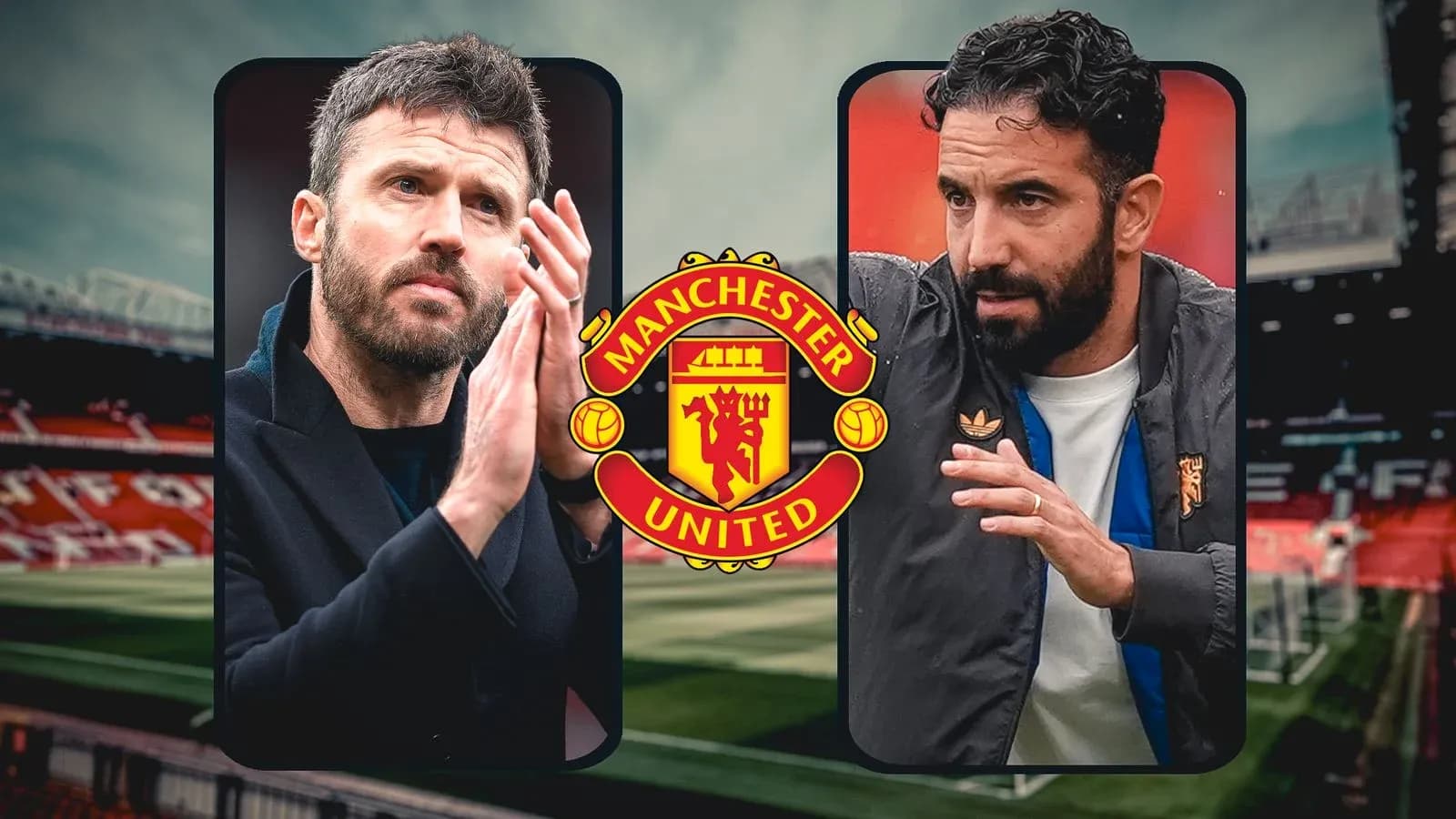
Ruben Amorim once told Manchester United fans they would have to suffer before they could succeed. Michael Carrick has turned up and quietly suggested there’s another way – the United way.
Twelve months ago, Marcus Rashford was on loan at Barcelona, Carrick had just been sacked by Middlesbrough, and Amorim was preparing for his first full season in charge at Old Trafford. Now all three collide again, in a different city, under very different spotlights.
Rashford, the prodigal forward, walks back into a club that looks familiar but feels altered. Waiting for him is Carrick – former team-mate, former captain, now head coach – arms metaphorically open, ready to offer a player once deemed expendable the chance to restart a story that began on these training pitches a decade ago.
Across the technical area, Amorim stares at a very different script. Dismissed by United just five months into last season, he has resurfaced at AC Milan, still chasing his first pre-season win and desperate to claim it against the club that cut him loose. The contrast could hardly be sharper: Carrick’s calm, methodical rise against the backdrop of the turbulence and theatre that defined Amorim’s Old Trafford reign.
Rashford’s reappearance only sharpens the edge. Amorim was the man who moved him on, having publicly challenged the England international’s attitude more than once. Their reunion, even in a pre-season setting, carries a charge. Saturday’s meeting between United and Milan is billed as a friendly; it feels like the next episode in a long-running soap opera.
It also offers a natural pause point. A chance to look back at how United have reshaped themselves since Amorim’s dismissal and how Carrick has quietly dragged the club back towards something recognisable. Three changes stand out.
From rigid dogma to real flexibility
Amorim’s refusal to bend became the defining mark of his time in Manchester.
Given the job of arresting United’s slide, he turned to what he knew: a 3-4-3 system he trusted above all else. Under scrutiny, he doubled down. He famously told reporters that not even the Pope could persuade him to abandon that shape. The line went viral. The results did not.
When the Africa Cup of Nations stripped numbers from his squad, the cracks widened. Amorim struggled to adjust. There were late hints that he might tweak the system, but when pressure grew he reverted to type. That stubborn streak, and the tension it created with the club’s hierarchy, ultimately proved fatal.
On the pitch, the friction was obvious. United had their free-scoring spells, but the three-at-the-back structure jarred with supporters raised on a different idea of what their team should look like. The goals could not mask the sense that this wasn’t Old Trafford football and that patience would not last.
Reports from Milan suggest familiar issues. Early days, same questions: players being squeezed into unfamiliar roles to serve the system, rather than the system serving the squad.
Carrick walked in and went the other way.
His first game in charge was a Manchester derby, and he used it to plant a flag. United stepped onto the front foot, pressed high, and attacked with a freedom that had been missing. They tore into Manchester City, slicing through almost every time they broke. The 2-0 scoreline flattered the visitors; City escaped a heavier beating.
That intent has carried into this pre-season. United move the ball quicker, forward passes are encouraged, risk is embraced. Summer signing Andrey Santos has looked eager to punch passes through the lines, while Bryan Mbeumo has come alive in a central role, constantly darting in behind and unsettling defences.
Bruno Fernandes has been one of the big winners. Restored to his favoured No 10 position, he embarked on a creative surge that ended with him setting a new Premier League assist record. The questions about what United are supposed to be, stylistically, have faded. Under Carrick, the identity feels simple again: proactive, attacking, unapologetically United.
Belief back in the stands and the dressing room
The mood around Old Trafford has shifted, and it starts with the man on the touchline.
Amorim’s press conferences were box office, but they came at a cost. Talk of storms and suffering, public declarations that this was the worst team in United’s history – the drama entertained neutrals but drained belief from the fanbase. You could glance at the table and see a side within reach of the top four, then listen to the manager and wonder if relegation was the real threat.
When he left, United were still close enough to Champions League qualification to make a push. Carrick made sure they did. He steadied the atmosphere, changed the messaging, and guided them over the line to a top-four finish Amorim had previously claimed they were not ready for.
Now the tone is different. Ambition is no longer treated as naivety.
New signing Leny Yoro has spoken about wanting to win the league. Mbeumo has echoed that target. Carrick has not batted those ideas away. He has embraced them, without bluster, framing them as a challenge rather than a fantasy.
He believes this group can do something significant, and he is not afraid to say it. That is a remarkable pivot from a year ago, when the conversation under previous management veered closer to survival than silverware.
Second chances instead of closed doors
Under Amorim, once you fell out of favour, the road back looked brutally short.
It was a clear stance: standards first, reputations second. After years of questions about the squad’s mentality, many at the club could understand it. But it came with casualties.
Alejandro Garnacho felt that ruthlessness most keenly. Kobbie Mainoo looked destined to follow. Rashford, once the poster boy of the academy, ended up taking two loan spells as his relationship with Amorim deteriorated and his place in the squad became untenable.
Amorim will feel vindicated in at least one of those calls. Garnacho’s underwhelming time at Chelsea has been followed by another loan, this time to Aston Villa, as he searches for the form and consistency that once seemed inevitable.
Mainoo tells a different story. Under Carrick, he became a cornerstone. Despite not starting a league game until January, he played his way into the XI and stayed there, his performances earning him a nomination for PFA Young Player of the Year. What looked like a dead end under one manager became a breakthrough under another.
Rashford sits somewhere between those two extremes.
His talent was never in doubt, even for Amorim. The issue was conduct, not quality. A sharp spell at Villa and a title-winning season with Barcelona have reminded everyone what he can do on the pitch. The question now is whether he will match that with the professionalism and buy-in demanded at Carrick’s United if he stays beyond the September deadline.
What is clear is that Carrick has reopened a door many assumed was bolted shut. He has chosen to see a player worth salvaging, not a problem to be offloaded. Whether Rashford seizes that chance is unknown, but the offer itself says plenty about the manager.
Amorim arrives with a point to prove. Carrick walks out with a team that believes again. Rashford stands between them, carrying the weight of his own redemption arc.
For United, this is more than a pre-season friendly. It’s a snapshot of what they were, what they’ve become, and what they still might be.