.svg&w=384&q=75 "GoalGist logo")
Portugal's World Cup Struggles: Ronaldo's Performance Under Scrutiny
Portugal’s World Cup plans hit an early snag in Houston, and the debate that has followed is as familiar as the man at the centre of it.
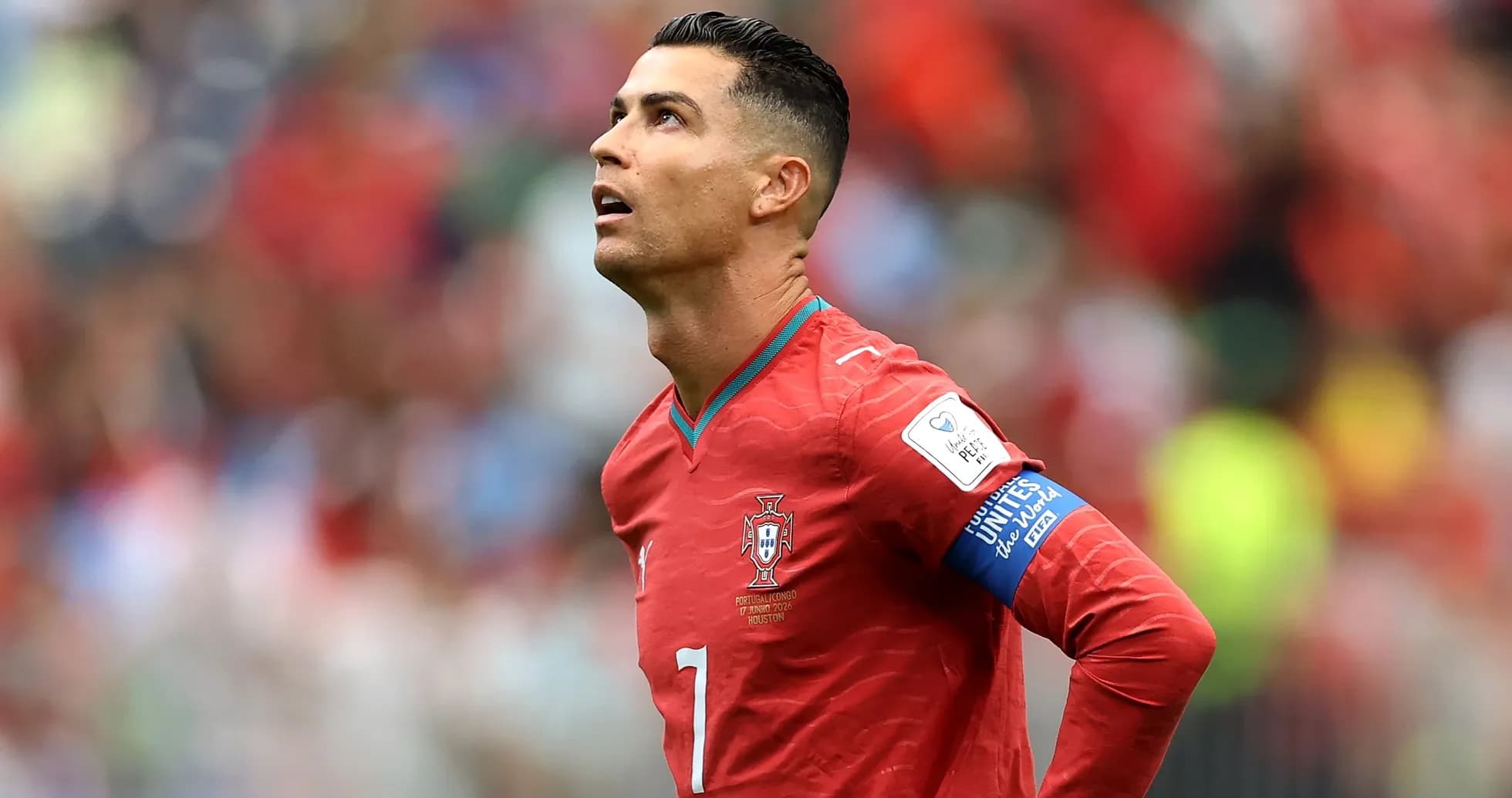
A 1-1 draw with DR Congo is not a disaster on paper, but it felt heavy. This was supposed to be a statement opener for Roberto Martinez’s side in Group K. Instead, it turned into another night where the performance of Cristiano Ronaldo overshadowed almost everything else.
Bright start, flat finish
Portugal actually began like a team intent on putting the group on notice. Joao Neves struck early, a composed finish that briefly suggested a routine evening ahead. The movement was sharp, the passing crisp, the superiority obvious.
Then the control slipped.
DR Congo grew into the game, sensed Portugal’s looseness, and refused to be overawed. Yoane Wissa’s equaliser before half-time was the product of that growing belief, and from that moment the contest changed tone. Portugal still had the ball, still pushed, but the authority was gone. The African side defended with conviction and carried a threat on the break, while Martinez’s men increasingly looked like a team waiting for someone – one man – to rescue them.
That man, as always, was Ronaldo. Only this time, he didn’t.
Ronaldo’s struggle in the spotlight
At 39, appearing at a record-extending sixth World Cup, Ronaldo remains the reference point for Portugal’s attack and the emblem of their ambition. In Houston, he was also the lightning rod.
He failed to register a shot on target. He missed two clear chances. The penalty-box instincts that defined his career never quite clicked into place. The runs were made, the arms went up, the frustration grew, but the net stayed untouched.
On nights like this, the conversation around him inevitably hardens.
Former England striker Jay Bothroyd, speaking on Sky Sports, did not soften his words.
“Have to be honest, I think if Ronaldo is a team player, I think he should step down and understand that he has to be a player that comes off the bench as an impact player,” Bothroyd said. “Is he ever going to do that? Nope, I don’t think he is. And that’s my point.”
It was a blunt assessment of a legend who has built an entire career on refusing to step aside. Yet it captured a growing tension: Portugal’s need to evolve versus Ronaldo’s enduring status.
“It looks like it’s all about him”
Bothroyd went further, questioning not just Ronaldo’s performance but the dynamic around him and the shadow of Lionel Messi that still lingers over the rivalry that defined an era.
“I look at Ronaldo and… the Ronaldo faithful are going to hate me today, but it looks like it’s all about him, yeah? You know, and he’s always chasing Messi all the time,” he added. “He’s never going to be Messi, but what he has throughout his career, he’s made the absolute most out of his career… But right now he’s becoming more of a hindrance for Portugal than help, and I think that’s where Martinez is going wrong.”
That word – hindrance – cuts deep. It speaks to a wider concern that Portugal, blessed with a new generation of talent, are still bending their structure, their tempo, even their decision-making, around a forward who no longer guarantees the same return.
When the attack stalls, younger options sit and wait. When chances go begging, the conversation returns to whether this team is built for today or still living in yesterday.
Martinez stands firm
Inside the Portugal camp, though, there is no sign of a tactical revolution or a sentimental farewell. Martinez doubled down on his decision to keep Ronaldo on the pitch in Houston, even as the game cried out for a different kind of threat.
“It makes no sense to get the best goalscorer in world football out in a game that you need goals,” the Portugal coach told reporters afterwards. “For us in moments like this, the experience of Cristiano in the box is important.
“The way that he attracts defenders is important, the way that we can use the space is important. And every player has a responsibility or a piece of quality on the pitch. And clearly when you look for goals, you need to have Cristiano.”
From Martinez’s perspective, Ronaldo is not just a finisher but a gravity force, dragging defenders towards him and freeing others. It is a tactical argument as much as an emotional one. Take off the all-time great and you lose not only his potential for a decisive touch, but the fear he still inspires.
The problem is that World Cups are unforgiving. They judge end product, not aura.
A familiar fault line for Portugal
The draw with DR Congo does not end Portugal’s campaign, but it does sharpen the margins. Tougher tests lie ahead in Group K, and every dropped point tightens the vise. Performances will be scrutinised, selections even more so.
Once again, Portugal stand on a familiar fault line: the balance between reverence for a legend and the ruthless choices required to win a World Cup now, not in 2016 or 2018.
Martinez has nailed his colours to the mast. Ronaldo remains central, indispensable in his eyes. The coach is betting that experience, presence and history will still tilt tight games in his favour.
If that bet fails as the stakes rise, how long before the question stops being whether Ronaldo should start – and becomes whether Portugal can truly move forward while he does?