.svg&w=384&q=75 "GoalGist logo")
Nigeria’s Super Falcons Unveil Squad for WAFCON 2026
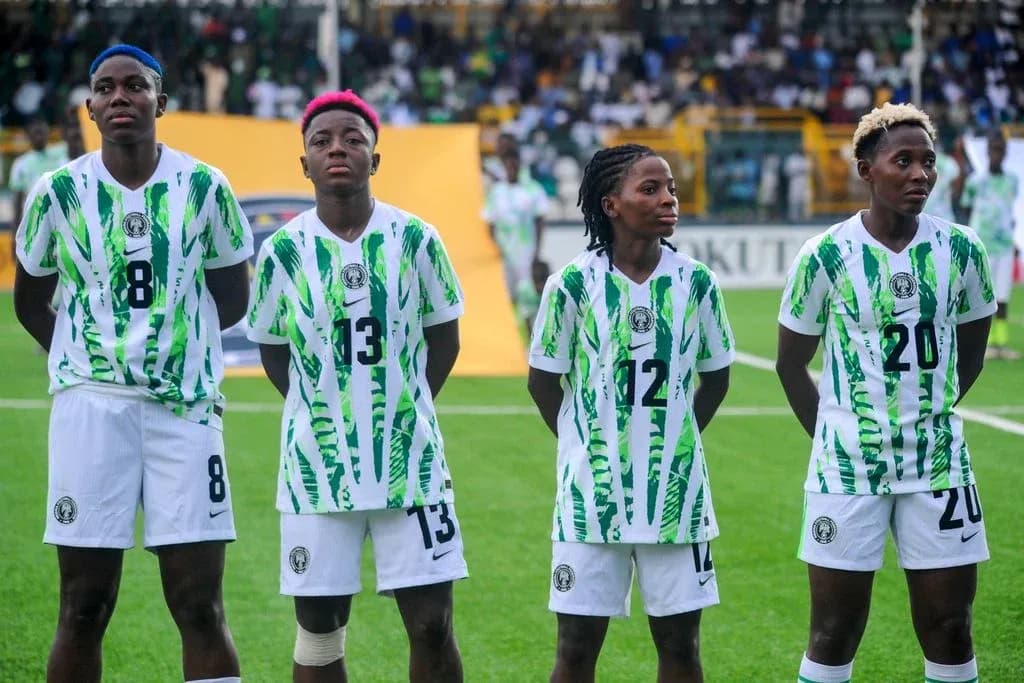
Nigeria’s Super Falcons have drawn back the curtain on their 25-woman squad for the 2026 Women’s Africa Cup of Nations in Morocco, a group picked to chase an 11th continental crown and defend a legacy that has defined African women’s football for three decades.
Madugu’s Mix of Old Steel and New Spark
Head coach Justine Madugu, speaking through the Nigeria Football Federation, has gone for a deliberate blend: hardened campaigners who know how to navigate tournament pressure, and younger legs eager to write their own chapters between July 26 and August 16.
Rasheedat Ajibade wears the armband and the responsibility that comes with it. She is no longer just a bright talent; she is the heartbeat of this midfield, the reference point in and out of possession.
Ahead of her, the headline name needs no introduction. Six-time African Women’s Player of the Year Asisat Oshoala leads an attack that, on paper, looks capable of overwhelming any defence on the continent.
Behind them, Chiamaka Nnadozie stands as the last line and, often, the first spark. The Brighton & Hove Albion goalkeeper has grown into one of the most reliable shot-stoppers in the women’s game, and she is expected to keep her status as Nigeria’s undisputed No. 1.
One notable absence cuts through the optimism. Star defender Ashleigh Plumptre misses out as she continues her recovery from surgery, a loss that strips the back line of a composed, ball-playing presence. Madugu will have to rewire his defensive structure without her.
Depth Across the Pitch
The squad list underlines the depth at Nigeria’s disposal.
In goal, Nnadozie is joined by Portsmouth Ladies’ Comfort Erhabor and Abia Angels’ Fatima Oloko, two domestic-based keepers offered a chance to learn in the heat of a major tournament.
The defence carries both experience and promise. Osinachi Ohale brings years of international know-how, while Michelle Alozie, Oluwatosin Demehin, Rofiat Imuran, Shukurat Oladapo, Glory Ogbonna and Sikiratu Isah form a unit that can be shuffled to suit different opponents. Christy Ucheibe, listed as a defender in the final squad, adds bite and mobility, whether she is screening the back four or stepping into midfield zones.
In the middle of the park, Ajibade leads a group that must control tempo and transitions if Nigeria are to go deep again. Halimatu Ayinde offers discipline and structure, Deborah Abiodun brings energy and tackling, Toni Payne links lines with her passing range, while Jennifer Echegini adds forward thrust and goals from deeper positions.
Up front, the options are almost extravagant. Oshoala is the spearhead, but she is far from alone. Folashade Ijamilusi, Esther Okoronkwo, Chinwendu Ihezuo, Francisca Ordega, Gift Monday, Uchenna Kanu, Omorinsola Babajide and Joy Omewa give Madugu a variety of profiles: target players, wide runners, inside forwards, and pressing forwards who can harry defences into mistakes.
Many of these players arrive from Europe’s top leagues; others come from North America, Asia and the Nigerian Women’s Football League. That mix of global experience and domestic hunger has long been one of the Falcons’ competitive edges.
Confirmed Super Falcons squad for WAFCON 2026
- Goalkeepers: Chiamaka Nnadozie, Erhabor Comfort, Oloko Fatima.
- Defenders: Osinachi Ohale, Oluwatosin Demehin, Michelle Alozie, Rofiat Imuran, Shukurat Oladapo, Glory Ogbonna, Sikiratu Isah.
- Midfielders: Deborah Abiodun, Christy Ucheibe, Halimatu Ayinde, Rasheedat Ajibade, Jennifer Echegini, Toni Payne.
Group C: Familiar Foes, New Stakes
Nigeria do not travel to Morocco as hopefuls. They arrive as the standard.
Ten WAFCON titles already sit in the cabinet. The last came in dramatic fashion, a 3-2 victory over hosts Morocco in the previous edition’s final. That win reasserted their dominance after a period in which the gap to the chasing pack had visibly narrowed.
Now comes Group C.
The Super Falcons share it with Zambia, Egypt and Malawi. On paper, Nigeria are favourites. On the grass, there are traps everywhere.
The campaign opens against Malawi on Tuesday, July 28, at Al Madina Stadium in Rabat. It will be the first senior competitive meeting between the two nations, a fresh chapter with no historical baggage but plenty of jeopardy for the debutants and the giants alike. Nigeria will be expected to impose themselves early; Malawi will see an opportunity to shock the continent.
Then comes a grudge match.
On Saturday, August 1, at the same venue, Nigeria face Zambia. The Copper Queens have become one of Africa’s rising forces, and the recent history between these sides is raw. Nigeria have taken two of their three meetings, yet it was Zambia who landed the last blow, a 1-0 win in the third-place playoff at the 2022 WAFCON. That result still stings and turns this fixture into one of the group stage’s standout contests.
The group phase closes against Egypt on Wednesday, August 5, at the Rabat Region Stadium. The numbers from their only previous WAFCON clash are brutal: a 6-0 Nigeria win back in 1998 at the inaugural African Women’s Championship. That scoreline belongs to another era. Egypt have invested in their women’s programme and arrive in Morocco as a far more organised and ambitious side.
A Continental Title – and a World Ticket
The stakes stretch beyond the trophy.
WAFCON 2026 doubles as Africa’s qualification route to the 2027 FIFA Women’s World Cup in Brazil. Reach the semi-finals, and a ticket to the global stage is guaranteed. Fail, and the pressure on this golden generation will spike.
For Nigeria, the equation is stark. Defend the crown, secure World Cup qualification, and reinforce their status as Africa’s benchmark. Anything less, in a country that measures its women’s team by titles rather than appearances, will raise uncomfortable questions about where the rest of the continent has caught up – and how quickly the Falcons can evolve again.