.svg&w=384&q=75 "GoalGist logo")
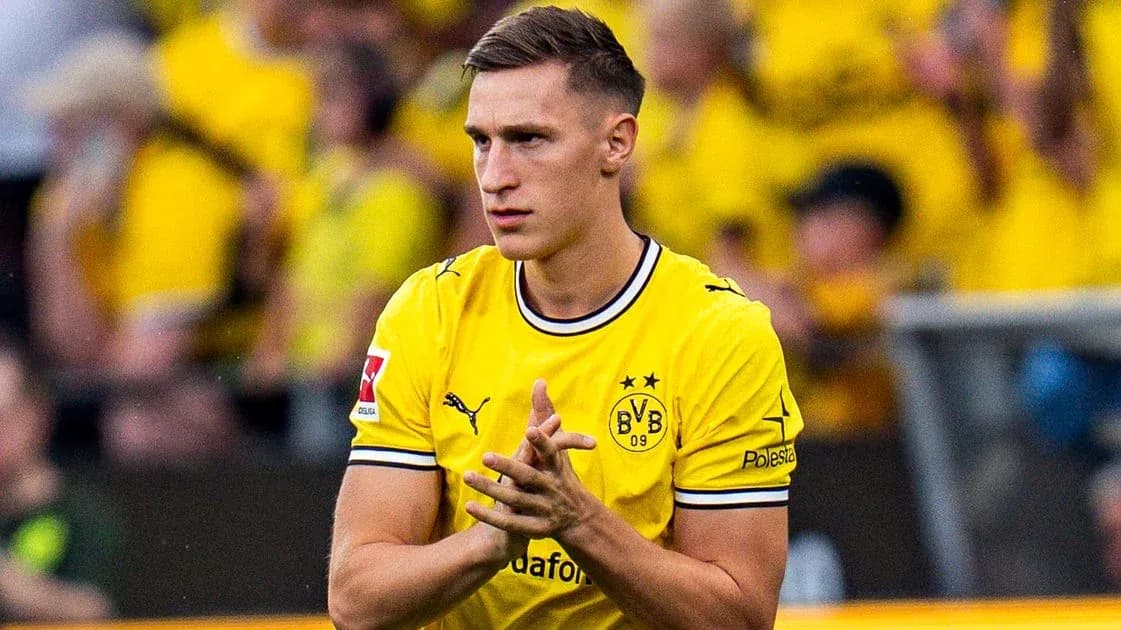
Nico Schlotterbeck's Injury and Dortmund's Defensive Challenges
Nico Schlotterbeck is still waiting. Borussia Dortmund are still waiting with him.
The 26-year-old has not played a competitive minute since 20 June, when an ankle injury in Germany’s second group-stage match of the FIFA World Cup 2026 against Ivory Coast abruptly cut his tournament short and reshaped Dortmund’s plans for the new season.
His World Cup was over in an instant. Dortmund’s defensive blueprint for 2026/27 changed just as quickly.
“A long, drawn-out story”
Speaking to Sky, Schlotterbeck did not try to dress it up.
“It’s basically a long, drawn‑out story,” he said, summing up weeks of frustration in one line.
“It wasn’t easy at the World Cup. At first, I thought it wasn’t that bad and kept playing,” he added, a candid admission of how quickly a knock can turn into something far more serious on the biggest stage.
Since that night, the left-sided centre-back has disappeared from the pitch and into the grind of rehab. No pre-season. No Franz Beckenbauer Supercup. No chance to ease himself back before the Bundesliga’s early rhythm kicks in.
Timelines fade, work continues
When Dortmund returned to training in mid-July, there was still some quiet hope at the club. Internally, the idea of a comeback around the first international break in September or October lingered — maybe just before, maybe just after. What always seemed clear: there would be no Schlotterbeck for the Supercup showdown with Bayern Munich.
The optimism has been careful rather than loud. Schlotterbeck himself refuses to draw a line on the calendar.
“We have to take it day by day,” he explained. “We’re trying to let it heal properly and do good work with the physios and the rehab coaches. Then I believe it won’t take much longer.”
No promises. Just repetition, treatment, and the slow rebuilding of trust in an ankle that gave way at the wrong time.
Leadership from the sidelines
Inside the club, his absence on the pitch has not meant silence off it. Sporting director Ole Book highlighted how Schlotterbeck, along with injured captain Emre Can, has stayed embedded in the group.
“I see both of them fully motivated every day,” Book said earlier in the summer. “During their rehab, they both contribute enormously as leaders – to the team, to the togetherness, to the group. But how long it will take exactly, nobody can say – and certainly not me.”
For a defender whose game is built on presence, personality, and that sweeping passing range from the back, leading in tracksuit and trainers is a very different role. Yet Dortmund’s dressing room still leans on him, even as the team learns to cope without its “rock at the back.”
The story of his injury may be long and drawn out, as he puts it. The question now is how quickly he can turn the next chapter from rehab room to starting XI – and what Dortmund will look like when their defensive leader finally walks back out onto the pitch.