.svg&w=384&q=75 "GoalGist logo")
Neymar and Pulisic Facing Calf Injuries Ahead of 2026 World Cup
Brazil and the United States are staring at the same problem from opposite ends of the pitch: their marquee attackers are hurt, and the clock is already ticking on this World Cup.
Both Neymar Jr. and Christian Pulisic are dealing with calf injuries that threaten to reshape their countries’ group-stage plans and, potentially, their entire tournaments.
Neymar Stuck On The Sidelines
For Neymar, this World Cup has yet to begin.
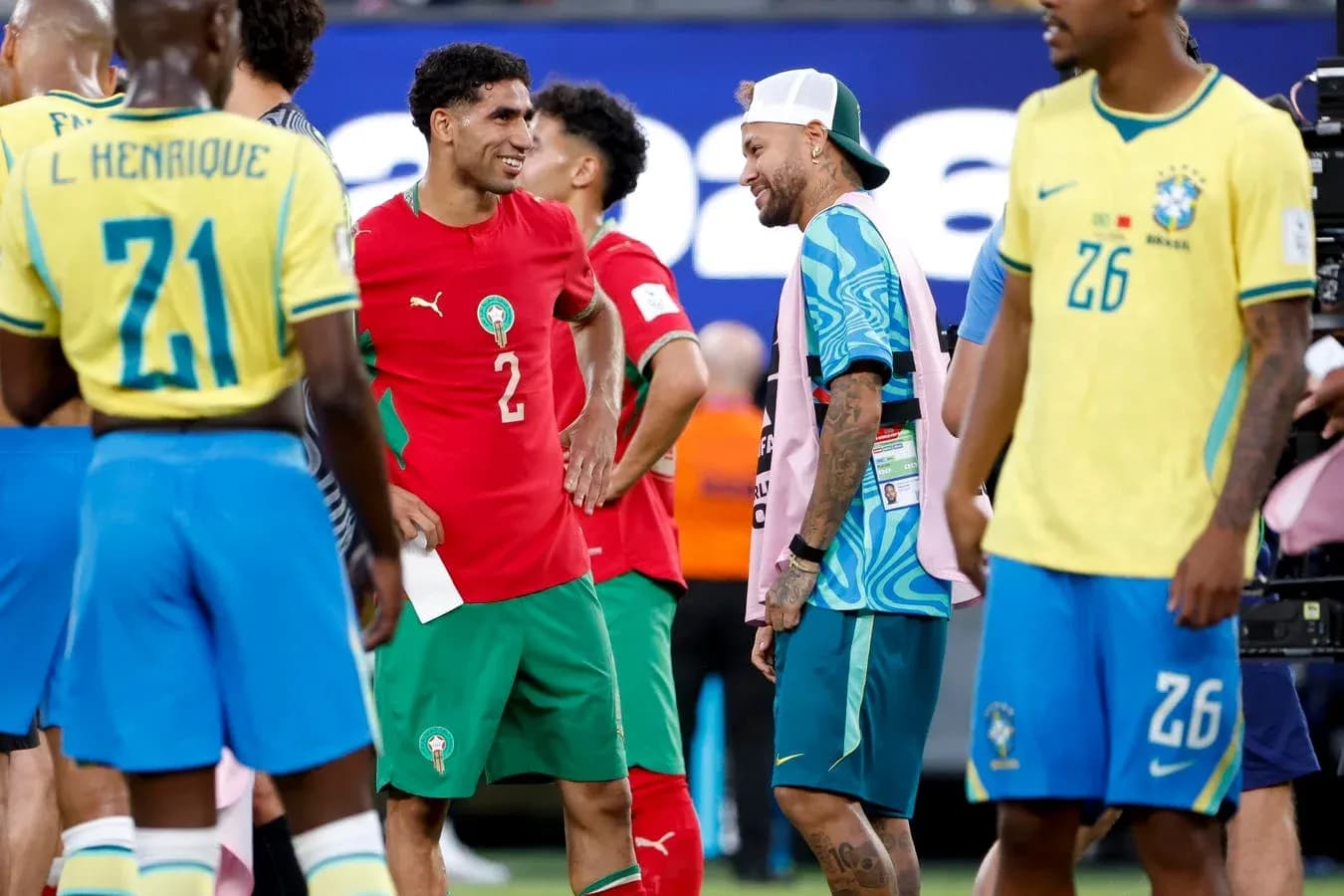
The 34-year-old forward injured his right calf on May 17 while playing for Santos and has been out for a month. He’s been edging his way back, training alone on the sideline on Tuesday and briefly rejoining his Brazil teammates on Wednesday, but he still hasn’t kicked a ball in this 2026 FIFA World Cup.
He won’t against Haiti either.
Brazil have already ruled him out of their next Group C match, a decision that underlines both the seriousness of the problem and the caution surrounding a player whose recent years have been defined as much by rehab rooms as by highlight reels.
Inside the camp, there is a growing sense that Neymar may be kept out for the entire group stage to protect him for the knockout rounds. That plan only works if Brazil get there. The five-time world champions opened with a 1-1 draw against Morocco and now face Haiti on Friday before Scotland on June 24. There is no margin for complacency.
Neymar’s absence is not just about this calf. He has not played for Brazil’s senior national team since October 17, 2023, when he tore the anterior cruciate ligament and meniscus in his left knee during a World Cup qualifier against Uruguay. This tournament was supposed to be a comeback. So far, it has been a waiting game.
The diagnosis explains the caution. Neymar reportedly has a second-degree calf strain – a moderate tear that falls short of a complete rupture but still demands respect. Recovery from such an injury typically takes around three to six weeks to return to full activity, roughly two to three times longer than a mild, first-degree strain.
For a player who relies on sharp bursts, sudden changes of direction, and explosive acceleration, rushing back is a risk Brazil cannot afford.
Pulisic’s Tournament In The Balance
On the other side of the Atlantic, the United States are dealing with their own star-shaped headache.
Christian Pulisic, 27, initially injured his left calf in training last week. He then aggravated the problem during the USMNT’s World Cup opener, a commanding 4-1 win over Paraguay. The damage was clear: he did not make it to halftime.
Now his status for the Group D clash with Australia on Friday is uncertain. The U.S. have momentum after that opening win, but their attacking blueprint is built around Pulisic’s movement, his ability to drift between lines, and his knack for decisive moments. Take him out, and the entire shape of the side changes.
The exact severity of Pulisic’s strain has not been confirmed. It is unclear whether he is dealing with a milder first-degree strain or something closer to Neymar’s second-degree issue. That gap in information matters: a minor strain can clear in one to three weeks, sometimes sooner if a player responds well to treatment; a moderate one stretches the timeline and increases the risk of setbacks.
For now, the U.S. staff are left juggling risk and reward. Push him and you might have him for Australia. Push too hard and you might lose him for the rest of the tournament.
The Brutal Reality Of A “Pulled Calf”
Behind the headlines and the star names lies a simple, unforgiving diagnosis: both players are almost certainly dealing with calf strains, the classic “pulled muscle” that haunts explosive athletes.
A calf strain occurs when one or more of the calf muscles – or the tendons that anchor them to bone – are overstretched or torn. It’s a staple injury in football, basketball, and any sport where players repeatedly launch into sprints from a standing or jogging start.
That action – planting the foot, driving off, and suddenly loading the calf – is where trouble begins. If the muscle is tight, fatigued, or simply not ready for the force it’s asked to absorb, fibers tear. Sometimes it’s a small rip; sometimes it’s a significant chunk of the muscle.
Medical teams typically grade these injuries:
- First-degree (mild): Less than five percent of the muscle mass is affected. Painful, but often manageable. Athletes can usually return within one to three weeks if treatment goes well.
- Second-degree (moderate): A larger portion of the muscle is damaged, but not completely torn. This is the category Neymar reportedly falls into, with a three to six week window to get back to full intensity.
- Third-degree (severe): A complete tear of the muscle or the muscle-tendon unit. That’s the nightmare scenario, one that often keeps players out for months and can sometimes require surgery.
Neither Neymar nor Pulisic is believed to be dealing with that worst-case third-degree tear. Surgery is typically reserved for that level of damage. Instead, both are on a more familiar, if still frustrating, path.
Treatment follows the well-worn RICE protocol: rest, ice, compression, elevation. Rest means exactly what elite competitors hate most – stopping. Ice is applied in short, regular bursts, around 20 minutes every couple of hours, to limit swelling and pain. Compression bandages help control fluid build-up, and elevation – keeping the leg above heart level – does the same.
From there, it becomes a race between healing tissue and the match calendar.
Two Stars, One Question
So Brazil wait. The U.S. wait. The World Cup waits.
Neymar is already out of Brazil’s next game and may not touch the pitch until the knockout rounds, if Brazil get there. Pulisic is fighting the clock just to make the team sheet against Australia.
Both players are central to their nations’ ambitions. Both are battling the same small but decisive group of muscles at the back of the lower leg. And both know that one mistimed sprint could turn a strain into something far worse.
The group stage will answer a tactical question for Brazil and the U.S. that no coach wants to face: can they keep their campaigns on track long enough for their stars’ calves to catch up?