.svg&w=384&q=75 "GoalGist logo")
Mykhailo Mudryk's Career Resumes After Doping Ban Overturned
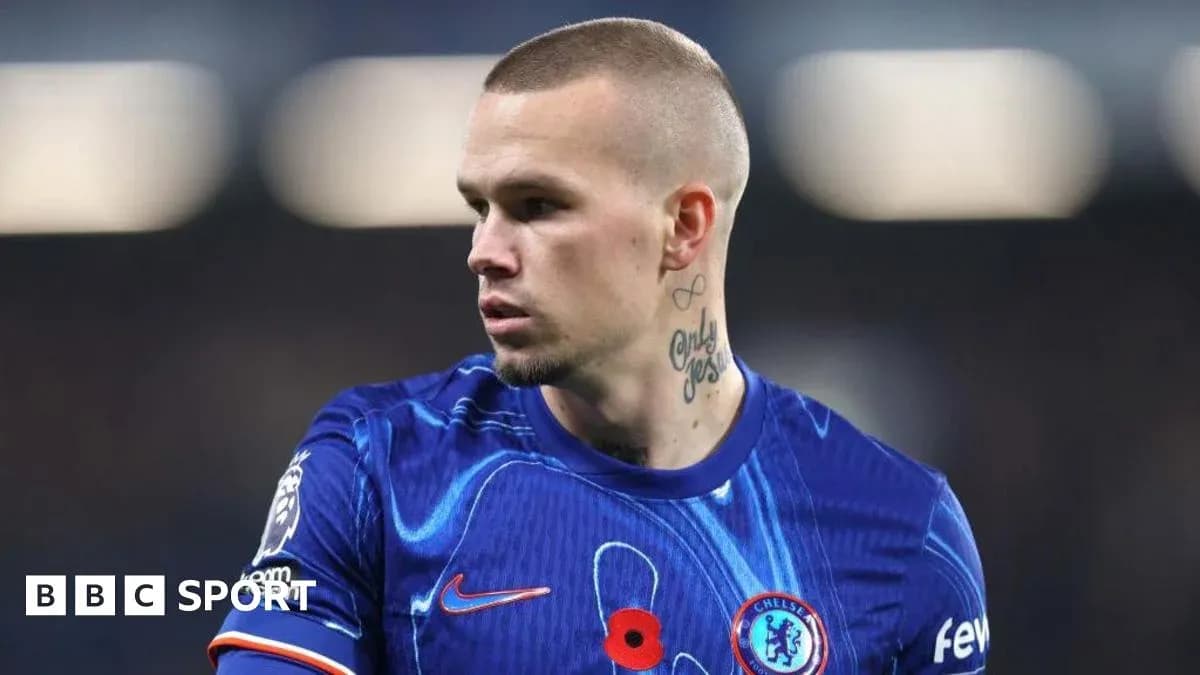
Mykhailo Mudryk’s career is back in motion. After 20 months in limbo, the Chelsea winger has been cleared to play immediately, his long-running doping case with the Football Association finally resolved and his four-year ban effectively wiped away.
The 25-year-old has not kicked a ball in a competitive match since November 2024. His world changed with one out-of-competition test on Ukraine duty in October that year, when he returned an adverse finding for meldonium, a prohibited cardiovascular drug known to boost stamina and respiratory capacity.
What followed was brutal. The FA hit him with the maximum sanction: a four-year suspension, handed down in January 2025 after he was charged the previous June. Mudryk appealed to the Court of Arbitration for Sport, and only then did the extent of his situation become public in April.
Now the picture is very different.
Ban overturned, career restarted
On Friday, the FA confirmed that its anti-doping disciplinary proceedings with Mudryk are over and that he can return to competition “with immediate effect”. The key detail: he has accepted that he broke anti-doping rules, but the suspension has been set at time already served.
The governing body also disclosed, for the first time, the substance and context of the case. The test on international duty showed “a low concentration” of meldonium. Since that sample was taken, the World Anti-Doping Agency has updated its technical document on the substance.
The FA stressed those changes are “not retroactive”. Yet they also acknowledged that, under today’s guidelines, the amount of meldonium detected in Mudryk’s sample “would not have been reported” and would not have triggered an adverse finding at all.
That line matters. It frames the resolution, and Chelsea wasted no time underlining it.
The club said it is “pleased that the matter has now reached a conclusion which allows him to return to football with immediate effect” and highlighted that, using current testing standards, “no anti-doping rule violation would have resulted” from Mudryk’s sample. For them, it is “an important part of the context” and a way for all parties to move on.
Mudryk, who described this as “the most difficult period” of his career, spoke of being “grateful” to play again and repeated his stance that he has “never knowingly or intentionally taken any banned substance”.
Isolation, private pitches and quiet graft
Behind the legal language sits a stark reality. For almost two years, one of Europe’s most scrutinised young wingers became a ghost in elite football.
Under the terms of his suspension, Mudryk could not set foot in Chelsea’s training ground or work with club staff. He watched from the outside as the team lurched through managerial changes and squad overhauls, permitted only the most limited contact. His only known public moment with the first team came at the Conference League final celebrations in May 2025.
To stay in shape, he had to build his own football world. He paid for private coaching, hired goalkeepers for one-on-one sessions and used a pitch at non-league Uxbridge FC in London. At one point he organised a training camp in Austria, with footage emerging of him scoring goals and working through attacking drills, trying to replicate the tempo of top-level football without the players, the pressure or the noise.
Those around him admit it was no substitute for daily work alongside elite teammates. The rhythm of a season, the intensity of training at Cobham, the constant technical and tactical demands of the Premier League – all of that was missing. Yet the same voices say he never stopped believing he could come back, and that the work he has done gives him a platform to do so.
Chelsea’s support, though necessarily at arm’s length, remained a constant theme. The club backed him through the legal process while respecting the strict boundaries of his suspension, offering emotional and institutional support without breaching the rules that kept him away.
Chelsea’s investment back in play
Mudryk’s return is not just a human story. It is a significant development for Chelsea’s long-term planning.
He remains under contract until 2031, having signed an unusually long deal when he arrived from Shakhtar Donetsk in 2022 for £61m, a transfer structured to spread the cost over many years through amortisation. A four-year ban would have left the club carrying a major financial commitment to a player unable to contribute on the pitch until around December 2028.
That scenario has now been avoided. Instead, Chelsea must decide what his second act in blue looks like.
The club has already confirmed he will join their pre-season tour as he steps back into a dressing room that has changed considerably since he last played. They say they are looking forward to helping him “return to full fitness, back into the squad and back onto the pitch”.
What that actually means remains open. A direct route into the first team is one option. A loan move, potentially involving sister club Strasbourg, is another. A permanent transfer cannot be ruled out in a market where wide forwards remain in demand and clubs are always alert to opportunity.
For now, Chelsea’s stance is to provide a pathway back into professional football and assess where he fits. For Mudryk, the equation is simpler: play, perform, prove himself again.
A career paused, not ended
Had the original four-year sanction stood, Mudryk’s story at the top level might have been effectively frozen in time, remembered chiefly for a high-profile transfer saga in 2023 and flashes of potential that never truly settled into consistency at Stamford Bridge.
Instead, the resolution of this case hands him something every athlete craves but rarely gets after such a fall: a genuine restart.
He re-enters a game that has moved on without him, at a club that has churned through players and coaches while he trained in isolation. The Premier League is less forgiving than ever, Chelsea’s standards no lower, and the scrutiny on him will be fierce.
But he is back. The ban is served, the appeal is closed, the rules have shifted in ways that cast his ordeal in a different light, and the next decision is no longer in the hands of lawyers or tribunals.
It belongs to Mudryk, a ball, and whatever comes next.