.svg&w=384&q=75 "GoalGist logo")
Morgan Rogers Makes History with Chelsea Transfer
Morgan Rogers didn’t just change clubs this summer. He changed the record books.
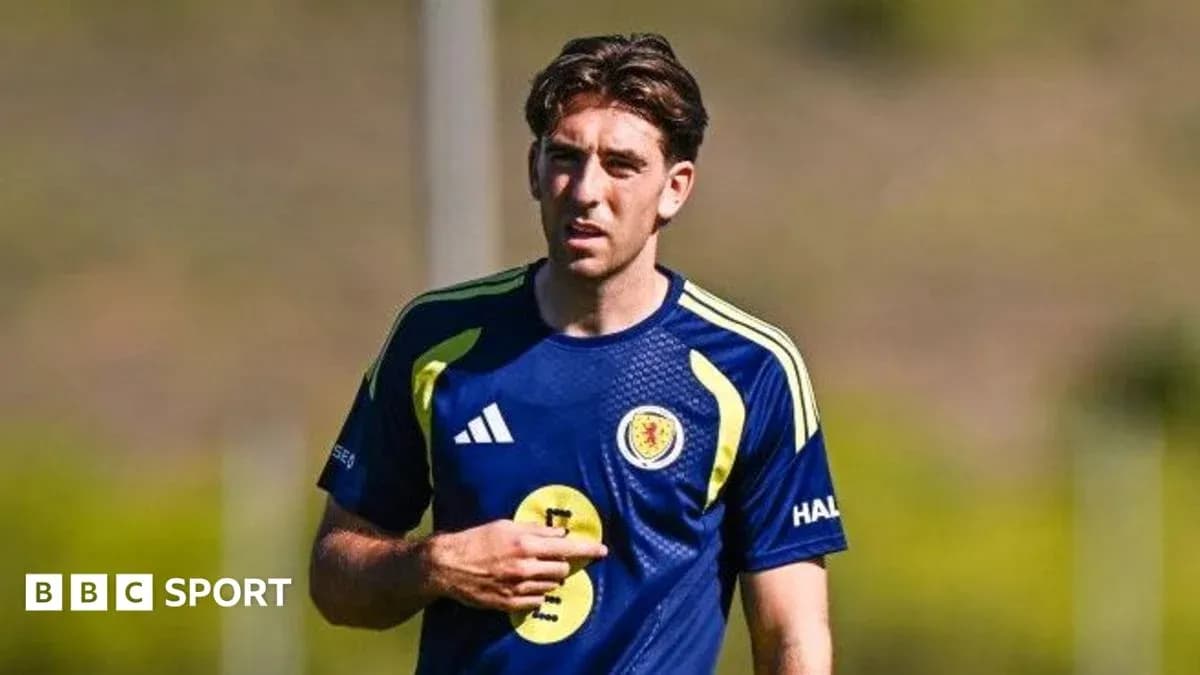
Chelsea’s £117 million move for the 23-year-old made him the most expensive British footballer in history, and his unveiling came with a line that crackled around north London: he was joining “the biggest club in London”. Arsenal fans heard the subtext. After months of reports that Mikel Arteta had identified Rogers as a key target, this felt like a snub dressed up as a statement.
On the face of it, though, the real gamble isn’t Arsenal’s. It’s his.
Rogers swaps certainty for chaos
Walking away from Aston Villa was understandable. Unai Emery has rebuilt Villa into a Champions League side, but Chelsea, even in their current state, still carry a different kind of weight. Leaving a team on the rise for the reigning champions would have been a straightforward step up. Leaving for this version of Chelsea is something else entirely.
BlueCo’s regime is ripping up the script again, this time handing the reins to Xabi Alonso and accepting a year without European football. Fewer games should, in theory, give Alonso more time on the training ground and reduce the physical toll on his squad after last season’s limp 10th-place finish. But he’s not a magician. The squad is already weaker.
Marc Cucurella has gone to Real Madrid. Enzo Fernandez could yet follow him out of the door. If the Argentine is sold, Chelsea lose a metronome in midfield and a huge chunk of their structure. That is not the kind of environment a record signing usually walks into.
Rogers also faces a tactical puzzle. He is at his best as a No.10, drifting into pockets, driving at backlines, breaking into the box. Cole Palmer, Chelsea’s standout performer last season, thrives in those same central spaces. Alonso will have to make a choice: build around Palmer and nudge Rogers wide, or compromise both to squeeze them into similar zones.
If Rogers ends up stationed on the flank, he becomes less of a conductor and more of a supporting act. At Villa, Emery unleashed him as a counter-attacking weapon, running into space, punishing disorganised defences. At Chelsea, Alonso wants control. That means more of the ball, more patient probing, more opponents camped in low blocks. Less grass to attack. Less chaos to exploit.
The risk is obvious. You pay a record fee for a player whose game is built on transition, then ask him to operate in tight spaces against set defences. That’s not evolution. That’s a rewrite.
The price tag only tightens the vice. For £117m, Chelsea aren’t buying potential. They’re buying expectation. Rogers will be judged from day one as the man who must change everything. He isn’t that. Not yet. Maybe not ever. He’s a gifted attacker, not a one-man reset button for a club still trying to work out what it wants to be.
Carrick’s United left short and exposed
If Chelsea have overspent, Manchester United have done the opposite.
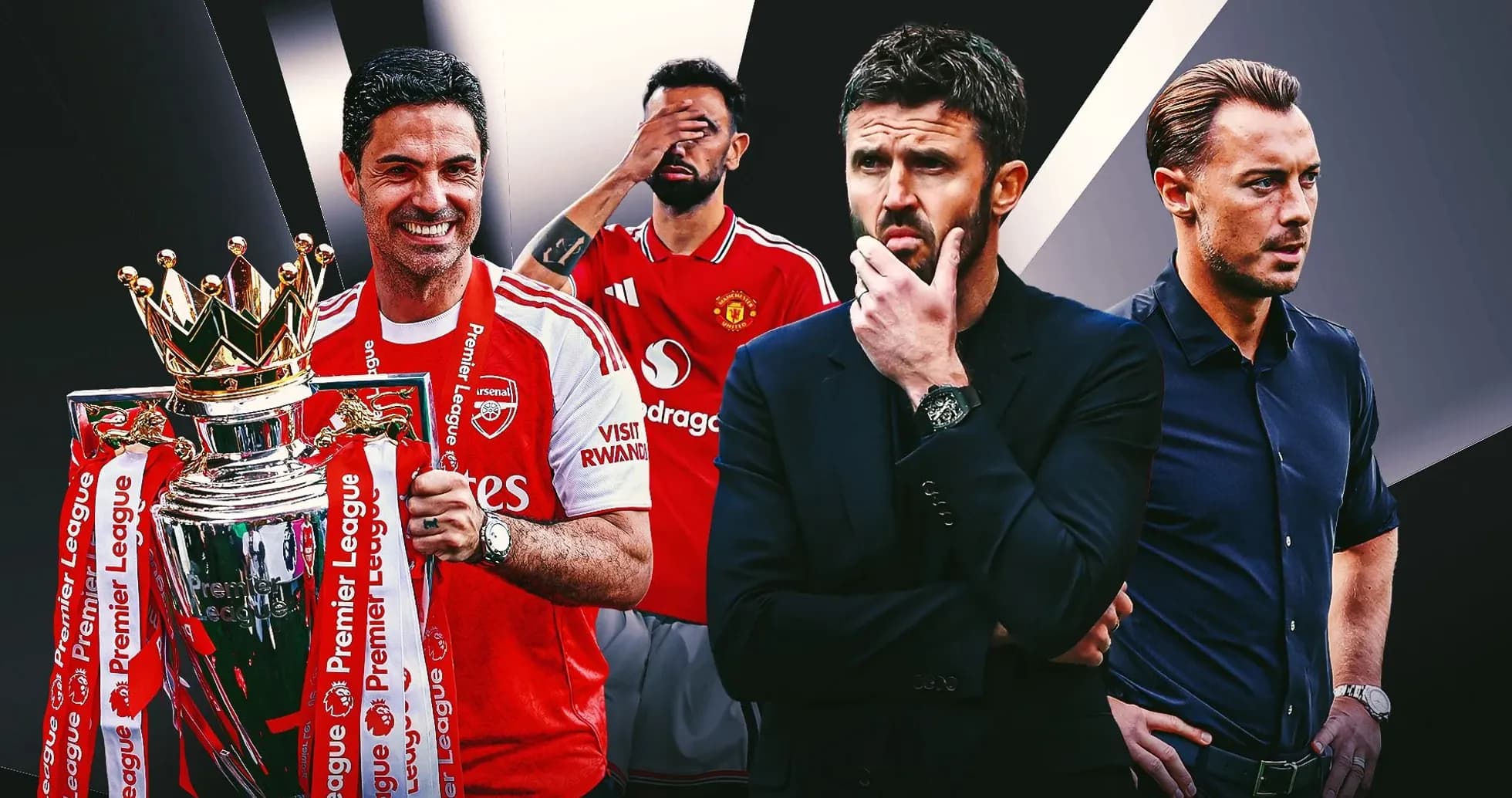
Michael Carrick earned the right to lead United into this season. A third-place finish in the Premier League and a return to the Champions League should have been the foundation for a proper push. Instead, the INEOS-led ownership has slammed on the brakes.
Just £75m has been spent, on Andrey Santos from Chelsea and Youri Tielemans from Aston Villa. Two smart signings, but nowhere near enough for a squad that still looks dangerously thin.
The hole left by Casemiro looms large. United need another midfielder who can shield the defence and set the tempo. Mason Mount remains stuck in a cycle of injuries. Manuel Ugarte is still working his way back from an ACL injury. Behind them, the options drop off a cliff.
The back line is hardly better stocked. Depth across defence is minimal, and up front the picture is even more precarious. With Joshua Zirkzee edging closer to Serie A, United could soon be left with Benjamin Sesko as their only natural No.9.
That is not a squad built for three competitions and three games a week.
Carrick’s early numbers were impressive: 12 wins from his first 17 matches. But the performances told a different story. United survived on moments of individual brilliance and defensive grit, not on a clear, progressive game model. They were conservative in possession, uncomfortable building from the back, and too often ceded control.
Stretch that over a full season with Champions League commitments and the cracks widen. A slow start is not just possible; it feels likely. Confidence at Old Trafford is brittle after a decade of false dawns. A poor opening run, and the noise around Carrick’s position will swell.
INEOS have already cycled through coaches at an alarming rate in their short reign. If United are drifting by December, Carrick risks becoming the fourth head coach they discard in two and a half chaotic years.
Arsenal step into the power seat
While others stumble, Arsenal finally look like a club ready to rule.
After three straight seasons of finishing as runners-up, Arteta’s side broke the cycle, winning the 2025-26 Premier League title by seven points over Manchester City. This wasn’t a sprint finish. It was control. No late collapse. No haunting run-in. Just a champion’s campaign.
That breakthrough changes everything. The psychological burden has gone. Arsenal are no longer the plucky challengers. They are the benchmark.
They should be, too, given the state of their rivals.
Liverpool’s defence is paper-thin, a far cry from the platform that underpinned their 2024-25 title. United, as already laid bare, don’t have the depth to handle a heavier schedule. Aston Villa have cooled their spending at precisely the moment they needed to kick on. Chelsea and Tottenham are both knee-deep in rebuilds.
So the field narrows. It’s Arsenal and City again. Only this time, City are shrinking.
Pep Guardiola has gone. So have Bernardo Silva and John Stones, two pillars of the most dominant era English football has seen. Rodri, the 2024 Ballon d’Or winner and the heartbeat of their midfield, has completed a £65m move to Barcelona. He drove City forward, protected the back line, and set the standard in the dressing room. Losing him is a body blow.
Elliot Anderson has arrived for £116m, a big fee for a player expected to grow into a leading role. But this is a City side in transition, not one primed to suffocate the league again.
Arsenal wasted no time underlining the shift. They dismantled City 3-0 in the Community Shield, a statement win that left new boss Enzo Maresca with more questions than answers. Arteta, by contrast, can lean on continuity and quality. His squad is the most settled and deepest in the division, and it has been sharpened further by the arrival of Bruno Guimaraes from Newcastle, an all-action Brazilian midfielder tailor-made for Arsenal’s high-tempo, high-control game.
Unless Arsenal implode or are ravaged by injuries on a scale rarely seen, the Premier League trophy looks set to stay at the Emirates in 2027.
Fulham roll the dice on Arbeloa
At Craven Cottage, the mood is very different.
Fulham’s five-year journey under Marco Silva ended in June when the Portuguese coach chose to return home and succeed Jose Mourinho at Benfica. That vacancy only existed because Mourinho himself had gone back to Real Madrid, where Alvaro Arbeloa’s turbulent six months in charge had been cut short.
And so the circle completed. Fulham turned to Arbeloa, the man Madrid had just cast aside, handing him a three-year contract and the keys to a club that had learned to punch above its weight.
On paper, Arbeloa brings pedigree. He played under Mourinho and Carlo Ancelotti, absorbing ideas from two of the most decorated managers of the modern era. As a coach at Real and with Castilla, he showed real faith in young players. For a club like Fulham, with emerging talent to nurture, that sounds attractive.
The reality is harsher. Silva kept Fulham competitive by being pragmatic. His 4-2-3-1 was built on structure and discipline, with a compact shape that protected a squad light on elite-level depth. Arbeloa wants something different: a higher defensive line, more front-foot football, more risk.
With Fulham’s resources, that is a dangerous game.
Questions linger over his tactical range and his man-management. Dressing room friction at Madrid eroded his authority, and while the glare at Craven Cottage is nowhere near as fierce, pressure has a way of exposing the same weaknesses. Results dip, players grumble, and a young coach can quickly look isolated.
The transfer business has done little to ease the tension. Arbeloa has brought Gonzalo Garcia and César Palacios with him from Madrid. Fulham have also made Jonah Kusi-Asare’s move from Bayern Munich permanent after a promising loan spell. Encouraging moves, but not transformative.
Crucially, Harry Wilson has not been replaced. Last season’s top scorer and creator is gone, and there is no obvious successor to his output. For a team already walking a tightrope, that is a brutal loss.
The fixture list shows no mercy. Chelsea, Liverpool and Manchester United all await in Fulham’s first five games. A slide towards the bottom three feels almost baked in, and if that happens, Arbeloa is the obvious fall guy. All signs point to him becoming the first managerial casualty of the 2026-27 Premier League season.
Newcastle’s dream turns sour
Not long ago, Newcastle United looked like a club ready to crash the established order.
Their 2025 League Cup triumph over Liverpool ended a 70-year wait for major domestic silverware. Champions League qualification under Eddie Howe followed. Tyneside buzzed. Howe was adored. The Saudi-backed owners looked like they had found their man and their moment.
Fifteen months later, the mood is unrecognisable.
The spine of that vibrant side has been ripped out. Alexander Isak, Anthony Gordon, Sandro Tonali and Bruno Guimaraes have all left St James’ Park. None have been adequately replaced. Of the five signings made in the current window, only one is over the age of 20. Established stars have repeatedly turned Newcastle down.
Howe has gone too, deciding after five years that he needed a new challenge. Instead of capitalising on their momentum by recruiting a proven elite European coach, Newcastle have turned to Matthias Jaissle, the German tactician who has spent the last three years in the Saudi Pro League with Al-Ahli.
Jaissle is a front-foot coach, as Howe was. Newcastle CEO David Hopkinson has called him a “rock star”. But right now, he looks more like the lead act at a festival where the stage is half-built and the sound system is broken.
Newcastle are still reeling from a 12th-place finish. Confidence is low. The squad, while not devoid of quality, feels unbalanced and inexperienced. Jaissle has barely had time to imprint his ideas on a group still processing the loss of its leaders.
Off the pitch, the owners have managed to alienate large sections of the fanbase. Decisions that once felt bold now look erratic. The atmosphere around the club has turned toxic, a constant hum of discontent that seeps into performances.
Relegation with these resources would be a calamity. But Newcastle have already tasted the drop twice this century. History says it can happen. The current chaos suggests it might.
The Premier League has a way of punishing clubs who think they’re too big, too rich or too talented to fall. This season will reveal who has built something solid – and who has simply been playing with matches.