.svg&w=384&q=75 "GoalGist logo")
Mikel Arteta's Contract Talks at Arsenal: A New Era Ahead
Arsenal’s transfer window has split opinion. Their next bit of business won’t.
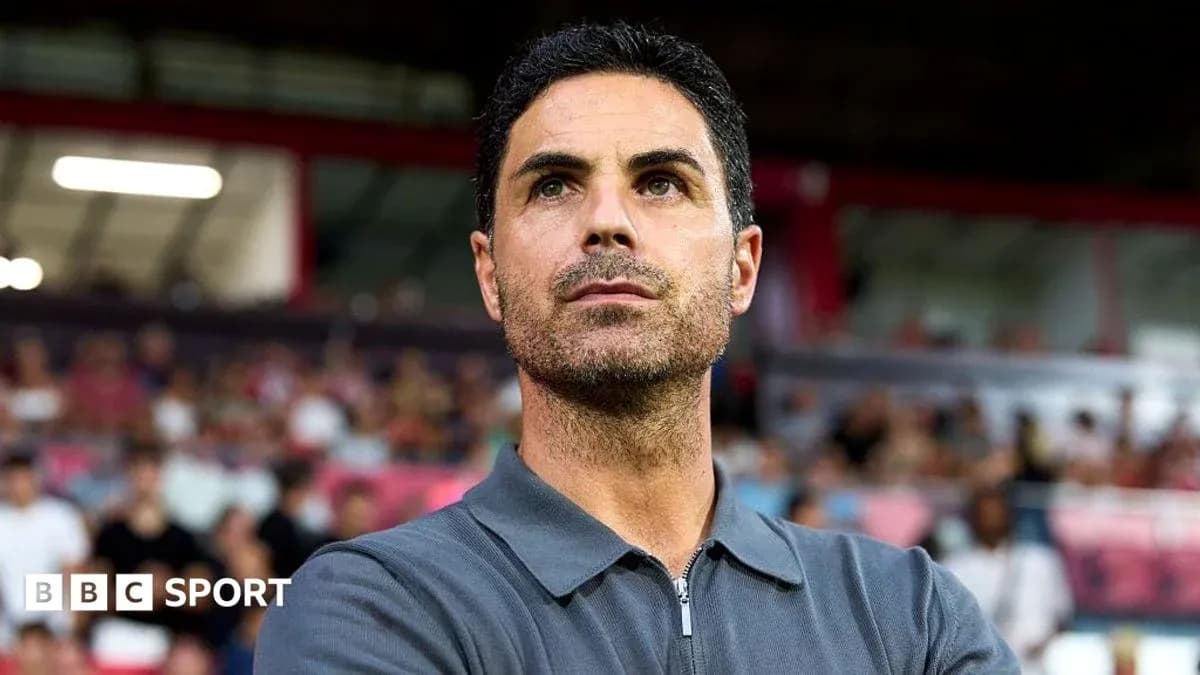
With the market shut until January, all eyes at the Emirates have turned from player contracts to the most important signature of all: Mikel Arteta’s. Talks over a new deal have dragged across the summer, but those involved now describe a process edging towards the finish line, with complete confidence that the Spaniard will stay.
Arteta himself cut through any remaining noise last month. “Everybody feels comfortable that the timing of the contract is not going to be an issue because my will certainly is to be here and I'm very happy here,” he said. “My feeling from the club is the same one. That's why everyone is doing things in a very organic way.”
Inside Arsenal, that calm is shared. Chief executive Richard Garlick has already framed the agreement as inevitable, calling it a simple “matter of time” before a new long-term deal is confirmed.
When it lands, it will be lucrative. Arsenal are ready to elevate Arteta into the bracket of the best paid managers in world football, improving significantly on his current £10m-a-year contract, which includes an extra £5m bonus for Champions League qualification. For a fanbase that has watched his current deal tick down to the final nine months, the announcement cannot arrive quickly enough.
Arteta’s Arsenal
The urgency is understandable. Since walking into the club in December 2019, Arteta has overseen a transformation that few foresaw at the time. He inherited a team drifting outside the Champions League places; last season, he delivered the club’s first Premier League title in 22 years.
Now Arsenal are not just champions. They are installed as heavy favourites to retain their crown and widely tipped to mount a genuine push for the club’s first Champions League triumph. The expectations have shifted. So has the power structure.
Like Arsene Wenger before him, Arteta has become the defining force at Arsenal. From a football perspective, nothing of consequence happens without his say-so. People often insist the manager should be the dominant figure at any club. In reality, that balance is rare. At Arsenal, it is very real.
His influence runs through the squad. Recruitment, style, standards – his fingerprints are everywhere. When Arsenal tried to lure Julian Alvarez and Vinicius Jr last month, it was Arteta who fronted the charm offensive, personally driving the push for elite-level additions.
That central role explains why the idea of losing him is regarded by the ownership as almost unthinkable. Strip Arteta out of this structure and you are not just changing the coach. You are ripping out the core of the project.
Ambition matched
The dynamic works both ways. If Arsenal lean heavily on Arteta, he has demanded proof that the club can match his ambition.
The summer business underlined that commitment. The arrivals of Bruno Guimaraes and Ezri Konsa were not cheap, nor were they signings for some distant future. Both will turn 30 next year, both represent a clear statement that Arsenal are operating in a win-now window, backing a squad in its prime rather than one still learning on the job.
The average age of the group – 26.2 – is among the highest in the Premier League. This is not a fledgling side feeling its way through big moments. It is a seasoned, battle-tested squad, shaped by Arteta and ready to build something lasting.
Even the failed pursuits of Vinicius Jr and Alvarez carried a message. They showed Arteta that the club’s American owners are prepared to go after the very top tier of talent and spend heavily to do it. Those are exactly the signals he wanted to see as contract talks moved forward.
Staying power
Arteta’s tenure is already remarkable in modern terms. Six years at the Emirates makes him, by some distance, the longest-serving manager across the Premier League and EFL. The new contract will push him towards a decade in north London – a throwback level of stability in an era of constant churn.
Of course, the wider game will not ignore his rise. One day, Spain will call. A return home, whether with Real Madrid, Barcelona or the national team, will tempt any ambitious Spanish coach. Arteta knows, though, that the kind of authority he enjoys at Arsenal is rarely granted at clubs so steeped in internal politics and competing power bases.
Right now, the pull is in the other direction. The project he has built in north London still grips him. The squad is aligned, the ownership is spending, the trophies have started to arrive.
And as Arsenal move to lock down the architect of it all on a deal befitting his status, there is little sign of Arteta easing off. The question is no longer whether he is the right man for Arsenal.
It is how far, and for how long, this partnership can push the club’s ceiling.