.svg&w=384&q=75 "GoalGist logo")
Michael Carrick's Impact on Manchester United's Future
Sir Alex Ferguson walked away 13 years ago with 13 league titles, a European crown and the belief that he had left Manchester United built to last. The empire was supposed to roll on without him.
It never did.
David Moyes, Louis van Gaal, Jose Mourinho, Erik ten Hag, Ruben Amorim – big reputations, big ideas, but no return to the relentless dominance that defined the Ferguson years. All the while, across town, Manchester City grew louder, richer, more ruthless. The “noisy neighbours” became the benchmark.
Now, quietly but unmistakably, there is a different sound around Old Trafford.
Carrick’s reset
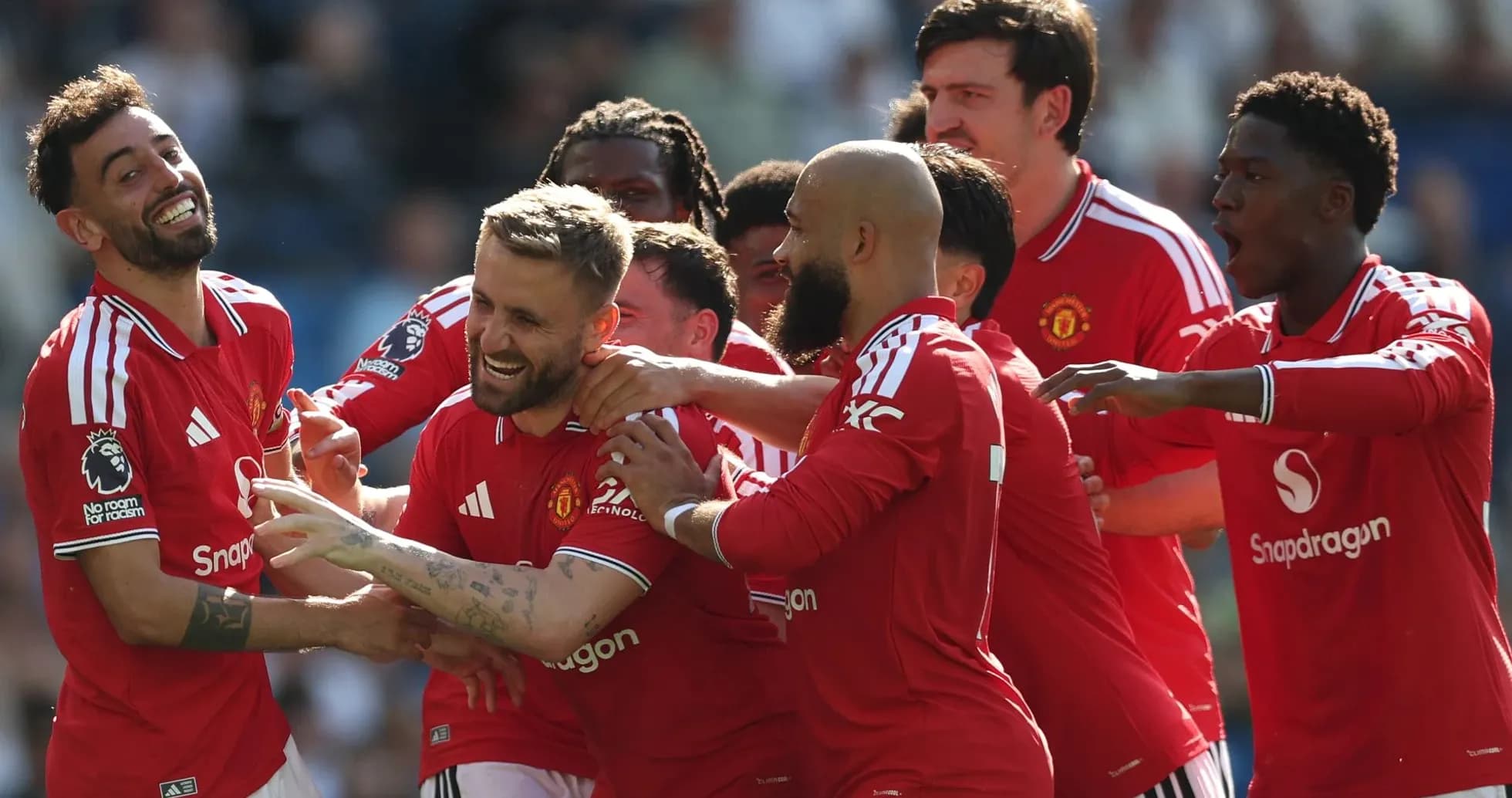
The 2025-26 season changed the mood. Michael Carrick, the elegant former midfielder who collected five Premier League titles under Ferguson, stepped in as interim boss and flipped the script almost immediately. Performances sharpened, belief crept back, and the club responded with a two-year contract.
Hope has returned to the red half of Manchester. Not the hollow kind that leans on history, but the practical kind: plans, structure, recruitment, a manager trusted to shape his own squad. Talk has already drifted towards the 2026-27 Premier League season and whether United can do more than just chase the top four. Some supporters are daring to say it out loud: a title push.
Gary Pallister is not ready to go that far.
The former United defender, a cornerstone of Ferguson’s early success, likes what he sees from Carrick but refuses to get carried away. Speaking to GOAL, in association with Spreadex Sports, he cut through the excitement with a dose of realism.
“I think a couple of signings can make a huge difference. Do I think they're in line for a title challenge? My honest opinion at the moment would be no, I don't think so. I think we've still got a bit of building to do.”
That’s the line. Encouragement, not exaggeration.
Resilience over romance
Pallister has watched Carrick’s early work closely. He has not been seduced by any notion that United suddenly look like Ferguson’s great sides, but he has seen something more important than pretty patterns of play.
“I think everybody's been very impressed with what Michael's done. I don't think the team was brilliant,” he admitted. “I think we had two or three games, the Man City game sticks out at home, where we played really well. A couple of games at the end of the season where we played really well and won comfortably.”
The key, in his eyes, lies elsewhere.
“What I think he's brought to the team is a resilience and that kind of fight for the badge and fight for the club and bring a little bit more of that, as Ole [Gunnar Solskjaer] did when he came in.”
That word – resilience – has hung over United for a decade. Too often they folded under pressure, too often they looked like a collection of individuals rather than a team anchored to the shirt. Carrick, a man steeped in the club’s culture but with his own ideas, has started to stitch some of that identity back together.
Now comes the hard part.
“But now we've got to give Michael a chance to bring his own players in. He's assessed everything. Give him the chance to bring some quality players in and see where that takes us. He's brought a feel-good factor back to United. The fans can feel that. I'm sure the players are feeling that. Now we're going to see whether he can take the next step.”
The summer window, then, is not just about filling gaps. It is the first true test of Carrick’s vision.
Rashford at the crossroads
No decision captures the complexity of this new era quite like Marcus Rashford’s future.
The academy graduate spent last season on loan at Barcelona. A permanent move has been discussed, but nothing is agreed. His name sits in both columns of the rumour mill: potential sale, possible return. Few players divide opinion at Old Trafford as sharply as Rashford does now.
Pallister has been clear before on where he stands.
“I've gone on record as saying I wouldn't bring him back,” he said. That was his stance before Carrick’s influence became a factor. Now, even he accepts the equation has changed.
“The difference now is that Michael Carrick's worked with him. Michael Carrick knows his personality. Michael Carrick knows whether he can get something out of him if he does come back.”
There is another layer to it. Rashford is currently on World Cup duty with England, his profile as high as ever, his future still unresolved.
“Would Marcus want to come back? Has he been quoted in the past saying he's happy to stay away?” Pallister asked. “He's a quality player. He's a United lad. If you could bring back the Marcus of two or three years ago, then it would be a no-brainer. The way it ended, I'm not so sure whether there is a way back for him.”
That is the dilemma. The talent is not in question. The history, the connection to the club, the memories of a fearless young forward tearing through defences – all of that still lingers. So do the images of a player whose form and body language dipped so dramatically that a loan to Barcelona felt like an escape as much as an opportunity.
Managers, though, see things differently. They trust their own instincts, their own relationships.
“Managers with different players can have their own feel on it,” Pallister said. “If Michael feels as though he can turn Marcus round in terms of his personality and his body language on the pitch and get him playing as he was playing for Manchester United in his early years, then he surely would be a bonus for Manchester United. I think there would have to be a lot of talking between the two before that happened.”
That conversation, whenever it happens, will say a lot about Carrick. About how he handles big personalities. About how ruthless he is prepared to be. About whether sentiment still has a place at a club that has been weighed down by its own past.
United stand at a familiar crossroads: optimism building, a manager trusted, a fanbase ready to believe again. The difference this time is that the noise is not coming from a farewell speech on the Old Trafford pitch, but from a quieter figure in the dugout, trying to turn resilience into trophies.
If Carrick gets his summer right – and if he makes the right call on Rashford – the question will not be whether United can challenge again, but how quickly they dare to aim for the very top.