.svg&w=384&q=75 "GoalGist logo")
Martin O’Neill Returns as Celtic Manager for New Era
Celtic are poised to confirm Martin O’Neill as their permanent manager once again, after the 74-year-old agreed a one-year deal to remain in Glasgow, with an option for a second season.
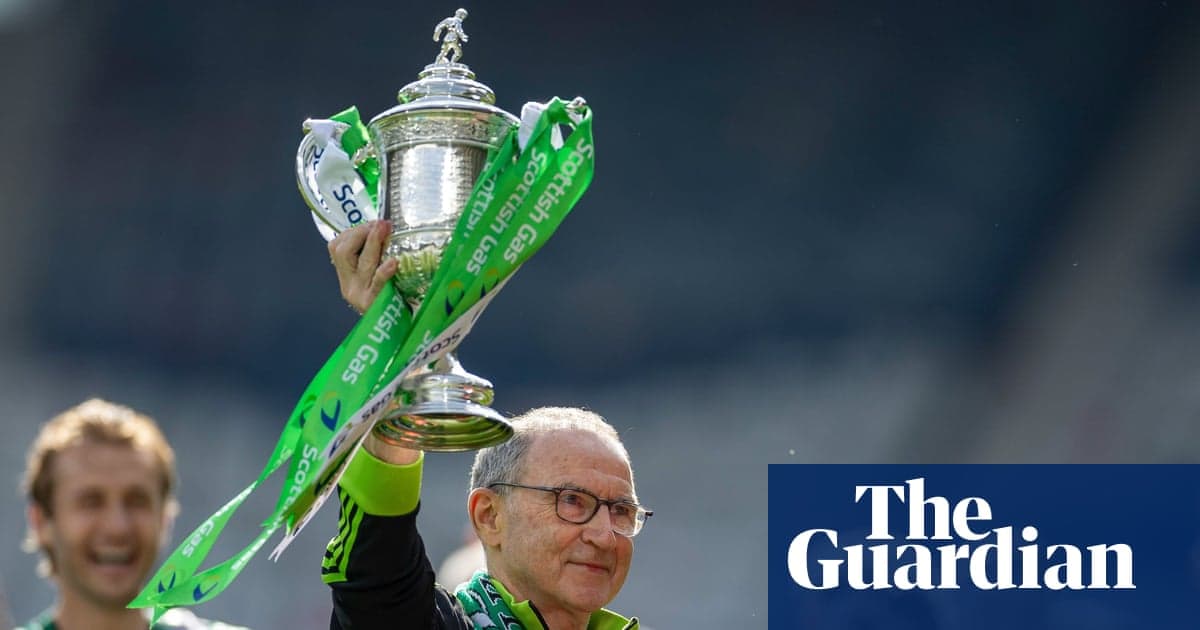
The decision comes at the end of a turbulent search that briefly threatened to drag the club into open conflict with sections of its own support. O’Neill, who stepped in twice this season as interim manager, steadied Celtic and then drove them to a domestic double in his second spell in the dugout. That finish to the campaign has now been rewarded with the job on a longer footing.
The board had seriously explored a different path. Robbie Keane, long admired at Celtic Park for his playing pedigree and profile, emerged as a leading candidate and held talks earlier this week with Dermot Desmond, the club’s principal shareholder. For a time, Keane looked a live option.
Then the backlash hit.
A vocal section of the Celtic support reacted furiously to the prospect of Keane’s appointment, focusing not on his past as a striker but on his managerial choices. His spell in charge of Maccabi Tel Aviv, and his subsequent move to Ferencvaros in Hungary, drew heavy criticism from fans who objected to his work in Israel in particular. Keane resigned from Ferencvaros at the end of May, but the damage to his candidacy in Glasgow was already done.
While that storm gathered, O’Neill kept his counsel. After guiding Celtic to Scottish Cup victory over Dunfermline, he asked for time to consider his future. He had options. He had leverage. Yet there was always a sense around the club that the Northern Irishman, having rediscovered the thrill of the touchline in front of a full Celtic Park, wanted one more proper crack at it.
Now he has it.
The agreement extends one of the most enduring relationships in modern Celtic history. It is 26 years since Desmond first persuaded O’Neill to swap Leicester for Glasgow, a move that transformed the club’s trajectory. That first tenure delivered three Scottish titles, three Scottish Cups and two Scottish League Cups, and took Celtic all the way to the 2003 Uefa Cup final, where they fell to José Mourinho’s Porto on a fraught night in Seville.
Those memories still carry weight in the east end of Glasgow. They buy trust. They buy patience. At a time when the board flirted with a divisive appointment, the return to a proven figurehead feels as much like a political decision as a football one.
Now comes the hard part. O’Neill has the job. He has the backing. He has the history. The question is whether, at 74, he can shape a new era to match the one that made his name in green and white.

