.svg&w=384&q=75 "GoalGist logo")
Martin O’Neill Returns as Celtic Manager on One-Year Deal
Twenty-six years after he first walked into Celtic Park and changed the club’s direction, Martin O’Neill is about to do it all over again.
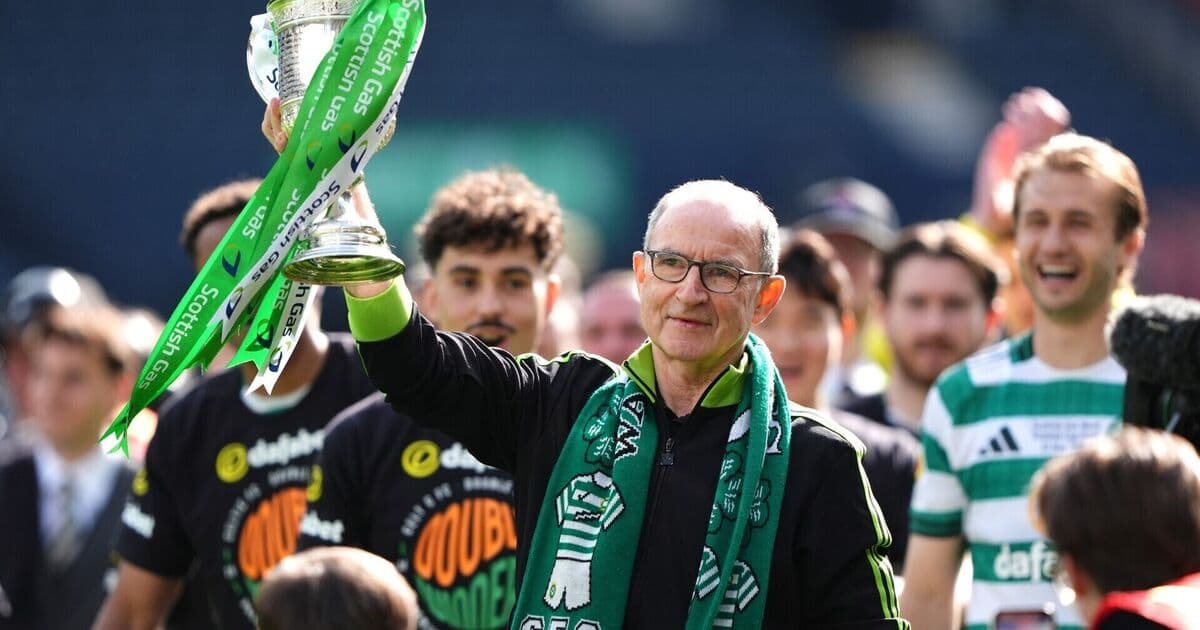
Celtic are expected to confirm the 74-year-old as their permanent manager after he agreed a one-year contract to stay in Glasgow, with an option for a second season. The deal rewards a remarkable rescue job: two interim spells in a single campaign, capped by a domestic double and a successful defence of the Premiership title.
O’Neill had asked for breathing space after the Scottish Cup final win over Dunfermline, time to weigh up whether he wanted the strain and spotlight on a full-time basis again. The answer, in the end, was predictable. A man who has never hidden his affection for the club has chosen to step back into the line of fire.
Keane talk, supporter fury
For a spell this week, it looked as if Celtic might take a very different path. Robbie Keane emerged as a serious contender, holding talks with principal shareholder Dermot Desmond. His candidacy was not a token gesture; Keane’s name had been prominent in the boardroom discussions.
Then the backlash hit.
A section of the Celtic support reacted furiously to the idea of Keane taking charge, centring their anger on his managerial spell in Israel with Maccabi Tel Aviv. His subsequent move to Ferencvaros in Hungary, and resignation at the end of May, did nothing to soften opinions. The noise around Keane’s past made his appointment politically toxic, and the mood around the club shifted quickly.
The board did not need to look far for a safer, more popular solution. O’Neill was already in the building, already winning.
The old master, again
O’Neill’s return carries an unmistakable sense of history. Desmond first lured him from Leicester City in 2000, a move that transformed Celtic’s modern era. Under the former midfielder, the club collected three Scottish titles, three Scottish Cups and two Scottish League Cups, and strode onto the European stage by reaching the 2003 Uefa Cup final, losing only to José Mourinho’s Porto in Seville.
That legacy still frames how supporters see him. He is not simply a stopgap; he is the benchmark.
This season, Celtic turned to him out of necessity. Brendan Rodgers’ resignation last October left a hole that needed a steady, trusted hand. O’Neill answered the call on a short-term basis, stabilised the dressing room and the results, then stepped aside when Wilfried Nancy was appointed.
Nancy’s reign imploded almost as soon as it began. Eight games, a trail of poor performances, and Celtic were back in crisis mode. O’Neill returned once more, and the effect was immediate. The team regrouped, rediscovered their edge and hauled themselves over the line to retain the Premiership crown, adding the Scottish Cup for good measure.
The pressure told on the pitch. O’Neill’s experience told off it.
One year, big stakes
The new contract reflects both ambition and caution. A one-year deal, with an option for a second, keeps Celtic flexible while handing O’Neill the authority to shape the short-term future. It also recognises his age, the physical demands of the job and the reality that this is not a long-term rebuild in the conventional sense.
Yet the stakes are high. Domestic dominance must be protected. European standards must be raised. And the club, at some point, still needs a succession plan that does not implode within eight games.
For now, Celtic turn again to the man who has already delivered eras, not just seasons. O’Neill walks back into a club he knows intimately, backed by a support that has seen what life looks like without him.
The last time Desmond coaxed him north, Celtic were transformed. The question now is simpler, and sharper: at 74, how much more can Martin O’Neill squeeze out of one of the great modern Celtic stories?

