.svg&w=384&q=75 "GoalGist logo")
Marcus Rashford's World Cup Disappointment and Future Uncertainty
Marcus Rashford went to the 2026 World Cup needing a shop window. He came back with the shutters half‑down.
England’s campaign in North America was supposed to be his stage. Instead, it belonged to Anthony Gordon. The two men spent the build-up jostling for Thomas Tuchel’s left-wing berth, but when the tournament began, Rashford never truly seized the moment. He did finish smartly to seal the opening win over Croatia, yet as Gordon spluttered into life, Rashford stalled.
After flat, functional wins against Panama and DR Congo, Tuchel lost patience. The United forward was dropped, Gordon promoted, and from there the Barcelona man became a central attacking figure in England’s run. Rashford’s World Cup ended with a meagre return: one goal, one assist, the latter arriving against a French defence that barely bothered to turn up in the third-place play-off.
All of this played out against a backdrop that will worry Rashford far more than any tournament stat line: his market was shrinking while the games were still being played.
Barca door shuts, clauses lapse
Barcelona had already made their call long before the World Cup kicked off. Gordon arrived from Newcastle for £69m, and with that, the Catalans effectively closed the door on Rashford. The buy option in his loan deal from Manchester United, worth around £26m, was left to expire on June 15, four days into the tournament. United, for their part, have refused to renegotiate that figure or entertain another loan to Camp Nou.
One month later, and just a day after England’s semi-final defeat to Argentina, another safety net disappeared. The £40m exit clause in Rashford’s contract lapsed, meaning any future deal will now hinge on fresh negotiations rather than a fixed release figure. That suits United’s valuation, which broadly aligns with that old Barca option, but it strips away one of the few mechanisms that might have tempted a club to move quickly.
Any hope that Barcelona might circle back late in the window has been hit by news elsewhere. Karim Adeyemi has completed a move to Borussia Dortmund, further crowding the elite winger market. Rashford, meanwhile, is understood to have turned down interest from Fenerbahce and Galatasaray as he waits for a Champions League-level project.
He is waiting. So are United. Neither side is particularly comfortable with what they see.
United’s own plan falls apart
It is not just Rashford who has watched options dry up. United had explored a move for West Ham winger Crysencio Summerville, only to see the Netherlands international veer towards Al-Hilal and a £60m Saudi payday.
That failed pursuit exposes a wider truth. United’s summer has been restrained, bordering on tight-fisted, with limited income from sales and no real depth on the left. They are in no position to casually discard a wide forward of Rashford’s pedigree, however bruised his reputation might be.
Selling him within the Premier League looks almost impossible. According to The i Paper, United have no intention of letting him join another English top-flight club, even though Tottenham were ready to trigger his now-expired £40m clause. The fear is stark and unapologetic: they do not want to be “humiliated” by an academy graduate rediscovering his scoring touch for a domestic rival. Internally, that is viewed as a PR disaster in waiting.
Arsenal and Xabi Alonso’s Chelsea have monitored the situation, but serious moves feel remote. Chelsea have already dropped £117m on Morgan Rogers from Aston Villa, while Arsenal’s interest has never hardened into anything more than background noise.
And then there is the elephant in the room: Rashford’s salary.
Wages that block every exit
At £325,000 a week, Rashford sits among the highest earners at Old Trafford. That figure is choking the market. No realistic suitor is willing to come close to matching it, and although he has reportedly rejected even more lucrative offers from less attractive clubs, the net effect is the same: he is stuck.
United want that money off the books. Sir Jim Ratcliffe and INEOS have embarked on a cost-cutting drive, and Rashford’s contract has become a symbol of the old regime’s excess. Former head coach Ruben Amorim pushed hard for his exit, and the January 2025 decision to send him out on loan had full boardroom backing.
The numbers are stark. The remaining two years of his deal will cost United around £39m in basic wages alone, according to The Athletic, before bonuses are even factored in. For a player who is no longer a guaranteed starter and will soon turn 29, Ratcliffe’s stance is unlikely to have softened.
Yet something has shifted on the football side.
Carrick opens the door
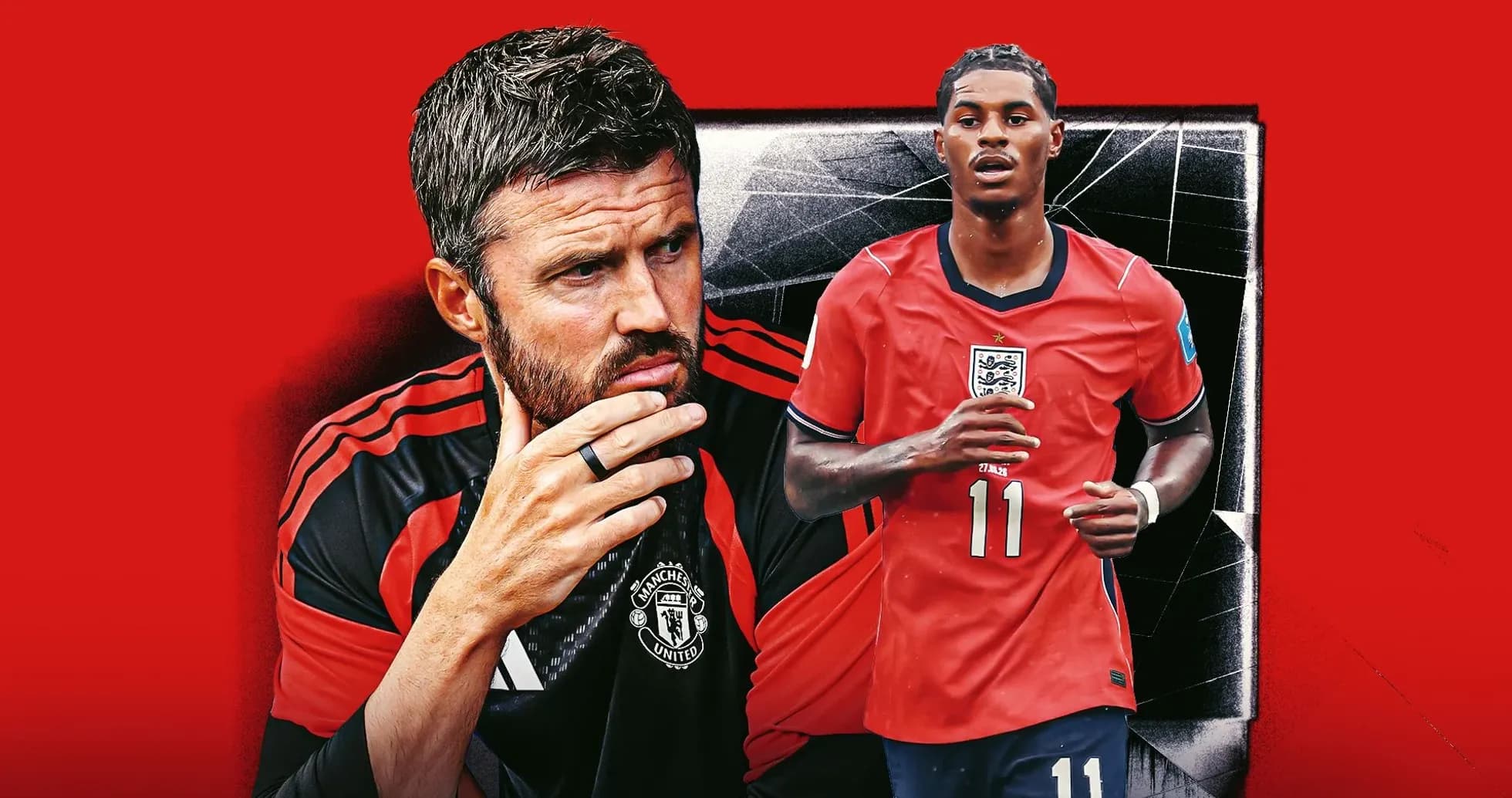
The mood music around Carrington is different under Michael Carrick. Those close to the situation say the new head coach is open to reintegrating Rashford. After a post-World Cup holiday, he is expected to link up with the squad in Dublin for the latter part of pre-season, with Champions League commitments looming large over United’s planning.
Rashford is said to hold no grudge towards the club, despite being banished to Amorim’s so-called “bomb squad” before his loan. Carrick, in turn, is understood to be genuinely intrigued by the challenge of reviving the forward’s United career.
“Rashford is really looking forward to the opportunity to work with Carrick,” reported transfer specialist Fabrizio Romano on his YouTube channel. “Carrick is also looking forward to working with Rashford. I am told that Carrick is genuinely excited about the opportunity to help revive Rashford's career at Man United.
“Rashford and the club are prepared to give each other another chance. After that, they will decide whether to continue together or whether the player will leave during the summer transfer window.”
Carrick himself had kept the door ajar back in April. “There's decisions to be made in time on certain things, and obviously Marcus is in that situation,” he said. “But at this point in time, nothing's been decided. From my perspective, whoever's here, I want to work with, make the best out of and help them improve.”
The i Paper suggests the most likely outcome is exactly that: Rashford stays, at least in the short term, given the lack of credible offers and the failure to land Summerville. A wage cut would smooth the path, but those close to the situation consider that unlikely.
So United hover between football logic and financial reality. Carrick wants a weapon on the left. Ratcliffe wants a bloated salary gone.
Fans, scars and the danger of going back
Even if Rashford does pull the United shirt back on, nothing is straightforward. His relationship with sections of the fanbase had deteriorated badly before his loan exit in January 2025. He became a lightning rod for anger over perceived attitude issues and work rate, his body language scrutinised to the point of obsession.
Some of that was scapegoating. United were a mess under Amorim, and high-profile homegrown stars often carry the heaviest blame when things unravel. But the perception stuck. To shift it, Rashford will need something more than a warm pre-season interview and a few bright training clips. He will need visible fight and early, decisive contributions.
If he starts slowly, the atmosphere could sour quickly. So much depends on how United begin the season as a whole. A winning team buys patience; a stumbling one turns old grievances toxic.
There is an old warning in football: never go back. Rashford is testing the limits of that saying at the very club where he grew up.
The loan card, one more time?
United, in many ways, are trapped by their own decisions. They want to sell, but the combination of high wages and a public desperation to move him on has driven down interest in their £26m valuation. Rashford, understandably, has turned down options that do not fit his ambitions.
That leaves a familiar compromise on the table: another loan.
If United can replicate the Barcelona model, a new club would cover most or all of his salary, potentially negotiating a reduction with the player to make the deal sustainable. The Catalans managed exactly that. A similar structure, perhaps with a 40/60 wage split in favour of the buying club, feels more realistic now than a permanent sale.
Any suitor knows time is on their side. As the window drags on and United edge closer to signing another winger, the leverage shifts. The later the move, the more favourable the terms they can demand.
For now, Rashford waits, training plans and transfer briefings swirling around him. United wait too, caught between the fear of being burned by a revival elsewhere and the fear of carrying a huge contract for a player they no longer fully trust.
Where he ends up this season is still an open question. The only certainty is that this saga is nowhere near its final chapter.

