.svg&w=384&q=75 "GoalGist logo")
Manchester United’s Summer Transfer Challenges
Manchester United’s summer was never supposed to look like this.
The blueprint was clear enough back in May: one marquee midfielder at the heart of a carefully controlled rebuild, maybe two if the numbers stretched, with the club finally behaving like a team that plans rather than panics. Instead, the market has bitten back. Elliot Anderson to Manchester City for £116 million. Mateus Fernandes to Tottenham for £85m. A £35m deal for Éderson agreed, then abandoned after medical tests raised a red flag.
United haven’t torn up the plan. But they’ve had to scribble over it. A lot.
Flexibility by necessity
Omar Berrada warned this might happen. Before the window opened, the new CEO talked about the need to be “flexible.” It sounded like a corporate platitude at the time. It now reads like a mission statement.
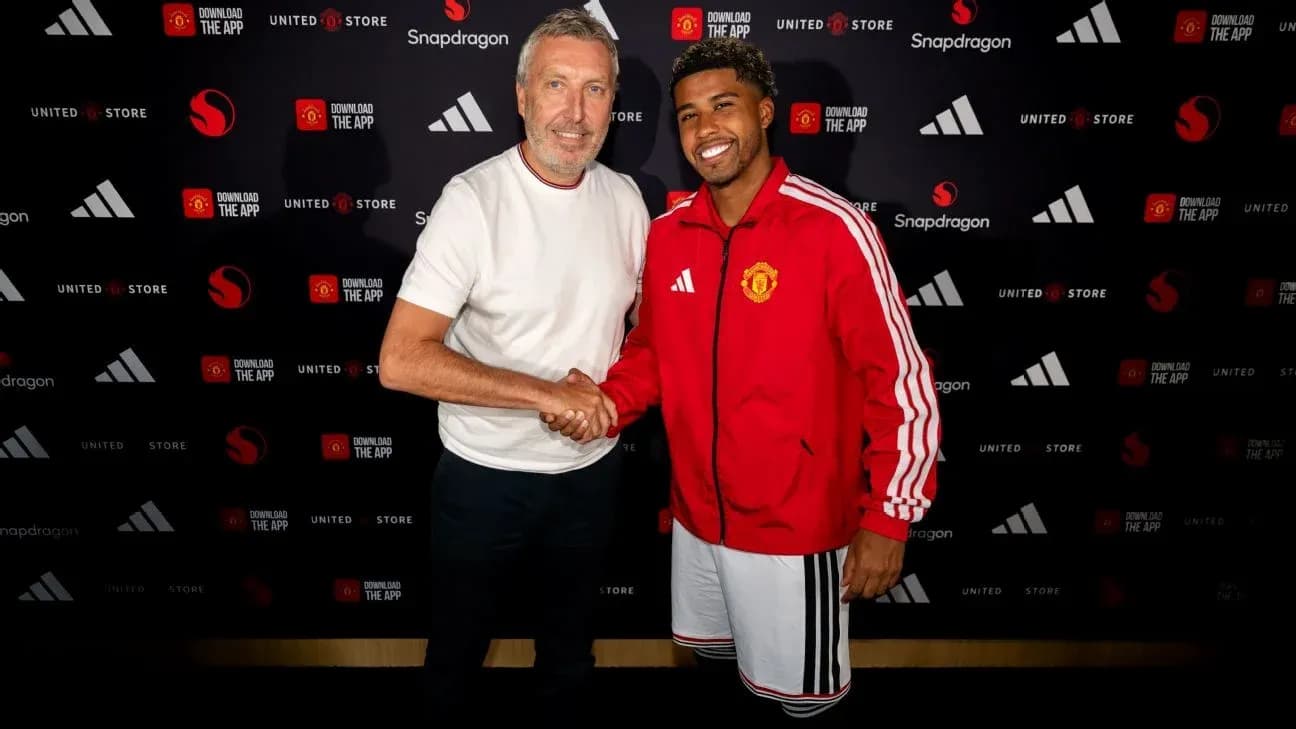
With Anderson and Fernandes gone, the midfield rebuild has been rerouted around Andrey Santos, signed from Chelsea for £48m, and Youri Tielemans, brought in from Aston Villa for £35m. Not the original headline acts, but central to the reshaped project.
Inside the club, those close to Berrada and director of football Jason Wilcox insist the mood has stayed calm. That in itself marks a change. This is a club with a long history of blinking first when the market turns hostile, of paying the premium, of living with regret later. This time, those in charge have been as focused on the deals they don’t do as the ones they push through.
The Anderson lesson – and the City problem
United knew early that Anderson, the England midfielder they had earmarked as the top target, was drifting out of reach. Manchester City’s interest hardened, Nottingham Forest dug in for close to £120m, and a familiar problem reappeared.
They had seen this movie in January with Antoine Semenyo. United thought they were in a strong position for the Bournemouth winger after positive talks with his camp. Then Semenyo sat down with City. The dynamic changed. Wage demands rose. United walked away. Semenyo went to the Etihad for £64m.
United had expected Liverpool to be the main rival for Semenyo. Instead, City’s involvement turned a competitive deal into something else entirely. The club were determined not to repeat that experience with Anderson. Rather than chase a number that made little sense, they cooled their interest early and moved on.
Fernandes, commitment, and a different kind of red flag
If Anderson was priced out, Fernandes was something more subtle. United had budgeted between £80m and £90m for a midfielder and could have matched Tottenham’s £85m package to West Ham. The money wasn’t the problem.
The hesitation came from elsewhere. During talks, United never felt a clear pull from Fernandes towards Old Trafford. No strong indication he saw United as his first choice. When the moment came to decide whether to go all-in and meet West Ham’s demands, that lack of conviction mattered.
Berrada and Wilcox had recent reference points. Last summer, Bryan Mbeumo and Matheus Cunha both pushed hard to join United, ignoring interest from other clubs, including Champions League sides. Inside Carrington, staff still point to that single-mindedness as a key reason both players adapted so quickly.
There are also those at the club who believe Jadon Sancho’s struggle to settle in 2021 owed something to his own uncertainty about leaving Borussia Dortmund. United were not keen to repeat that dynamic with another big-money signing.
Tielemans, by contrast, ticked that box immediately.
Tielemans and the Éderson U-turn
Tielemans brings a hefty bank of Premier League experience and, crucially, made it clear early he wanted to play for United. His £35m release clause only strengthened his case. At Old Trafford, they talk about the “United tax” — the inflation clubs slap on when United come calling. Release clauses cut through that. Berrada likes them for exactly that reason.
The Belgian’s arrival followed fast on the heels of a more uncomfortable call. United had an agreement in place with Atalanta for Éderson, worth around £35m, before the World Cup. Medical checks then highlighted an issue significant enough that United felt they could not proceed.
The deal has not been buried completely. Club sources have not ruled out revisiting it later in the summer. For now, though, it is off the table, another reminder that even when the negotiations are done, the transfer isn’t.
Santos, at £48m plus £2m in add-ons, became the more palatable option financially and structurally. United also worried that Fernandes’ fee would ripple through the market, dragging prices up across the board.
Spurs’ spending shock and shifting numbers
United’s recruitment team pride themselves on scenario-planning: trying to anticipate how other clubs will move. Tottenham blew a hole in those projections. Few at Old Trafford expected Spurs to spend a combined £185m on Fernandes and Newcastle’s Sandro Tonali, another midfielder United had monitored.
At the same time, United’s own financial model for the window has been constantly rewritten. The initial hope was simple enough: raise around £90m from outgoings to cover the marquee midfield arrival. Rasmus Højlund’s £40m move to Napoli was part of that equation. So were potential exits for Marcus Rashford, Manuel Ugarte, Joshua Zirkzee and Altay Bayindir.
Reality intervened. Barcelona opted against turning Rashford’s loan into a £25m permanent transfer. Ugarte then suffered a serious knee injury playing for Uruguay at the World Cup, ruling out a move and sidelining him for most of the coming year. Revenue that had been pencilled in disappeared.
That is why release clauses, like Tielemans’ £35m, have become so attractive. Predictable fees. No auction. No “United tax.”
A third midfielder – and a widening net
Despite the arrivals of Santos and Tielemans, United have not closed the door on a third midfield signing, especially after Ugarte’s injury. The shortlist is long and varied.
There is interest in Bournemouth pair Alex Scott and Tyler Adams, and in Fulham’s Sander Berge. Crystal Palace’s Adam Wharton has been tracked extensively. Wolves’ João Gomes, Roma’s Manu Koné and Lille’s Ayyoub Bouaddi — the 18-year-old who lit up the World Cup for Morocco — are all under consideration.
Real Madrid’s Eduardo Camavinga has been offered to several Premier League clubs, United among those alerted. Brighton’s Carlos Baleba is another name that has come up, though United learned last summer that Brighton would want a fee similar to the £100m Chelsea paid for Moisés Caicedo. That kind of number would cut against the more disciplined approach Berrada and Wilcox are trying to enforce.
Beyond midfield: gaps across the squad
The rebuild is not confined to the middle of the pitch. United are in the market for a left-sided player — either a full-back or a winger — and a second striker to ease the load up front.
In goal, Wales international Karl Darlow, 25, is expected to arrive from Leeds United as experienced cover for current No.1 Senne Lammens. It’s a functional move, but a necessary one for a team that will face a heavier schedule next season.
Champions League qualification has brought in extra revenue, but it has also raised the bar. The starting XI needs a higher ceiling. The squad needs more depth. The physical demands on the group will spike next year, and United know they cannot go into a four-competition campaign with the same fragility that has been exposed in recent seasons.
Calm in the noise – for now
Inside the club, the message is consistent: they are relaxed about the window so far. Outside, patience is thinner. Some supporters have voiced frustration at the lack of a single, blockbuster midfield name, especially as rivals unveil their big-money signings.
United’s hierarchy have pushed back against the noise. Judge the window at the end, not in mid-July. There are six weeks until the Premier League kicks off on Aug. 22, and seven until the market closes on Sept. 1. In modern football, that is an eternity — and also no time at all.
The best-laid plans have already been bent out of shape. City, Spurs, medical reports, injuries, shifting budgets: all have forced United to improvise. What matters now is whether this new, more disciplined version of the club can hold its nerve when the market reaches its most chaotic phase — and whether that resolve finally translates into a squad worthy of the stage it’s about to step back onto.