.svg&w=384&q=75 "GoalGist logo")
Manchester United Appoints Eva Olid as New Head Coach in Strategic Reset
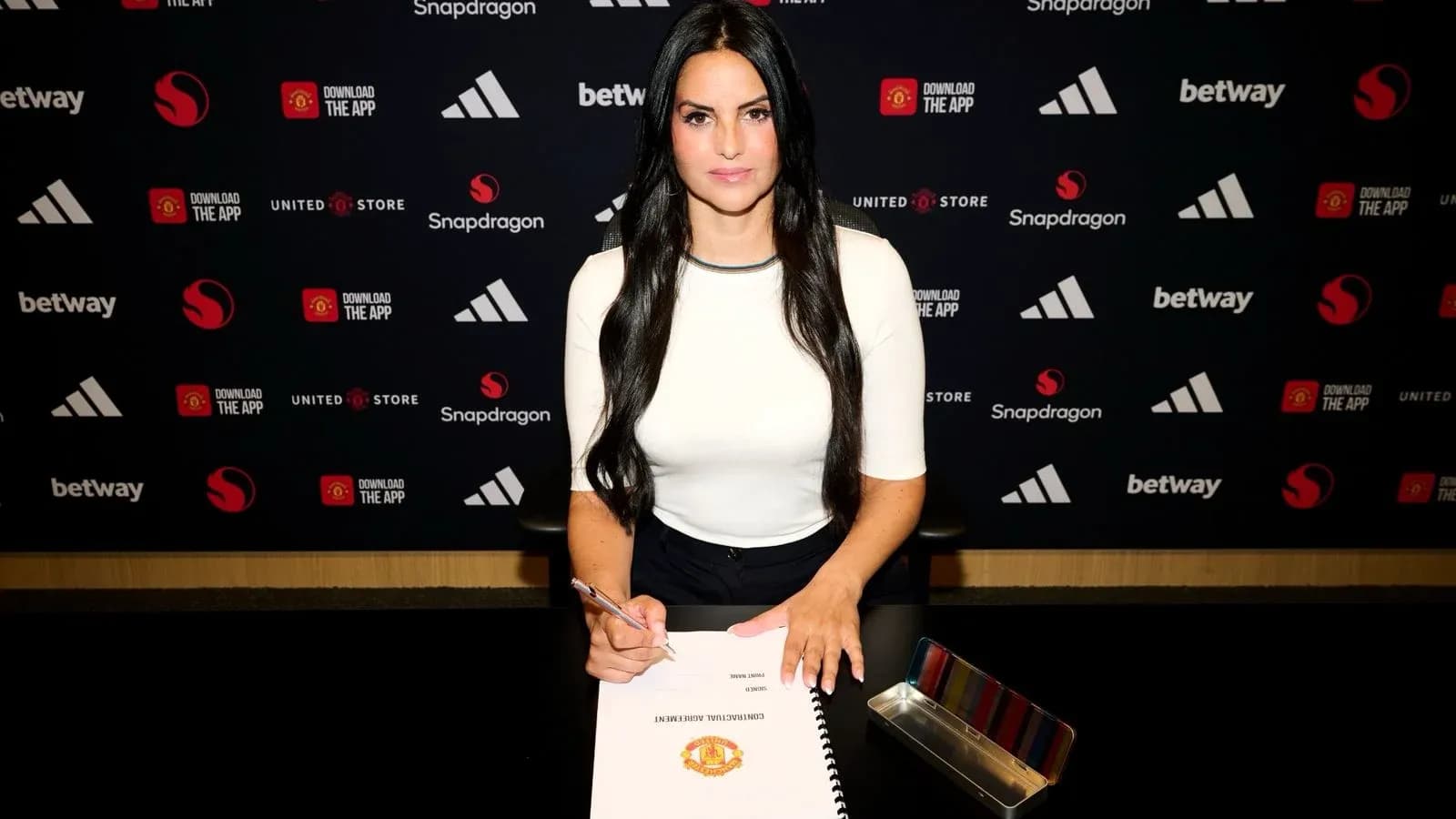
Manchester United Women have handed the reins to Eva Olid, the Spaniard tasked with steering a very different kind of project at Carrington.
Olid replaces Marc Skinner, who left on Monday after five years in charge and four finals, his exit landing just a month before United open their WSL campaign against London City Lionesses on September 4, live on Sky Sports. The timing is ruthless. The message is not: this is a reset, not a rip‑it‑up.
From Hearts history-maker to United architect
Olid arrives with a champion’s pedigree. At Hearts, she did what many thought was out of reach: broke Rangers and Celtic’s domestic stranglehold and delivered a first-ever Scottish title for the Edinburgh club last season. Two points clear of Rangers in the SWPL, a historic crown secured, and then a dignified exit after it was announced in April that she would leave by mutual consent at the end of the campaign.
Her five-year spell in Scotland, beginning in 2021, was not just about the league trophy. Hearts reached their first Scottish Cup final in 2024 under her watch, falling short against Rangers on the day but planting a flag in territory they had never visited before. She left on a high, with a reputation for building, not just buying.
That, precisely, is what has drawn Manchester United to her.
“She is seen by Man Utd as the ideal candidate to develop players within the current squad as well as players coming through the academy,” is the internal view. United want a coach who can squeeze every drop of potential from what they already own, not simply demand the next big-money signing.
Olid understands the scale of it.
“The opportunity to become head coach of Manchester United Women is a dream come true,” she said. “The club has outstanding infrastructure and everything we need to achieve our ambitions. We have an excellent training facility, an academy that is already producing players capable of performing in a competitive first team and an exceptional group of support staff.”
The tools are there. The expectations are changing.
Ratcliffe’s United: from title race chequebook to academy blueprint
When Sir Jim Ratcliffe and INEOS first walked through the door, the women’s team were handed a bold target: win the WSL by 2028. It sounded ambitious, expensive, and, at the time, perfectly aligned with the club’s transfer behaviour.
That plan has been rewritten.
United have grown uneasy about the spiralling cost of chasing the WSL elite through the market. Big wages, big names, but, in the club’s eyes, not enough tangible return. The financial arms race to stay in the title picture has started to look unsustainable.
So the club has pivoted. Hard.
Now, the priority is clear: invest heavily in the academy, develop from within, and build a squad that can compete for silverware without relying on constant marquee arrivals. It is a philosophy steeped in the men’s side’s history – the Busby Babes, the Class of ’92 – but untested on this scale in the women’s game.
It also demands the one commodity football rarely affords: time.
United accept that betting on youth and development may mean sacrificing the immediate comfort of guaranteed star power. The hope is that a stronger academy pipeline, guided by a coach like Olid, will yield a more sustainable, self-renewing squad capable of living with the WSL’s powerhouses over the long term.
Skinner’s legacy and the risk of a new road
Olid steps into a role reshaped by Skinner’s achievements and the club’s new caution.
Skinner did not leave an empty cupboard. Under him, United reached four major finals – three FA Cups and one League Cup – and finally lifted their first major trophy in the 2023/24 season. He also took the club into Europe for the first time and guided them to the quarter-finals of the Champions League last term, a landmark run for a side still relatively new to the elite level.
Crucially, United under Skinner became the only team to consistently disturb the WSL’s established “big three”. They proved they could live in that company, at least for stretches of a season.
But that progress came at a price the hierarchy no longer want to pay. Concern over the escalating cost of being a WSL title contender has shifted the club’s thinking. The new model leans less on the transfer market and more on coaching, pathways, and patience.
That is where Olid comes in. Her track record at Hearts suggests she can nurture a group, improve individuals, and build a competitive side without needing a superstar in every position. At United, the scale is bigger, the scrutiny sharper, the stakes higher. The principle remains the same.
A new season, a new experiment
The immediate challenge is brutally simple: prepare a squad for a WSL season with a new voice, a new philosophy, and limited time before that opener against London City Lionesses.
The longer-term test is more complex. Can Manchester United Women, in a league dominated by heavy investment and star power, genuinely compete for titles with an academy-first strategy?
The men’s side has proved that homegrown cores can carry a club to trophies and eras of dominance. The women’s game, still rapidly professionalising and reshaping its economic landscape, offers no such precedent.
Olid now stands at the heart of that experiment. United are backing development over chequebooks, pathways over quick fixes. If it works, they might redefine what a WSL superclub looks like.
If it doesn’t, how long will this club, and this league, wait for youth to come of age?