.svg&w=384&q=75 "GoalGist logo")
Manchester City's Transition: The End of an Era
On a humid evening at the Etihad, the mood felt strangely funereal. Not because of the scoreline alone, though Arsenal’s 3-0 win in the Community Shield cut deep enough. It was the sense that something larger had shifted, that a decade-long golden age might just have started to close its doors.
This was not a pre-season blip to be shrugged off. It was the first visible crack in a project that has defined English football for more than ten years.
The pillars begin to fall
The first tremor came upstairs. Txiki Begiristain, the architect behind Manchester City’s modern dominance, has gone. Quietly, without drama, but decisively. The director of football who turned City from big spenders into a ruthless, efficient super-club decided more than a year ago that his time was up, and only now is the scale of that decision truly being felt.
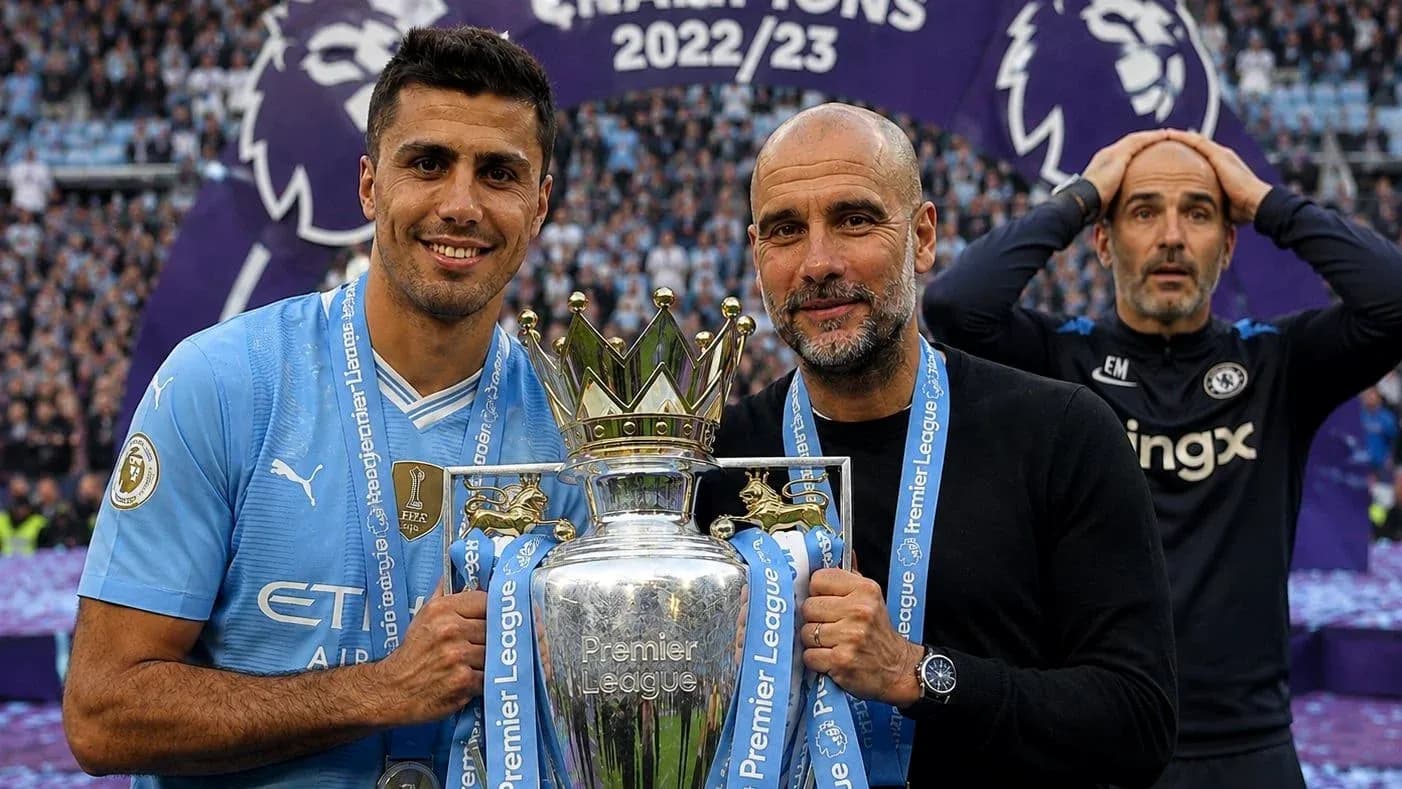
On the touchline, Pep Guardiola is already in the departure lounge, even if he is still nominally in charge for now. His exit is no longer a distant theory but an approaching reality. And behind him, Rodri – the metronome, the safety net, the on-pitch brain – edges towards his own farewell.
Three pillars. Three reference points. All slipping away.
What remains is a club that once felt untouchable now staring at a future it does not fully recognise. The sky-blue machine has begun to look human.
Maresca’s harsh introduction
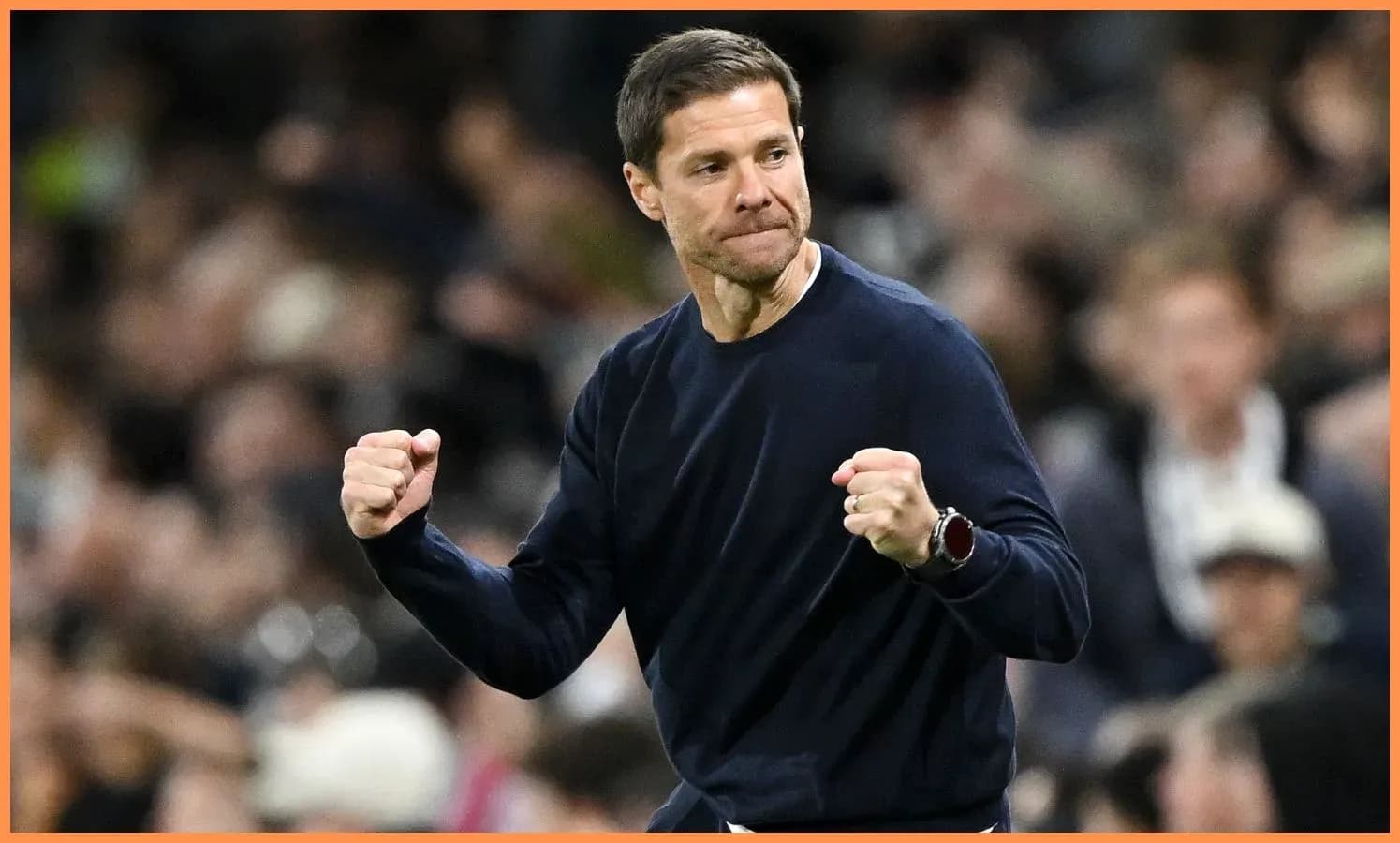
Into this landscape walks Enzo Maresca. A bright, modern coach with titles at Leicester City and Chelsea on his CV, but no experience of carrying a project of this magnitude on his shoulders.
His first real test? Arsenal. At Wembley. A chance to steady the narrative and show that City’s aura had survived the summer.
Instead, he ran straight into a red wall.
The 3-0 defeat did more than hand Arsenal a trophy. It sent City home with a jolt of reality and the uncomfortable feeling that the easy days at the Etihad are over. The team that once strangled games with control and inevitability suddenly looked fragile, disjointed, oddly unsure of itself.
Maresca did not create this storm, but he now has to navigate it.
Life after Txiki
Behind the scenes, the continuity that once defined City has been quietly eroding. Ownership remains stable. Ferran Soriano still pulls the financial and operational strings. The infrastructure is intact. On paper, the foundations look strong.
But the sporting brain has changed.
Begiristain was not just a name on an organisational chart. He was the strategist who saw value where others hesitated. Erling Haaland for around £60 million. Rodri for roughly £70 million. Big fees, yes, but anchored by smart sales and a long-term vision that kept the squad fresh and the accounts balanced.
His successor, Hugo Viana, has hit a very different note. More than £130 million spent on just two deals this summer. The numbers alone are not the problem; City have never been shy with money. The concern lies in the shift of approach. The precision has given way to something looser, more speculative.
This is how eras begin to fray. Not with one bad window, but with a slow drift away from the principles that built the empire. Manchester United learned that lesson the hard way after Sir Alex Ferguson stepped away. City can see the parallels from across town.
The Guardiola vacuum
If Begiristain was the architect, Guardiola was the conductor.
His tactical genius is only half the story. His real power at City came from something more unusual: absolute authority. Pep was untouchable. Win or lose, his position never felt in doubt. That certainty seeped into everything – from the dressing room to the boardroom to the opposition’s mindset.
Under him, City did not just win. They imposed a style, a rhythm, a psychological weight that crushed rivals before a ball was kicked.
When Guardiola goes, all of that walks out the door with him. The patterns of play, the small details, the aura of inevitability – they are not easily inherited. Maresca, or whoever ultimately takes over the full reins, cannot replicate that status. No one can walk in and be “Pep”.
That difference shows up in results. In performances. In the way opponents approach City. The club knows this. So does the league.
At Old Trafford, Ferguson’s departure opened a void that swallowed manager after manager. City now stand on the edge of their own version of that moment.
Rodri: the most dangerous loss of all
If Guardiola’s exit is seismic, Rodri’s looming departure may prove the most immediately damaging.
There are very few midfielders in world football who can drag a team from one level to another almost on their own. Rodri is one of them. With him, City looked like champions-in-waiting every season. Without him, they often looked strangely ordinary.
The evidence is already there. Whenever he missed games, the midfield lost its balance. The press weakened. The defence felt more exposed. The attack received the ball a fraction slower, in worse areas, with less protection behind it. The Spanish captain did not just anchor the team; he organised its entire structure.
Now that anchor is close to being pulled up.
Replacing that influence in one summer is close to impossible. City can sign a midfielder. They cannot instantly recreate Rodri’s blend of positioning, discipline and leadership. History is full of clubs who waved goodbye to their central figure and never quite recovered their old level.
There is little reason to assume City are immune.
A crossroads, not a collapse – yet
This is not a story of instant ruin. City still possess vast resources, elite facilities and an ownership group that has shown patience and planning over the long term. They are not about to vanish from the top of the table.
But the project that began with Txiki, Pep and Rodri is clearly in its final chapter. The people who defined the club’s identity are either gone or heading for the exit. What remains is a powerful institution entering a genuine rebuilding phase.
Maresca’s task is brutal in its simplicity: build a new Manchester City while still winning like the old one. He must craft a fresh identity without the luxury of time, under the glare of a fanbase and a league that have grown used to perfection.
The Community Shield defeat does not decide a season. It does, however, expose fault lines. The balance that once made City feel unshakeable is no longer guaranteed. The solidity that used to be taken for granted now has to be earned again.
If the poor results continue into the league campaign, the club may find themselves forced into a deeper, more painful reset. New ideas, new leaders, perhaps even a new hierarchy of players. Exactly the kind of prolonged transition that turned United’s post-Ferguson years into a cautionary tale.
City still have one advantage their rivals lacked: continuity of ownership and a financial model that, so far, has remained coherent. That gives them a chance to manage this shift without descending into chaos.
But the warning signs are already on the scoreboard. The fear of repeating United’s long stumble back to relevance is no longer an abstract worry. It is a live scenario.
The era built on Txiki, Pep and Rodri may never be matched in its sheer dominance. The question now is stark and unavoidable: can Manchester City reinvent themselves quickly enough to stay at the summit, or are they about to discover just how long and dark a rebuilding tunnel can be?