.svg&w=384&q=75 "GoalGist logo")
London City Impress as Manchester United Struggles in WSL Opener
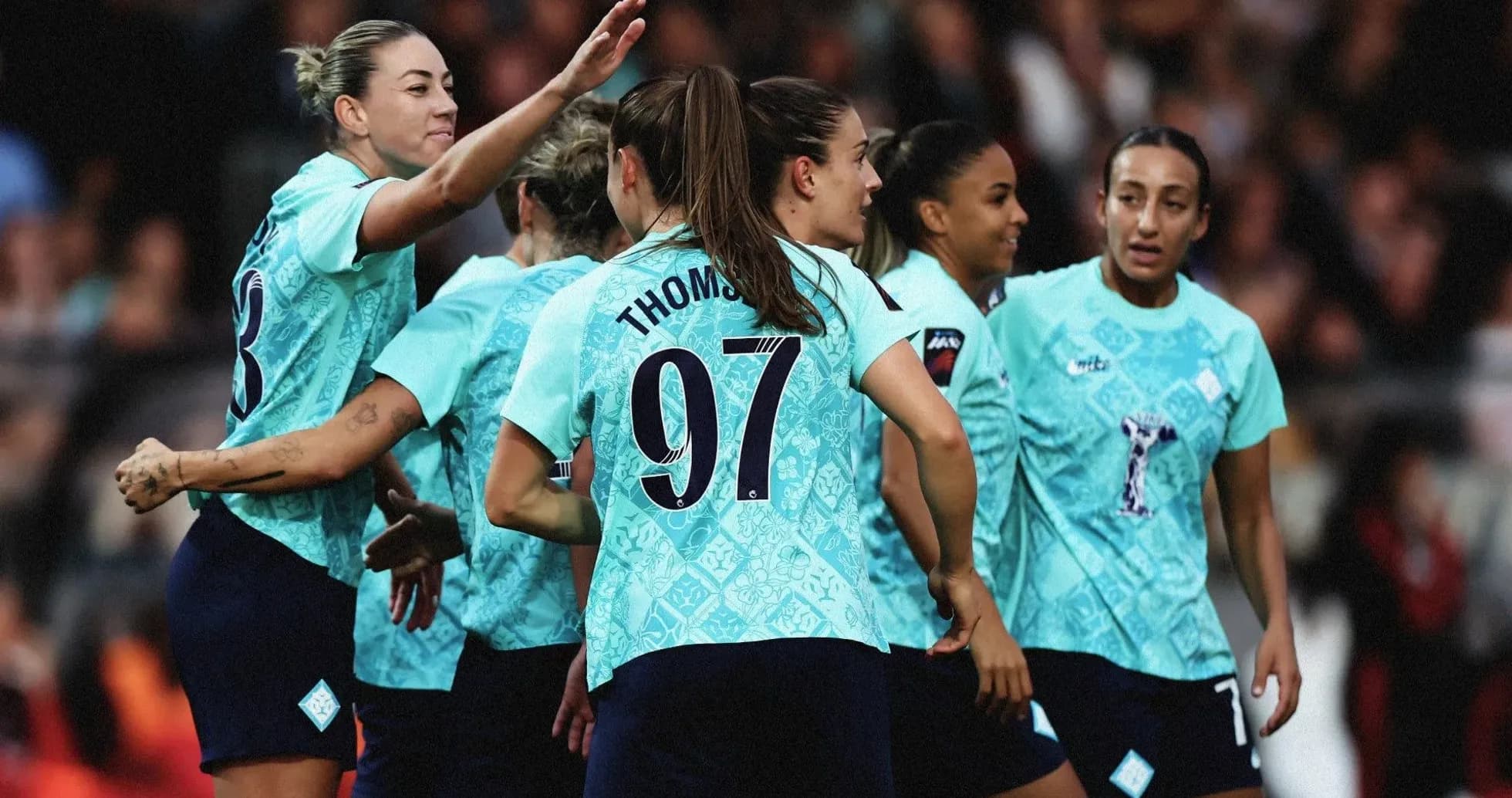
The word is out. If there were any lingering doubts about whether London City’s summer revolution had really caught fire, the record-breaking sell-out crowd in the capital on Friday night answered them in one sweeping statement.
Most came to see the stars. To gauge just how sharp Alexia Putellas looks in new colours. To watch Mary Earps, a Lionesses icon, command her box under the lights. Instead, they watched something far more ominous for the rest of the league: a fully functioning team, slick and connected, far earlier than anyone had a right to expect.
Putellas’ competitive debut was tidy rather than headline-grabbing, a calm presence in the middle of the storm. Earps stayed on the bench while Elene Lete almost wrote her own piece of history, denied the first clean sheet of the WSL season only in the 100th minute by Simi Awujo. Seconds from perfection.
The real noise came from everywhere else on the pitch.
Grace Geyoro, so muted in her first campaign after that world-record move, played like someone determined to rip up last year’s script. She snapped into tackles, drove through midfield, and constantly offered herself as an outlet. This did not look like the same player who drifted through last season.
Alongside her, Alanna Kennedy justified every bit of faith Eder Maestre placed in her. In a midfield trio that will always be headlined by Geyoro and Putellas, it was Kennedy’s aggression and pressing that forced the early breakthrough, her pressure panicking Julia Zigiotti Olme into turning the ball into her own net. That moment set the tone: London City on the front foot, United scrambling.
Out wide, Rosa Kafaji tormented her marker all night, a player on a mission after her stalled spell at Arsenal. On the opposite flank, Delphine Cascarino simply tore United apart. Named Sky Sports’ Player of the Match, she drove relentlessly down the right, beating players, stretching the back line, never letting the visitors breathe. Lucia Corrales matched that energy on the left, repeatedly surging into space and pinning United’s full-backs deeper and deeper.
And that still doesn’t cover it.
Isa Kardinaal was outstanding at centre-back, reading danger early and stepping in with authority, while her partner, likely Alex Greenwood’s stand-in in terms of profile, sprayed passes from the back that sliced through United’s first line of pressure. The build-up looked rehearsed, confident, almost casual.
Ahead of them, Danielle van de Donk knitted everything together in a false nine role that suited her intelligence perfectly. She dropped into pockets, dragged defenders out of shape and, with one deft flick to double the lead, showed exactly why Maestre trusts her as the central reference point. That touch summed up London City’s night: clever, composed, ruthless.
This was the performance Maestre has been promising since he arrived at the winter break last season. Back then, he inherited a squad midstream and tried to change course on the fly. Kennedy admitted as much in pre-season, telling GOAL that adapting to a new approach halfway through a campaign was “a little bit disruptive” and that the group simply needed “real time together” to chase something special.
On Friday, that time finally showed.
London City pressed Manchester United high and hard, swarming the ball, forcing mistakes. When they had possession, they moved it with purpose, rotating positions, dragging red shirts into areas they didn’t want to go. Off the ball, their movement carved open passing lanes and created constant overloads. This wasn’t just energy. It was structure, drilled and believed in.
On the other side, United looked like a team still reading the manual.
New head coach Marc Skinner’s successor, Olid, has barely had a month with this group, and it showed. With only one new signing in the starting XI, the lack of cohesion was jarring. This wasn’t a side learning each other’s names. It was a side learning an entirely new way of playing.
Olid had already flagged the full-backs as a particular “challenge” in implementing her ideas, and that played out in real time. At points it was genuinely hard to tell whether United were operating in a back three or a back four. Andrea Medina, the sole new starter, and Anna Sandberg never quite synced on the left, leaving gaps and confusion. On the right, Jayde Riviere, usually a force charging upfield, stayed pinned back, hesitant, caught between instruction and instinct.
The tactical uncertainty might have been forgivable. The sloppiness was not.
United repeatedly coughed up possession with heavy touches and poor decisions, inviting wave after wave of London City pressure. Phallon Tullis-Joyce had to step up again and again, producing a string of saves to stop the scoreline from turning brutal. Without her, this could have turned into a humiliation.
“Players were nervous, without confidence,” Olid admitted to Sky Sports. “That is not us.”
But on this evidence, it is United right now: unsure of the system, short of belief, and miles away from the fluid, aggressive side they want to be.
The contrast with London City could not have been sharper. While United looked like a work in progress, Maestre’s team looked ready to gatecrash the established order. Their intensity, their clarity with and without the ball, their depth of contribution across the pitch – it all pointed in one direction.
In the short term, it’s hard to escape the feeling that it is London City, not United, who look best placed to harry Manchester City, Chelsea and Arsenal for those Champions League spots. Van de Donk’s words after the match only sharpened that impression. “We don’t even know our best level yet,” she told Sky Sports. “We’ve not really played together that much. Hopefully there’s still more to come. We have loads to improve.”
If this is the starting point, the ceiling is high.
United, by contrast, stare at a season that could feel long and unforgiving while Olid reshapes them. The club will argue that the pain now is an investment in a more coherent future.
But on a night when London City roared into the spotlight and played like contenders, United could only watch and wonder how far they suddenly have to climb just to keep pace.