.svg&w=384&q=75 "GoalGist logo")
Lionel Messi Returns to Football After Father's Death
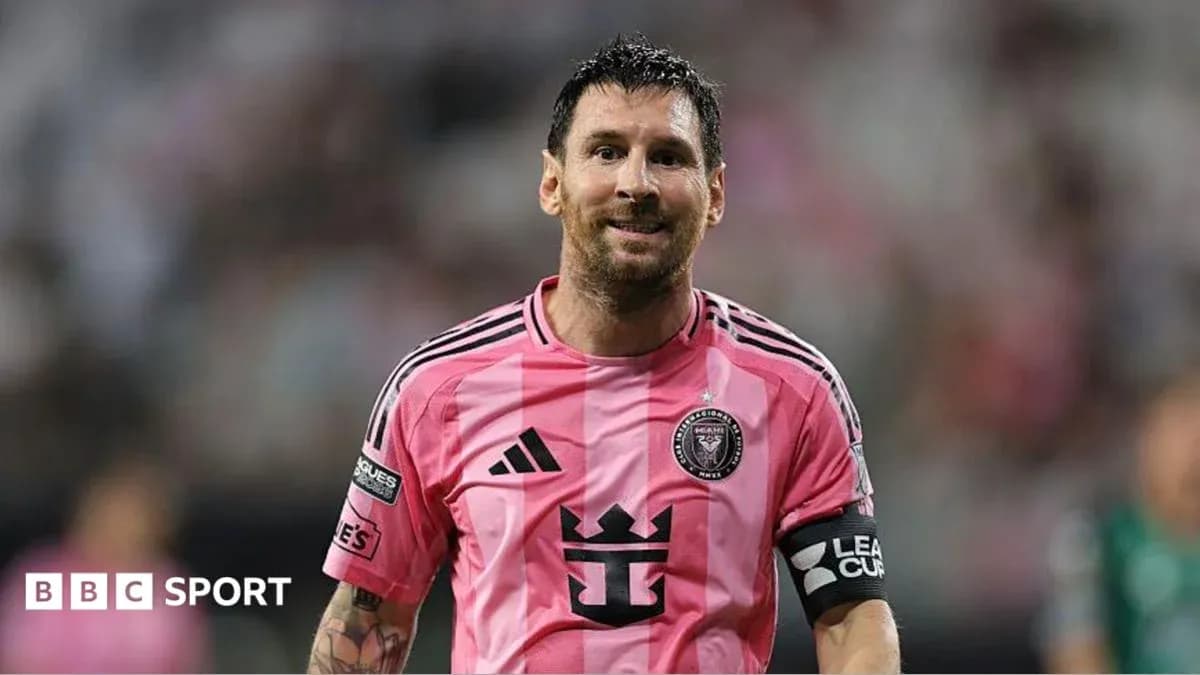
Lionel Messi walked back onto a football pitch on Wednesday night carrying far more than Inter Miami’s hopes.
Four days after burying his father in Rosario and hinting publicly he may be nearing the end of his career, the 39-year-old stepped off the bench to a roar in Fort Lauderdale, a grieving son returning to work in a 3-2 defeat to León that ended Miami’s Leagues Cup campaign at the group stage.
A farewell on one front, doubts on another
Jorge Messi, who died last week at 68 after a long illness, was far more than a parent. He had been his son’s agent since Lionel was 14, the constant presence behind every contract, every move, every trophy. He was there when Messi lifted the World Cup in 2022, the culmination of a lifetime’s shared pursuit.
The loss hit hard, and Messi did not hide it. In an emotional social media message, he admitted he is weighing up his future in the game, writing that he is “really not sure if I’ll carry on doing it for much longer.” It was the clearest sign yet that the final chapter of one of football’s greatest careers may be approaching.
Jorge had pushed for at least one more act. According to Messi, his father urged him “to play in one last World Cup” even as his own health was failing, a request that now hangs over every decision the forward makes from here.
From Rosario to Miami, and straight into the fight
Messi attended a private funeral in Argentina on Sunday, then flew back to the United States to rejoin a team that badly needed him. He had missed Miami’s 2-1 defeat to Monterrey in the Leagues Cup on Saturday, but made himself available to coach Guillermo Hoyos for what was effectively a do-or-die meeting with Mexican side León.
He started on the bench. He did not stay there.
With Miami chasing the game and their tournament future, Messi came on at half-time to huge cheers, the stadium rising as one. The match slipped away regardless. León held on for a 3-2 win, a result that knocked Inter Miami out in the group stage for the first time since the competition expanded in 2023 — the year Messi arrived and immediately carried the club to the Leagues Cup title.
This time, there would be no rescue act. Just a reminder that even with Messi, Miami are fallible, and that football does not pause for grief.
“We try to stay close to him”
Inside the dressing room, team-mates understood what his presence meant.
Midfielder Yannick Bright, who scored Miami’s second goal against León, admitted he was stunned to see his captain back so quickly.
“I wasn’t expecting it,” he said. “It shows how much he cares. When I saw he was here, all I was thinking about was to give my 150% for him.
“It’s a tough situation. We try to stay close to him and support him as much as we can, but it’s a lot.”
That was the mood around the club: admiration, concern, and a collective urge to carry some of the weight Messi is shouldering alone.
Respect from the other side
León coach Javier Gandolfi watched the same scene unfold from the opposite technical area and reached for the only description that seemed to fit.
Messi, he said, “is human being that is different to the rest”.
“Today he demonstrated once more what he’s made of.”
Different, yet suddenly more human than ever. A superstar wrestling with mortality, family, and the end of a career that has defined an era.
The Leagues Cup journey is over for Inter Miami, cut short in a way that would have felt unthinkable when Messi first landed and immediately lifted the trophy. The bigger question now stretches beyond this tournament, beyond this season.
After everything he has just lost, and everything he has already given, how much more does Lionel Messi really want to give the game?