.svg&w=384&q=75 "GoalGist logo")
Konstantelias and Karetsas Shine Before Injury Nightmare
Niko Kovac stepped in front of the cameras with a smile and a warning. "They are two lads who can bring us a different dimension here, and will do too – they showed that today," the Borussia Dortmund coach told Sky after the 2-0 win over Hamburger SV.
He meant Giannis Konstantelias and Konstantinos Karetsas. Two Greeks, two debuts, one electric first impression.
For 45 minutes, Signal Iduna Park saw something it has often craved in recent years: not just entertainment, but spectacular football with a purpose. Football that hurt the opponent and lifted the crowd in equal measure.
Kovac had hinted at it before a ball was kicked. The squad, he said, now contained players capable of the spectacular, the kind of technicians fans demand. On Saturday, they saw exactly what he meant.
The “Different Dimension”
Konstantelias and Karetsas, both signed from smaller European leagues, did not just replace Julian Brandt. They reshaped the role.
Where Brandt once threaded passes, the Greeks injected an extra gear. They can do almost everything the former playmaker, now at Ajax Amsterdam, used to do. But they add a decisive edge: they change games from a standing start.
They receive the ball between the lines, stand still for a heartbeat, then explode. They turn static phases into chaos for defenders, create angles where none seem to exist, and keep opening fresh attacking situations. A touch more proactive, a touch more daring, and already essential to how Dortmund want to play.
Against HSV, that “different dimension” was obvious from the first whistle.
Konstantelias Takes Over
The first half became their stage. Karetsas drifted, Konstantelias drove. Together they constantly punched holes in Hamburg’s block, demanding the ball, turning under pressure, accelerating into space.
Konstantelias had already hinted at his quality in the Super Cup defeat to Bayern Munich. On Saturday, he underlined it. His close control at high speed, his agility, the fluidity of his movement – all of it jumped out. So did something else: aggression without the ball.
After around half an hour, he snapped into a duel in midfield, won the ball, and Signal Iduna Park roared its approval. It felt like a statement. This wasn’t just a luxury No. 10. This was a playmaker who would also hunt.
Then came the moment that changed the noise into something close to euphoria.
Shortly before half-time, Konstantelias made it 2-0 and crowned his Bundesliga debut with a goal. The finish carried a touch of luck – the shot took a deflection off a Hamburg defender – but the idea behind it was pure invention. The Greece international had shaped for the near corner with a no-look effort, catching everyone off guard.
"First half, top – that was perfect. We implemented everything we wanted to implement," defensive leader Waldemar Anton said on Sky, almost purring over the performance.
After barely 100 minutes in a Dortmund shirt, Konstantelias already felt like a future crowd favourite. The chemistry with the stadium was instant. You could almost see the next few weeks unfolding: the songs, the highlights, the growing myth.
By Sunday afternoon, that vision was gone.
From Dream Debut to Devastating Diagnosis
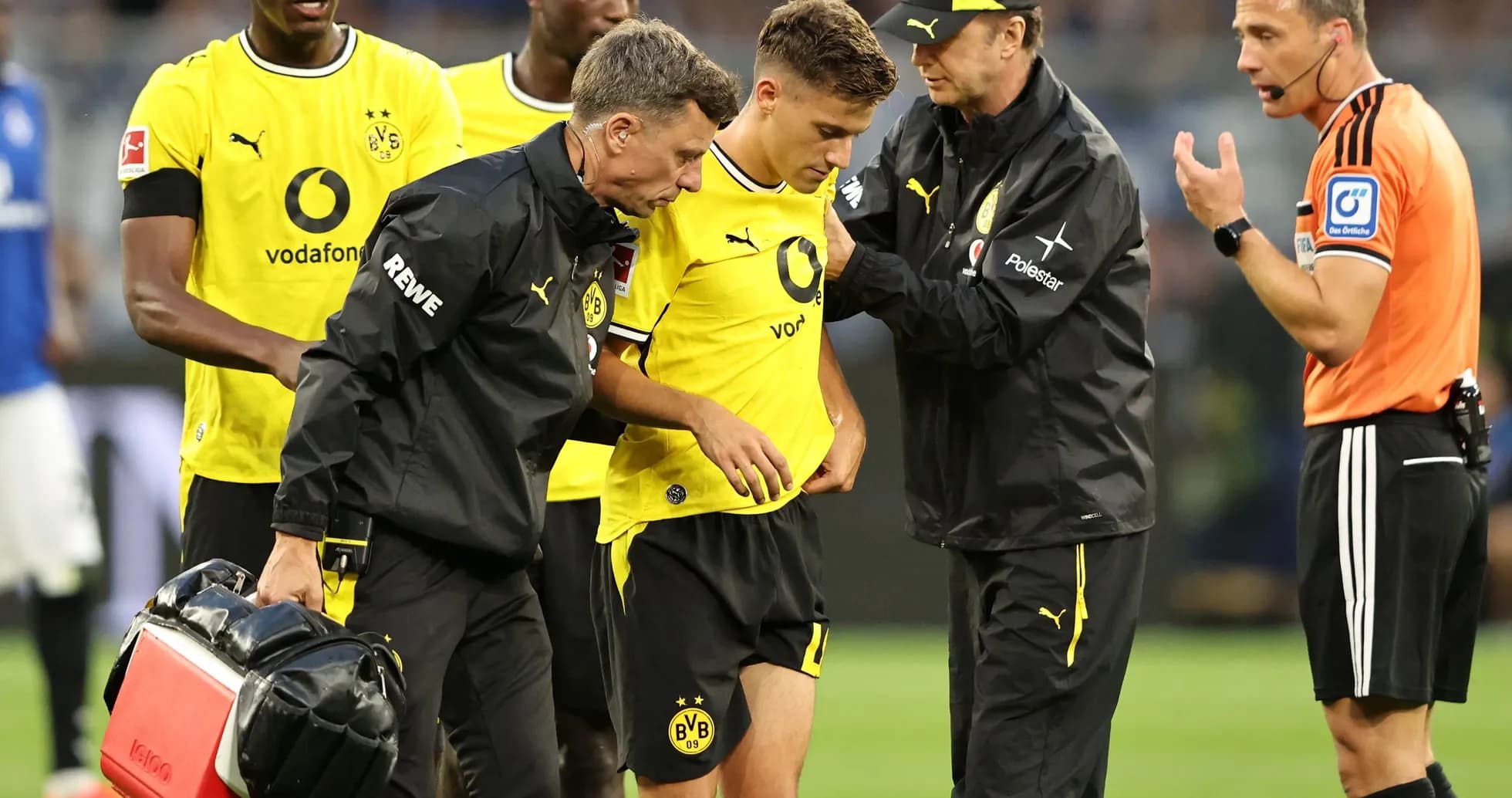
A day after the Bundesliga opener, Dortmund confirmed what many had feared. Konstantelias had suffered a cruciate ligament tear on his league debut. He will be out for several months.
"This news hits us very hard because Giannis has already shown in a very short time why we see him as a great player for Borussia Dortmund," said sporting managing director Lars Ricken. "For now, however, his focus and ours is on his recovery. Giannis has our full support in that."
The worry had already surfaced on Saturday night. Kovac, still riding the high of the win, had sounded unusually sombre when asked about the incident.
"We have to talk about something more serious there. We will have the examination on Sunday. But at least it doesn't sound good, from what the doctor told me," he admitted.
The injury came shortly after Konstantelias had narrowly missed a second goal. In an awkward movement during a challenge, his knee gave way. He stayed down, then left the pitch in the 54th minute looking shattered.
For a player who had just lit up his debut, the blow was brutal. For Dortmund, it was a tactical and emotional loss rolled into one.
A System Built Around Him – Suddenly Without Him
The 26-million-euro signing had already shown he upgrades Dortmund’s attacking play. With him, moves had rhythm and unpredictability. Without him, they looked heavier.
In the second half against HSV, that difference was obvious. Hamburg improved, yes, but BVB also lost a good deal of their fluidity once Konstantelias departed.
"When Dortmund play from right to left, play into the spaces in between, then first of all you do a lot of chasing and don't really manage to get into the press. That was our problem," HSV captain Nicolai Remberg said on Sky, summing up the first-half struggle.
The key to that pattern? Konstantelias and Karetsas.
The Greek Duo Light It Up
Together, the two Greeks tormented Hamburg. They rotated constantly, swapped positions, and kept the ball moving at high speed between the lines. Their first touch and control allowed Dortmund to play quick and precise football in tight areas.
"Brutal," was Anton’s verdict on their display. "The mobility they have, how dangerous they are – that is a huge quality at that age and it is something we need for the future as well. I'm glad we have them with us."
Those early impressions made one thing clear: Karetsas had found his perfect partner. Now he will have to do without him for a long time.
From Dortmund’s perspective, the question is immediate and uncomfortable: how do you replace a player you had only just started to build around?
"I felt incredibly sorry for the lad. From day one here he has had a terrific presence, also in the dressing room. We all already like him very much," said sporting director Ole Book, who had watched the injury to the player he and the club’s hierarchy had absolutely wanted with a worried look.
Internal Options – And a Red Card Wildcard
Kovac’s first answer on Saturday was conservative. He brought on Marcel Sabitzer for Konstantelias, adding more defensive stability but losing the spark between the lines. The Austrian could not replicate his predecessor’s flair. Few could.
On paper, Samuele Inacio is the closest like-for-like option. An 18-year-old top talent, he has the profile to step into that creative role. His cameo against HSV, though, ended in chaos: a lightning red card and a swift walk back to the dressing room. Whether he is ready to shoulder Konstantelias’ responsibility is a very different debate.
Maximilian Beier offers another path. More experienced, more robust, he could fill the central attacking role. But that would force Kovac to abandon his plan to use the Germany international on one of the two flanks. Solving one problem would create another, leaving a gap out wide.
And time is not on Dortmund’s side.
Transfer Window Tension – And the Sancho Question
The summer transfer window closes on Tuesday, 1 September, at 8pm. Three days. That is all Dortmund’s decision-makers have to decide whether they trust their internal solutions or must dive back into the market.
Ricken had already hinted at conditional action before the full diagnosis was public. "Depending on how serious the injury actually is, we will shape our further steps accordingly. But one thing is certain: over the next three days we are not planning anything."
That was before “serious” became “cruciate ligament tear”.
One early option has already vanished. Said El Mala, a preferred target before the Konstantelias deal, extended his contract at 1. FC Cologne and is off the table.
So attention turns, inevitably, to a familiar name.
Jadon Sancho.
The Englishman fits the profile. Like Konstantelias and Karetsas, he can create dynamism from a standing start, beat players in tight spaces, and unlock deep blocks with a single touch. The speculation over a third Dortmund spell had cooled after the Greeks arrived. It may not stay quiet for long.
During his previous time at BVB, Sancho played the best football of his career. Now 26 and out of contract after leaving Manchester United, he is available on a free. Financially, the risk looks manageable, though he would have to accept a significant pay cut to return.
The sporting risk is harder to measure. His recent loans at Chelsea and Aston Villa were largely disappointing. The question hangs over him: can he still reach anything like his old level?
Dortmund, suddenly stripped of their new conductor, may soon have to decide whether the answer to that question is worth betting their season on.