.svg&w=384&q=75 "GoalGist logo")
Kompany's Rotation Decision Backfires as Bayern's Scoring Streak Ends
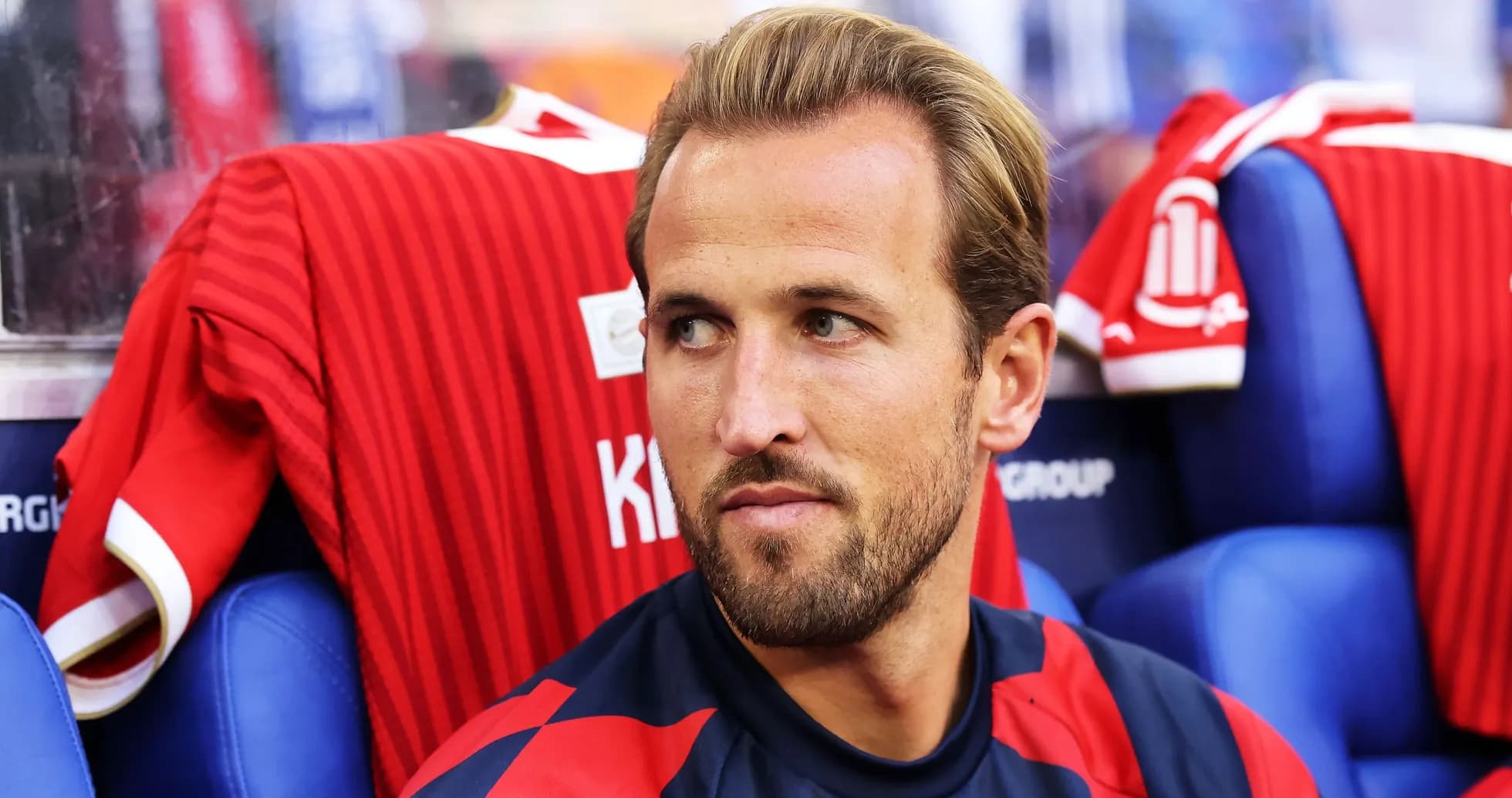
At the Veltins-Arena, the story began long before the first whistle. Harry Kane and Michael Olise, Bayern’s headline acts, sat on the bench. And as the minutes ticked by and the champions toiled, that decision loomed larger and larger over the night.
Vincent Kompany had rolled the dice. He left his two attacking stars out of the starting XI, backing the wider squad to carry the load after a draining summer and a busy early schedule. The gamble almost worked. Almost.
Kane and Olise Arrive Late – But So Does Bayern
The visitors laboured through a flat first half, struggling to prise open a deep, disciplined Schalke block. Chances came in flickers, not waves. The longer it stayed goalless, the more the home crowd sensed something rare: Bayern, frustrated and blunted.
Kane emerged at half-time, replacing Nathaniel Brown, and the entire tempo of the game changed. Suddenly Bayern had a reference point, a focal presence around which their attacks could orbit. The pressure grew, the noise rose, and Schalke retreated even closer to their own box.
Then came the moment that felt destined to decide it. Kane picked up the ball in space, wound up, and unleashed a thunderous strike from distance. It flew towards the top corner, the kind of shot that usually ends with the net rippling and the striker wheeling away.
Loris Karius refused the script. He sprang, fingertips strong, and clawed the ball over the bar. The stadium erupted as if Schalke had scored at the other end.
Olise entered the fray later, replacing Lennart Karl, and wasted no time in leaving his mark. Drifting into pockets, demanding the ball, he forced Karius into another sharp stop from a tight angle. Bayern’s stars had arrived, but the goal would not.
Kompany Defends His Rotation
After the final whistle, the questions were inevitable. Why start without Kane and Olise in a game like this?
Kompany didn’t flinch.
“The decision with Michael and Harry was simply completely rational,” the Belgian coach explained. “The two of them only came back very, very late from their holiday after the World Cup. It’s not a given that you can just say: ‘You play 90 minutes, 90 minutes, 90 minutes.’ The cup match in Osnabrück also took energy. You can’t always put that full workload on these guys.”
He framed it as a long-season call, not a one-night misjudgment. Bayern’s calendar is packed, the margins for overuse thin. On this occasion, the compromise cost them more than just two points.
A Historic Run Shattered
This was not any ordinary 0-0. For Bayern, it marked the end of a staggering streak of offensive reliability.
They arrived in Gelsenkirchen having scored in 59 consecutive competitive matches. That run stretched all the way back to July 2025, when Paris Saint-Germain shut them out 2-0 in the Club World Cup. For more than a year, Bayern always found a way. Penalties, deflections, late scrambles – something always fell their way.
Not this time. By failing to beat Karius, the Rekordmeister watched that record-breaking sequence crash to a halt.
Kompany acknowledged the significance, but he refused to pin the night solely on misfortune.
“Every game has its own story,” he said. “Our story was that we didn’t score and the opponent went home without a shot. But that shouldn’t take anything away from Schalke. I’ve seen games like this plenty of times. You need 90 minutes of pressure against defenses like this until they crack. We didn’t quite manage that today because we took the tempo out of the game several times.”
That admission cut to the heart of Bayern’s problem. The pressure came in bursts, not in relentless waves. The rhythm dipped. The passes slowed. Each pause gave Schalke a breath, a chance to reset their lines and rebuild the wall in front of Karius.
Karius Steals the Night
On the pitch, though, the evening belonged to one man.
Karius, once defined by a Champions League final nightmare, has rebuilt his reputation in the Bundesliga brick by brick. Against Bayern, he produced a performance that felt like a statement of closure.
He was everywhere. Diving low, leaping high, punching through crowds, smothering loose balls. Kane’s rocket, Olise’s angled drive, a series of sharp efforts from the edge of the box – all met by a goalkeeper in complete command of his penalty area.
While the pre-match talk centred on Bayern’s rotation, the post-match conversation circled back to the German keeper and the blue wall in front of him.
“It was a beautiful football match with emotion and passion,” Kompany said. “There were also plenty of defensive situations in which something special always had to happen. Schalke managed that this evening, so congratulations. They did a great job and gave everything. You could see that.”
The Bayern coach’s praise was pointed. Schalke did not simply park the bus and hope. They defended with conviction, discipline, and a clear plan. When the structure was briefly breached, Karius was there to close the door.
Europe Awaits – With Questions Attached
There is no time for Bayern to lick their wounds. The continental stage arrives fast.
Next week, the Allianz Arena welcomes Norwegian side Bodo/Glimt as Bayern launch their European campaign. It is an immediate chance to reset the narrative, to prove that this goalless night was a stumble, not the start of a trend.
The task is straightforward but unforgiving: rediscover the cutting edge, restore the aura, and show that the decision to manage minutes now will pay off later in the season.
Kane and Olise will not be easing back into the spotlight much longer. The question, as Europe beckons, is simple: was this just one stubborn, Karius-shaped roadblock, or the first hint that Bayern’s attack is no longer guaranteed to fire on command?