.svg&w=384&q=75 "GoalGist logo")
Kobbie Mainoo's Struggles at World Cup: From Star to Sidelines
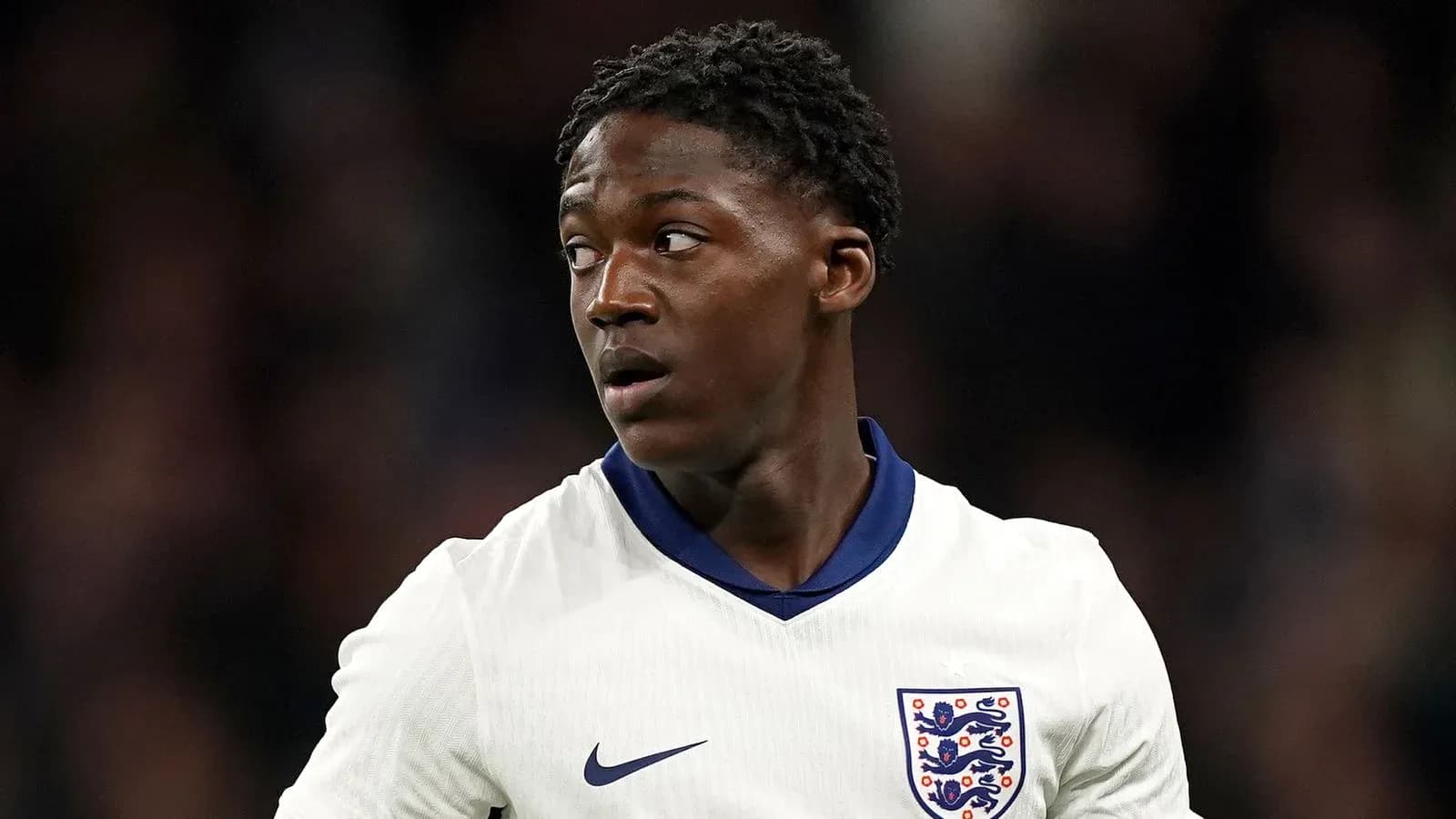
Kobbie Mainoo walks quickly through the mixed zone these days. Head down, bag slung over his shoulder, always the first England player out of the dressing room and onto the team bus. Not sulking. Not throwing a strop. Just… separate.
For a teenager who started a European Championship final barely a year ago, this World Cup has felt like a hard stop.
From centre stage to the shadows
Mainoo is one of only three outfield England players yet to play a single minute at this tournament. Ivan Toney and Trevoh Chalobah are the others, but their situations are simpler, cleaner, easier to accept.
Chalobah arrived late, a replacement for the injured Tino Livramento, and slotted straight into the role of emergency cover. John Stones has been the next centre-back in line, and everyone has known it.
Toney was told by Thomas Tuchel from the outset: you are a finisher. Harry Kane starts, you wait. Kane has stayed fit, scored six, and England have not needed a penalty specialist. Job description honoured, frustration understandable but logical.
Mainoo’s story is different. His absence feels like a gap in the narrative.
The Manchester United midfielder was 18 when he started the Euro 2024 final. It felt like the beginning of something, the emergence of a player who would grow with this England team for the next decade. The assumption was that a “glorious international future” had already begun.
Instead, in the heat of the USA and Mexico, he has not kicked a ball.
England move on without him
Circumstances should have opened the door. Jordan Henderson’s World Cup ended the moment he broke his wrist in the celebrations after the win over Mexico. A senior midfield slot suddenly sat vacant.
Tuchel’s response has been ruthless in its clarity.
Declan Rice and Elliot Anderson have become the midfield pairing England lean on. Rice, the vice-captain, remains one of the first names on the team sheet whenever he can stand upright. Illness, knocks, fatigue – he has played through all of it.
Anderson, whose move to Manchester City went through mid-tournament, has surged. Each game has made him look more at home. His performance against Norway in the quarter-final, his best yet, underlined why Tuchel trusts him so much.
For Mainoo, that trust has not yet arrived.
The Miami moment that never came
If there was a night that seemed made for him, it was Norway in Miami.
Rice had been floored by a Mexican stomach bug, stuck in bed for three days. In the sweltering heat, he could manage only 45 minutes. England needed legs, control, someone who could pass and press in equal measure.
Mainoo must have felt the chance coming.
Tuchel went another way.
He turned first to Eberechi Eze. The England head coach wanted more attacking thrust, more risk between the lines, so he pushed the Arsenal man into midfield to sharpen England’s passing and penetration. Eze is not a holding midfielder, but he offers incision and bravery on the ball. Tuchel backed that.
Mainoo would argue – with reason – that his own energy and range of passing could have steadied England just as the Miami heat began to drain his team-mates. It was exactly the kind of game that rewards fresh legs and clear minds in midfield.
Then came another twist. Midway through the second half, Reece James was sent on in midfield. Not at right-back, where his role is formally defined for both England and Chelsea, but in the engine room again, where Tuchel has increasingly used him as a defensive shield.
James had been managing a hamstring issue, yet still he was preferred in the middle of the pitch.
When Ezri Konsa, covering at right-back, cramped up and had to come off, James moved back into defence. Once more, a midfield slot opened. Once more, Mainoo’s path seemed clear.
It closed just as quickly. Morgan Rogers came on to bolster midfield and Eze shifted out to the left wing.
Mainoo stayed seated.
Tuchel’s logic, Mainoo’s reality
Strip the emotion away and Tuchel’s choices are understandable. In a World Cup knockout tie, with England chasing control and cutting edge, he turned to players he already leans on: James as his trusted defensive midfielder, Eze as his creative risk-taker, Rogers as another progressive option.
Coaches at this level live by their convictions. Tuchel is chasing the ultimate prize, and sentiment does not get a look-in.
For Mainoo, that is the brutal truth of tournament football. A year ago he was the teenager fast-tracked into a major final. Now he is the unused option, walking alone to the team bus, watching others shape England’s midfield.
The talent has not gone anywhere. The future almost certainly still belongs to him.
But this World Cup is passing him by, and for one of England’s brightest young players, that is the harshest lesson of all.