.svg&w=384&q=75 "GoalGist logo")
Klement's World Cup Forecasting Model: Predicting the Next Champion
Paul the Octopus needed nothing more than a tank and a couple of mussels to become a global sensation at the 2010 World Cup. Eight arms, zero equations, and a perfect record on Germany’s results.
Fourteen years on, the sport’s most reliable oracle might be a man with a spreadsheet.
Joachim Klement, a German economist based in London, has built a World Cup forecasting model that has correctly picked the tournament winner three times in a row. Germany in 2014. France in 2018. Argentina in 2022. Each time, the numbers pointed one way. Each time, reality followed.
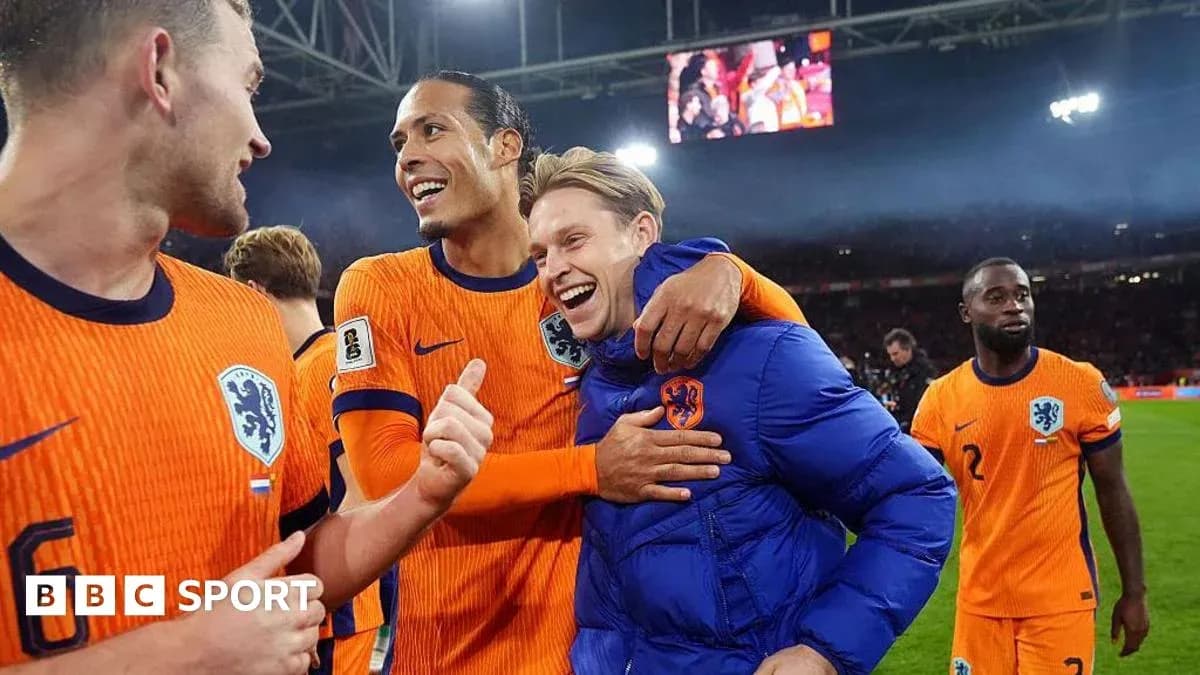
Now his data says the Netherlands.
If the Dutch lift the trophy this summer, Klement’s streak moves to four from four. At that point, we’re no longer talking about a clever party trick. We’re talking about a statistical prophecy that keeps surviving the chaos of football.
A model that sees beyond the winner
Klement’s work doesn’t stop at the eventual champion. His model runs through the full 48-team tournament, spitting out a roadmap of shocks, exits and near-misses.
On his chart, Japan stun Brazil in the second round. Scotland never make it out of their group. England grind their way to the semi-finals, only to fall to Portugal – a painful echo of 2006, even if his spreadsheet doesn’t go as far as specifying “penalties, again.”
It reads like a script: familiar heartbreaks, fresh villains, a new name on the trophy.
For all the attention, Klement insists this was never designed as a betting edge or an emotional shield for traumatised fanbases. It started as a joke at his own profession’s expense.
“This started as an exercise in showing the world a hubris of economists who think they can forecast stuff that they actually have no clue about,” he says. “And now it's become an exercise in how, if you're lucky often enough, people will think you're a guru.”
From fluke to phenomenon
When his native Germany went all the way in 2014, Klement fully expected the magic to end four years later. Run the numbers again, get it wrong, and the whole thing could be filed away as a one-off curiosity.
Instead, the model nailed France in 2018. Then Argentina in 2022.
Three World Cups. Three correct champions.
“Because I was right three times in a row, people now think that this model is unbeatable and that I obviously will have to be right as well next time,” he says.
The reality, he stresses, is far less mystical. World Cup performance is shaped by big, measurable forces: population size, national wealth, climate, Fifa rankings. Those “systemic” factors give certain countries a built-in advantage that can be captured in a model.
But only up to a point.
Klement reckons those fundamentals explain roughly half of what happens. The rest? That belongs to football’s wild side.
“The other 50% is luck,” he says. “Every match – especially when you have these high-quality teams playing against each other that are very similar in skills and quality – it really depends on the form of the day, a ref call, a piece of luck in the sense of hitting the post versus the ball going in.
“Things like that are completely unpredictable.”
So the model offers a framework, not fate. A map, not a guarantee. Yet with each correct call, the appetite for his four-yearly forecast grows.
A distraction in a turbulent world
Away from his football alter ego, Klement works as a strategist at investment bank Panmure Liberum. His daily life is markets, crises, and the hard edges of global economics.
The World Cup model is his escape.
“Especially in 2026, when there are so many crises, wars and things going on, it is something that makes me feel good and hopefully the readers feel good and gives them a little bit of a distraction from all the kind of bad stuff that is going on in the world,” he says.
What began as a tongue-in-cheek exercise has become a ritual. As each tournament nears, he fires up the data, runs the simulations and publishes the outcome. The readership swells. So does the pressure.
Inside the office, colleagues now treat his projections with unnerving seriousness. They quiz him on specifics, down to individual injuries.
How does Xavi Simons’ ACL problem affect the Netherlands’ chances? Does the model adjust for that? Can one missing midfielder tilt an entire tournament?
The questions keep coming. The bets do too.
“I've got several colleagues who bet some money on the Netherlands in response to me publishing that note,” he says.
He has warned them. Repeatedly. The model is not a crystal ball. It leans on probabilities, not certainties. Half of football remains chaos in boots.
Still, the stakes feel different now. Three perfect calls have turned a sceptic’s experiment into a perceived edge.
So what happens if the Dutch fall early, or crash out in some dramatic quarter-final? Klement already has a plan.
“If the Netherlands get eliminated from the World Cup,” he says, “I think the next day I have to work from home.”

