.svg&w=384&q=75 "GoalGist logo")
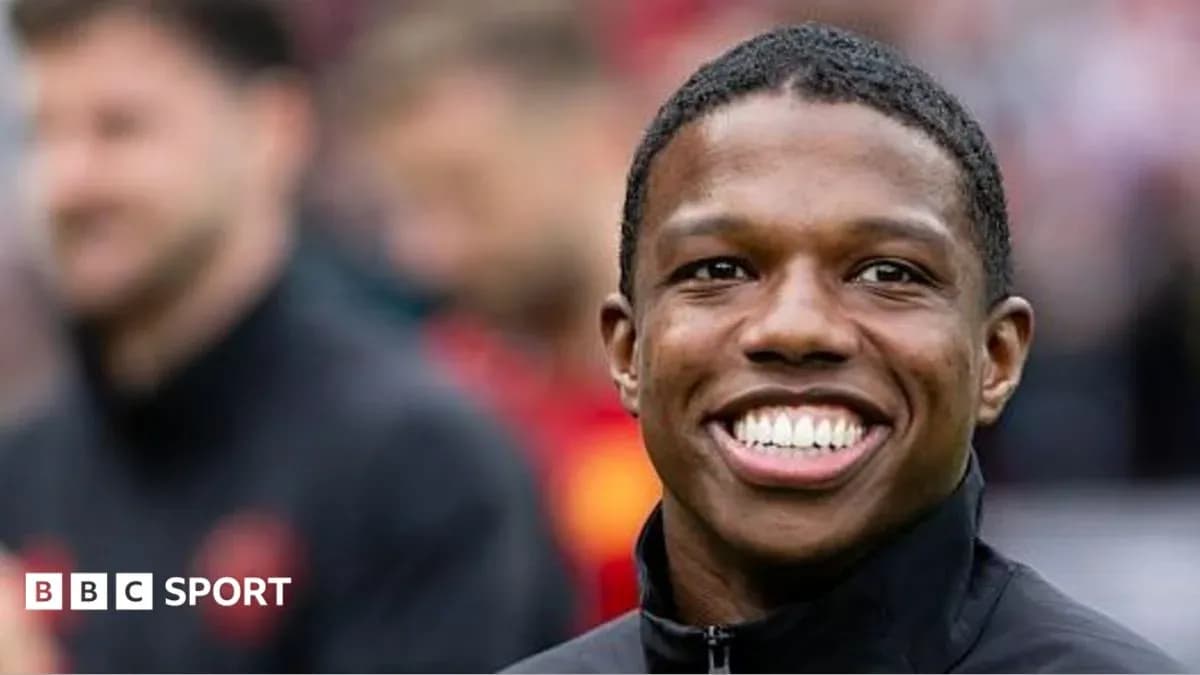
Kevin Lamour Exits Fifa Amid Controversy
Kevin Lamour knew what was coming. He said as much.
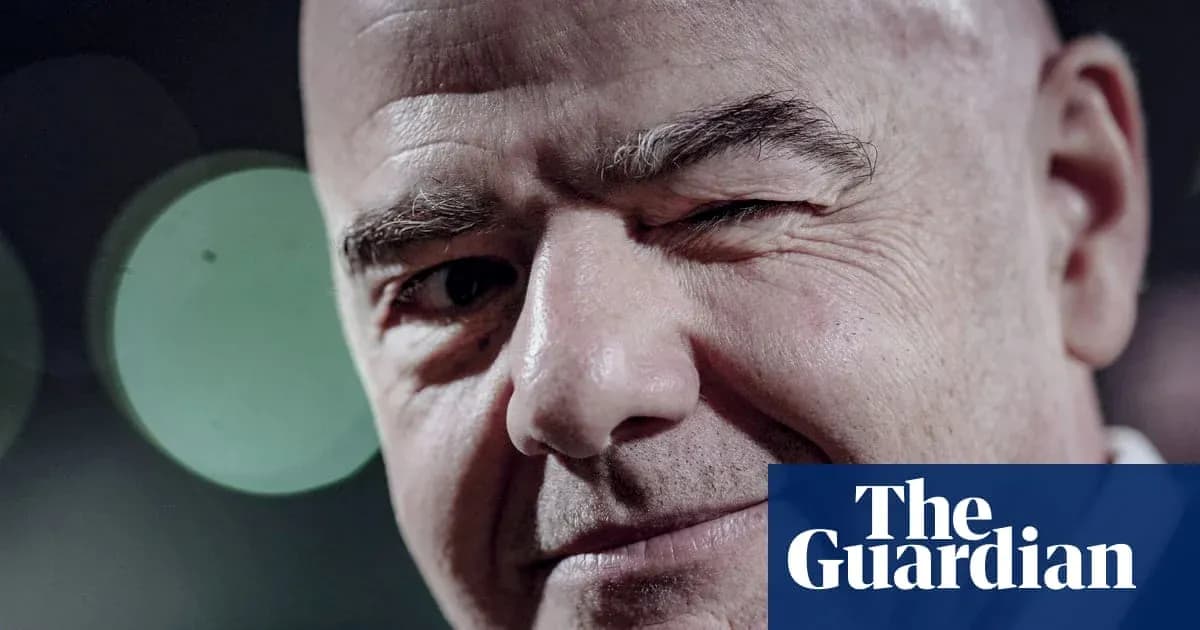
When Gianni Infantino’s scheme to flog a chunk of the World Cup to private investors was exposed last month, the then Fifa chief operating officer didn’t just raise an eyebrow. He torched the plan. Lamour dismissed the proposal as “the project of one person”, accused the administration of having been “deceived”, and openly accepted that speaking out might cost him his job. “If it means I lose my job, then so be it,” he said. “At least I’ll sleep well tonight.”
On Monday night, he finally got his answer. And his P45.
Fifa confirmed that Lamour’s time was up, quietly dropping a statement that tried to sound routine while everyone knew exactly why the Frenchman was being ushered towards the exit. “Fifa can confirm that the working relationship between Fifa and Kevin Lamour as Fifa’s Chief Operating Officer has ended on 17 August 2026,” a spokesperson announced. The governing body thanked him for his “two years of service” and wished him “the best of luck for the future”. Then came the line that now feels like a punchline: “No further comment will be made on the matter.”
The timing tells its own story. Infantino’s World Cup sell-off wheeze was shelved just days after Lamour went public with his objections. The holidays of reporters were ruined, the plan was parked, and the one senior executive who had dared say no has now been removed from the building. If Lamour had been sleeping with one eye open since his broadside, he can at least rest easy knowing his prediction was spot on.
Others, though, are in no mood for sleep.
‘Management by Fear’
Lise Klaveness rarely needs an invitation to speak her mind, and she certainly didn’t wait for one here. The president of the Norwegian Football Association, a persistent critic of Infantino’s regime, went straight for the jugular.
“Now he is thrown out and we are supposed to move on,” she said, furious at Lamour’s treatment. “It’s unacceptable, it’s management by fear.” She called Lamour “the best football administrator” she has ever met and then turned her fire on those still inside the tent. “Now we also have to call upon Fifa leadership and the administration to not submit to orders you know are not in the interests of football.”
It was a direct challenge, a plea to the remaining power-brokers not to simply shrug and carry on. The problem, as the recent Geopolitics World Cup saga showed, is that Fifa’s internal machine tends to roll over dissent rather than absorb it. Asking officials to stand up to the president has, in recent years, felt about as likely to succeed as asking fish to stop swimming.
Klaveness’s remarks have also been widely read as a pointed jab at Mattias Grafström, the Swedish Fifa official understood to have carried out the sacking on Infantino’s orders. If Lamour was the conscience in the room, Grafström is now the one telling staff to look beyond the mess.
“Individuals, unstable moments and unfortunate episodes come and go,” he wrote in an email to employees. “The institution, its mission and its responsibility towards world football continue.”
The message was clear: people are replaceable, the badge is not. The irony is just as clear: the more Fifa talks about its mission, the more it looks like an organisation purging those who question how that mission is being pursued. For now, the sackings roll on and the mood music is simple – morale will improve when everyone who disagrees has gone.
Guardiola’s Pain, Guardiola’s Point
While Fifa deals with its latest internal drama, an entirely different kind of revelation has surfaced elsewhere in the game.
In a new Amazon documentary, Pep Guardiola is seen stepping into territory most managers would avoid at all costs: his private life. Addressing his players during a poor run of results, the former Manchester City manager lays himself bare.
“Guys I want to confess something, I’m [eff]ing divorced from the most beautiful woman on your planet,” he tells them. “It’s my wife, my ex-wife – I love her unbelievably, but we lost the passion. For many reasons, we lost the passion. I love her? Yes, absolutely. She loves me? Yes, but we lost the passion.”
Then comes the pivot, the link to the dressing room in front of him.
“How do you play football, because you are paid? Or because of something inside? Where is the passion? In your life, whatever you are going to do, do it with passion. I don’t want any good players. I want players with passion.”
The speech is raw, uncomfortable, and clearly calculated. Guardiola uses his own marriage as a metaphor for a squad that, in his eyes, had gone flat. The cameras also capture another flashpoint: a major bust-up with Kyle Walker, another relationship straining under elite football’s relentless pressure.
Managers often talk about “hunger” and “desire”. Guardiola, as ever, goes a step further, putting his own scars on the table to make the point.
Letters, Wages and a Wizard Behind the Curtain
Away from the boardrooms and documentaries, the inbox has been busy.
Anthony Brady wrote in after spotting a line in Monday’s “Memory Lane” segment that looked suspiciously like a template accidentally left in. The sentence began with “(insert name of whoever is in the news as being on the end of a bad foul, bad behaviour, etc, here)”. Brady likened it to a Wizard of Oz moment, the curtain briefly pulled back to reveal the machinery behind the quips: “(insert witty denouement here).”
From the romantic to the financial, Stewart McGuinness weighed in on player wages. He crunched the numbers: if the average Premier League player earns around £5m a year, roughly £100,000 a week, then a single week’s pay now eclipses what Jimmy Greaves earned in his entire career. Go back to legends such as Tom Finney, Jackie Milburn and Nat Lofthouse and the gap widens into a chasm.
And when Rob Smyth recently took aim at a terrible film, Bob Cushion felt compelled to clarify that the criticism was aimed at a movie, not at Beniamino Gigli, the Italian tenor he regards as “the best there ever has been”. “Well, I needed something to take my mind off the football!” he added.
Anthony Brady, for his troubles and his eye for the man behind the curtain, walks away with the (still prizeless) letter of the day.
Limbs in the Canton End
The word “limbs” gets thrown around too easily these days. Scroll through social media and any half-decent celebration is branded with it. But what happened in the Canton End at Cardiff City Stadium on Monday night? Those were Proper Limbs.
Cardiff, back in the Championship, found themselves trailing to Wrexham, their newly moneyed Welsh rivals. The script was painful: former Bluebird Kieffer Moore scoring early for the visitors, the hosts huffing and puffing in front of more than 30,000 in the capital, the minutes ticking away.
Then came the 98th minute.
Rubin Colwill stood over a free-kick and ripped it into the top corner, a shot that seemed to drag the entire stadium upwards with it. The Canton End erupted, bodies flying everywhere, a surge of noise and movement that justified every capital letter in “ABSOLUTE LIMBS”. Even Cardiff head coach Brian Barry-Murphy ended up in the crowd, swallowed by the chaos and the joy.
It was a reminder of what the Championship can still be at its best: frantic, flawed, and utterly intoxicating.
Transfers, Power Plays and a New Lion
The transfer carousel continues to spin.
Rodri arrived in Barcelona on Monday to complete his move from Manchester City and called it a “dream” to join the Catalan club. He will undergo his medical on Tuesday. “There have been some very intense days, but I’m happy that everything has been resolved,” he said, sounding both relieved and exhilarated at the same time.
At Chelsea, the intrigue is happening upstairs rather than on the pitch. Chair Todd Boehly and director Mark Walter are considering selling their shares to Clearlake Capital, the majority owners. If the deal goes through, Clearlake would hold total control of the club. For supporters still trying to make sense of the post-Roman Abramovich era, the prospect of a private equity firm with full command hardly feels reassuring.
Elsewhere, Coventry have moved decisively, snapping up Taiwo Awoniyi from Nottingham Forest for £9m. Ipswich, still keen to build on their recent momentum, have brought in Abdoul Ouattara and Julio Enciso from Strasbourg, the club formerly overseen by Gary O’Neil. Newcastle have also been busy, announcing the signing of defender Amar Dedic from Benfica for around £30m.
On the international stage, Patrick Vieira has a new challenge. Born in Dakar, the former Arsenal captain has been appointed as the new manager of Senegal, a job loaded with expectation and possibility.
Memory Lane: Leeds on Top of England
And then, a snapshot from another era.
Leeds United, managed by Don Revie, celebrating their first league title in 1969. The photograph shows nine players, four bottles of champagne, two cigars and a single cigarette between them. By the standards of the time, that counts as restraint.
No social media, no private equity manoeuvres, no streaming cameras in the dressing room. Just a squad, a trophy and a night that would live with them forever.
The game has changed. The power struggles, the money, the exposure – all of it. But as Kevin Lamour’s exit shows, the real battles in football still hinge on who is willing to say no, and how much that courage is going to cost.