.svg&w=384&q=75 "GoalGist logo")
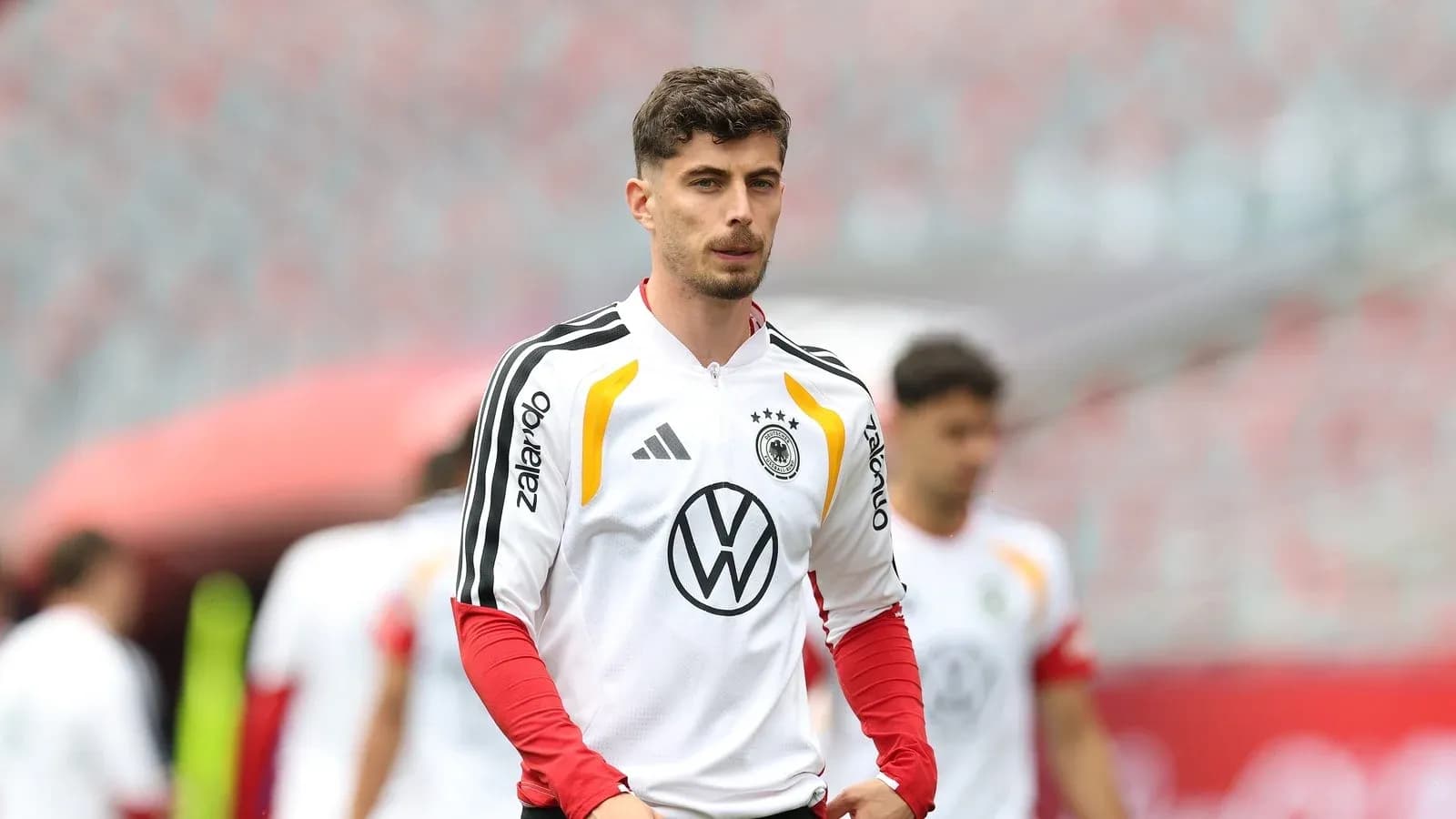
Kai Havertz: Germany's Key Player in World Cup Knockout Match
Kai Havertz leans into the World Cup spotlight. He always has.
In Boston, under knockout tension and with Germany trying to remember what it feels like to survive this stage of a World Cup, the 25‑year‑old walks into the role he has been edging towards all tournament: the man expected to carry the attack, to set the tone, to drag a heavyweight back into the latter stages of a competition it once owned.
For Germany, this is not just Paraguay in the first knockout round of the 2026 FIFA World Cup. It is a chance to step back into a room they have been locked out of since 2014, the year they last reached the last 16 and went on to lift the trophy. A long time for a nation that measures itself in semi-finals and finals, not group-stage autopsies.
“This will be my first knockout match in a World Cup,” Havertz told the media on the eve of the game. “I like these big occasions and I feel comfortable in this context. I hope to keep going; for that, you have to work hard and believe in yourselves.”
The words are calm. The stakes are not.
Germany arrive in the knockouts with a split personality. On one hand, there was the ruthless 7-1 dismantling of Curacao in their opening game, Havertz scoring twice as the front line sliced through with the kind of movement and precision that once defined German tournament football. On the other, a flat 2-1 defeat to Ecuador in the final group match, where chance creation dried up against a deep, disciplined block and old questions resurfaced.
That Ecuador performance stung. The criticism followed quickly, and not without justification. A team built to dominate the ball struggled to bend a compact defence out of shape. The forwards looked disconnected, the combinations half a beat off.
Havertz did not duck it.
“We talk a lot about what can work better and what we need to improve,” he said. “The three of us – myself, Florian Wirtz and Jamal Musiala – know ourselves that we haven’t fully shown what we’re capable of up front yet. We have to take responsibility for that.”
That frontline, on paper, is one of the most technically gifted in the tournament. In reality, it is still a work in progress. Players who dazzle for their clubs must recalibrate in a national team that trains together in short bursts, then gets judged in 90‑minute windows watched by millions.
“It takes a bit of time because everyone comes from their clubs to the national team and you have to get used to your teammates,” Havertz explained. “When you are in a major tournament, people talk, but I don’t care what people say, we are focused on ourselves.”
The narrative around Germany will always be loud. The margin for error will always be thin. That is the environment Havertz has chosen to embrace.
Waiting for them is a Paraguay side that has grown into this World Cup. Their opening night against hosts USA was a bruising reality check, a 4-1 defeat that hinted at a short stay. They refused to accept that script.
Since then, Paraguay have tightened the screws. A 1-0 win over Turkey, built on discipline and sharp counter-attacks, restored belief. A goalless draw with Australia completed the turnaround and, crucially, delivered back-to-back clean sheets. It was enough to send them through as one of the eight best third-place teams – and it sent a message: underestimate them and you will suffer.
Germany will not be fooled by the group standings. They know they are walking into a contest against a side that relishes the fight, that defends with aggression and throws itself into duels. They also know that the onus is on them to break that resistance, to show the patience and precision that deserted them against Ecuador.
Havertz, again, cut through the noise.
“They have quality; aggression and intensity are what define them,” he said. “We need a good performance, and we’ll be better tomorrow. I like big matches, matches on the biggest stage. We are fully convinced we can win.”
There it is: no hedging, no attempt to soften expectations. Conviction, laid out plainly.
For Germany, this knockout tie is more than a hurdle on the way to a fifth world title. It is a test of whether the new core – Havertz, Wirtz, Musiala and the rest – can carry the weight that a previous generation once shouldered so naturally. It is a test of whether the swagger of that 7-1 against Curacao was the start of something, or just a flattering snapshot.
The setting is ready, the stakes are familiar, and the margin for error is back to what Germany always knew it to be: win, or go home. Havertz has made it clear which option he is playing for.

