.svg&w=384&q=75 "GoalGist logo")
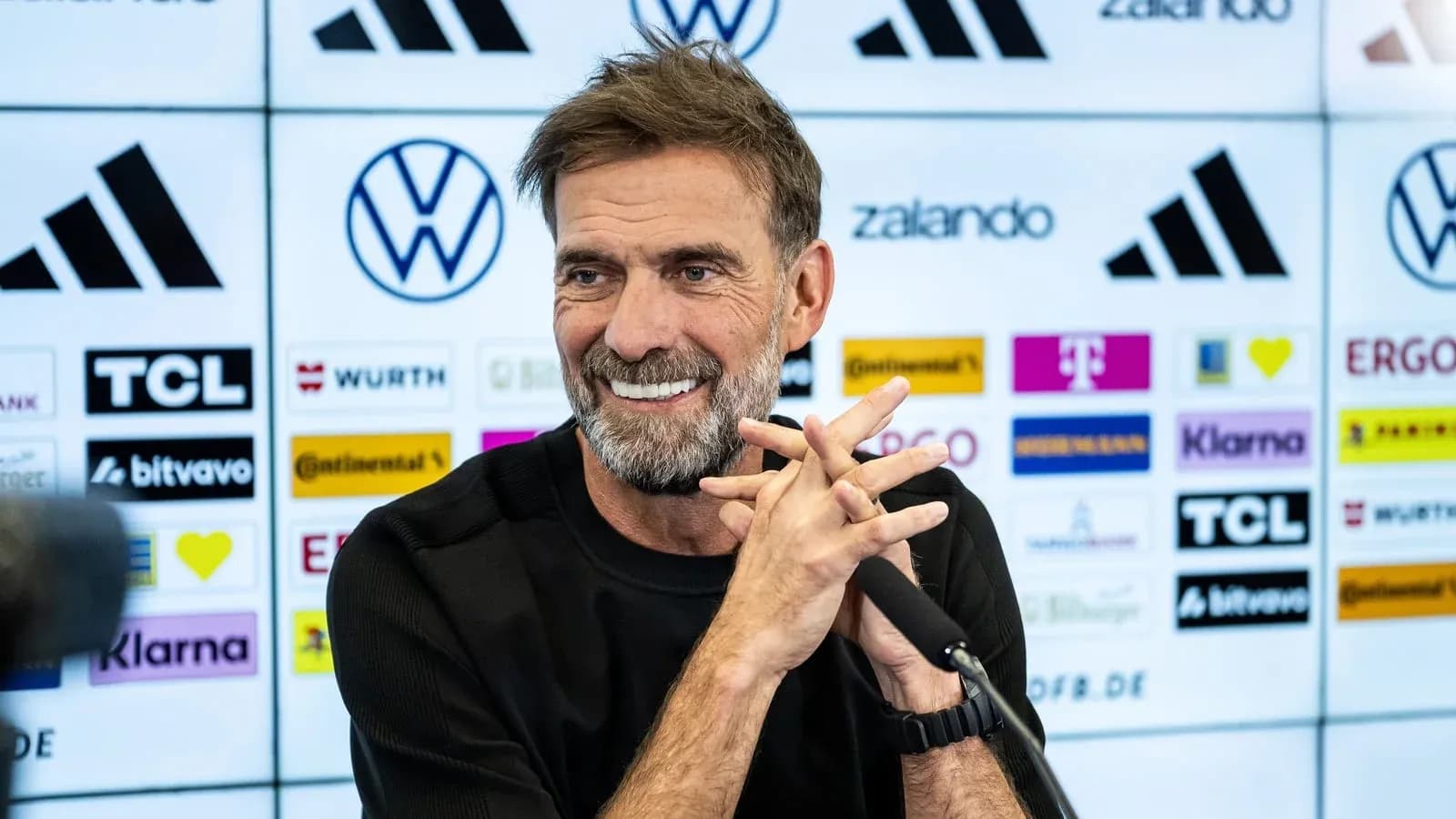
Jürgen Klopp Becomes Germany's New Head Coach
Jürgen Klopp is back where many in Germany always thought he would end up: at the helm of the national team.
The German Football Association (DFB) confirmed on Thursday morning that Klopp has signed a four-year contract to become Germany’s new head coach, a deal that runs through to the 2030 World Cup. The announcement came at the DFB campus in Frankfurt, drawing a line under weeks of expectation and quiet manoeuvring behind the scenes.
From New York talks to Frankfurt unveiling
Once Julian Nagelsmann resigned in the wake of Germany’s World Cup exit — a penalty shoot-out defeat to Paraguay in the last 32 — the DFB did not hesitate. Klopp was the first and only name they truly chased.
Officials flew to New York, where Klopp had been working as a television pundit during the tournament, to open talks while the World Cup was still in full swing. By 11 July, the DFB revealed it had reached an agreement in principle with the 59-year-old. The formal confirmation has now followed, ending any lingering doubt over his next step in the game.
The contract is understood to take him through to the next World Cup in 2030, giving him a full cycle to reshape and re-energise a national side that has laboured in recent major tournaments.
Familiar faces in the dugout
Klopp will not arrive alone. His trusted lieutenants are set to follow him into the international arena.
- Pep Lijnders, the long-time Liverpool assistant who most recently left Manchester City after Pep Guardiola’s departure, is expected to join the backroom staff.
- Peter Krawietz, another key figure from Klopp’s Liverpool era, is also in line for a role.
- Reports in Germany suggest Sven Bender, who played under Klopp at Borussia Dortmund and knows his demands intimately, will be part of the coaching team as well.
The names tell their own story. Klopp is building a staff rooted in shared history, shared methods and shared intensity — the same core that helped transform Liverpool and Dortmund into high-pressing, trophy-winning machines.
From Liverpool farewell to global role
Klopp’s return to the touchline at international level comes after what was supposed to be a step back from the relentless grind of club football.
He walked away from Liverpool in 2024 after nine years that reshaped the club and restored its status among Europe’s elite. During his time at Anfield he lifted the Champions League, the Premier League, the FIFA Club World Cup, the FA Cup and the League Cup twice, building a side that became a benchmark for aggressive, front-foot football.
When he announced his departure, Klopp spoke openly of “running out of energy”. He insisted the emotional and physical demands of elite club management had taken their toll.
After a six-month break, he resurfaced in a different role, becoming Red Bull’s head of global soccer. From that vantage point he later made it clear he had no desire to return to club management, signalling that his future, if there was one on the bench, would lie elsewhere.
Now that “elsewhere” is the German national team.
A costly release and a clear commitment
Securing Klopp’s release from his Red Bull position required more than persuasion. It required a significant financial gesture.
The DFB has donated €1 million to Red Bull’s non-profit foundation Wings for Life as part of the agreement that allowed Klopp to take the Germany job. It is an unusual detail, and a measure of how determined the federation was to land their man.
Germany have turned to the coach who has come to define modern German management on the European stage. Klopp, in turn, has chosen the one job that can match the scale and symbolism of what he built at club level.
Now comes the real test: can he turn a faltering giant back into a force by 2030?

