.svg&w=384&q=75 "GoalGist logo")
Jose Mourinho Returns to Real Madrid: A Rescue Mission
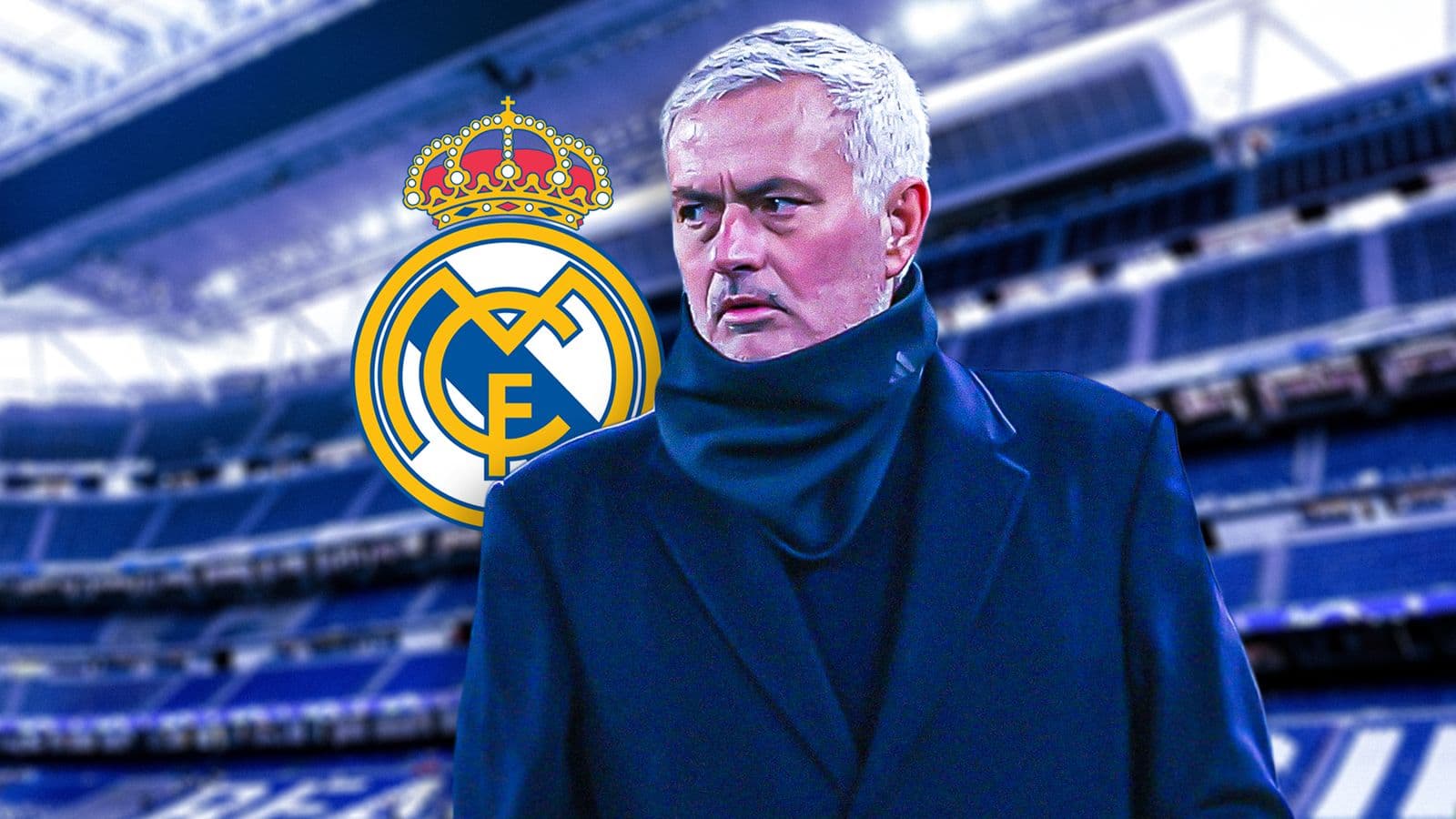
Jose Mourinho is going back to Real Madrid. Thirteen years on, the Bernabeu has turned once more to its most combustible modern figure in the hope that he can bring order to chaos and edge back towards dominance.
The Portuguese coach has agreed a two-year deal, with an option for a third, to return as head coach. The formal announcement is expected after Real Madrid’s final game of the season against Athletic Club on Sunday, with his unveiling pencilled in for next week in the Spanish capital.
This is not a romantic reunion. It is a rescue mission.
Madrid in need of control
Real finish the season without a trophy, their dressing room dragged through off‑field controversy and discipline issues that have eroded the authority of the club and the coach. Xabi Alonso paid the price in January, dismissed just seven months into the job. Alvaro Arbeloa has been holding the fort since, another former player asked to steady a listing ship.
It has not been enough. Florentino Pérez has gone back to a man he knows, and a man who knows him.
Mourinho’s relationship with the Real Madrid president, forged during that first spell between 2010 and 2013, has survived the years and the noise. This time, Pérez is not chasing Guardiola’s Barcelona; he is trying to clean up a mess in his own house. He believes Mourinho has the personality, and the scars, to walk into a room full of egos and take control.
The Portuguese will arrive with his trusted inner circle. A clause in his Benfica contract, signed only eight months ago, allows him to leave for £2.6m, and he is expected to bring four members of his coaching staff with him to the Bernabeu.
Leaving Benfica unbeaten, chasing something bigger
Mourinho closed his brief Benfica chapter on Saturday with a 3-1 win over Estoril, sealing third place in Liga Portugal and an unbeaten league campaign. It was tidy, efficient, and ultimately a prelude.
His original plan for the summer was different. The Portugal national team was the long‑term target. Then Real Madrid called. More specifically, Pérez called. That changes the equation for almost anyone in the sport, even for a coach who has managed almost everywhere and won almost everything.
You do not say no to Real Madrid twice. Mourinho had already done it in 2021, when the club approached him but he felt bound by his word and contract at Roma. This time, the timing aligns. He is free. They are desperate.
He is “very excited by the challenge”, those close to him say. He has cut out World Cup punditry offers to focus solely on the task in front of him: to squeeze the maximum from a squad rich in talent, light on discipline and direction.
A different Mourinho, same enormous shadow
The man returning is not the same volcanic figure who first stormed through LaLiga. Those who have worked with him recently talk of a more mellow version, less inclined to rule with a heavy fist and more likely to put an arm around the shoulder.
That does not mean the edge has gone. It means the methods have changed.
Real Madrid’s dressing room demands nuance as much as authority. The coach must manage not only world‑class footballers, but global brands with their own gravitational pull. That is where Mourinho’s next battle line lies.
Front and centre is Vinicius Junior. Their relationship will be one of the defining subplots of this second spell. How will the Brazilian react to Mourinho’s arrival? Will it influence his decision on whether to extend his contract? Real cannot afford a fracture between their coach and one of their crown jewels.
Then comes the wider tactical and emotional puzzle: can a Real Madrid side be built around both Kylian Mbappé and Vinicius? Can Mourinho find a structure, and a hierarchy, that allows two superstars to coexist without tearing the dressing room in two?
Pérez clearly believes he can. He wants Mourinho to impose order where others have failed, to bring clarity to a squad that has drifted.
The weight of history
When Mourinho first walked into Valdebebas in 2010, he did so as the man tasked with stopping Pep Guardiola’s Barcelona, a team many still regard as the greatest club side ever assembled.
The start was brutal. A 5-0 hammering at Camp Nou in November 2010 exposed the gap between the rivals and seared itself into Real Madrid’s collective memory. Barcelona went on to win LaLiga and the Champions League that season. Mourinho had to watch his great enemy sweep the board.
He did not leave empty‑handed.
Real Madrid denied Barcelona a second treble in three years by winning the Copa del Rey, a landmark victory in Valencia that signalled the first crack in Guardiola’s dominance. The real breakthrough came in 2011/12.
Mourinho’s Madrid ripped through LaLiga, ending a four-year title drought with a record-breaking campaign. They became the first Spanish champions to reach 100 points, a mark later equalled by Barcelona but never surpassed. That side still holds the record for most goals in a LaLiga season (121) and shares the record for most wins (32) in a league campaign in Spain.
Those numbers have not faded from Pérez’s mind. They are part of the calculation, part of the justification for bringing back a coach whose name still carries extraordinary weight in the game. Many managers are his peers. Few, if any, are bigger.
A giant returns to a club on edge
This is the gamble: a club in turmoil handing the keys to a manager whose presence guarantees noise, confrontation and attention, but also demands respect and can galvanise a fractured group.
Real Madrid wanted a figure who could walk into that dressing room and be the biggest personality in it. Mourinho still is.
The Bernabeu will soon find out whether the mellowed version of its old lightning rod can once again turn chaos into trophies, or whether this second act will test the club’s patience and his legacy in ways neither side can yet see coming.