.svg&w=384&q=75 "GoalGist logo")
Jordi Cruyff on Ajax’s Rebuild: Not Risky at All
Ajax’s summer of upheaval has left Jordi Cruyff sounding anything but nervous.
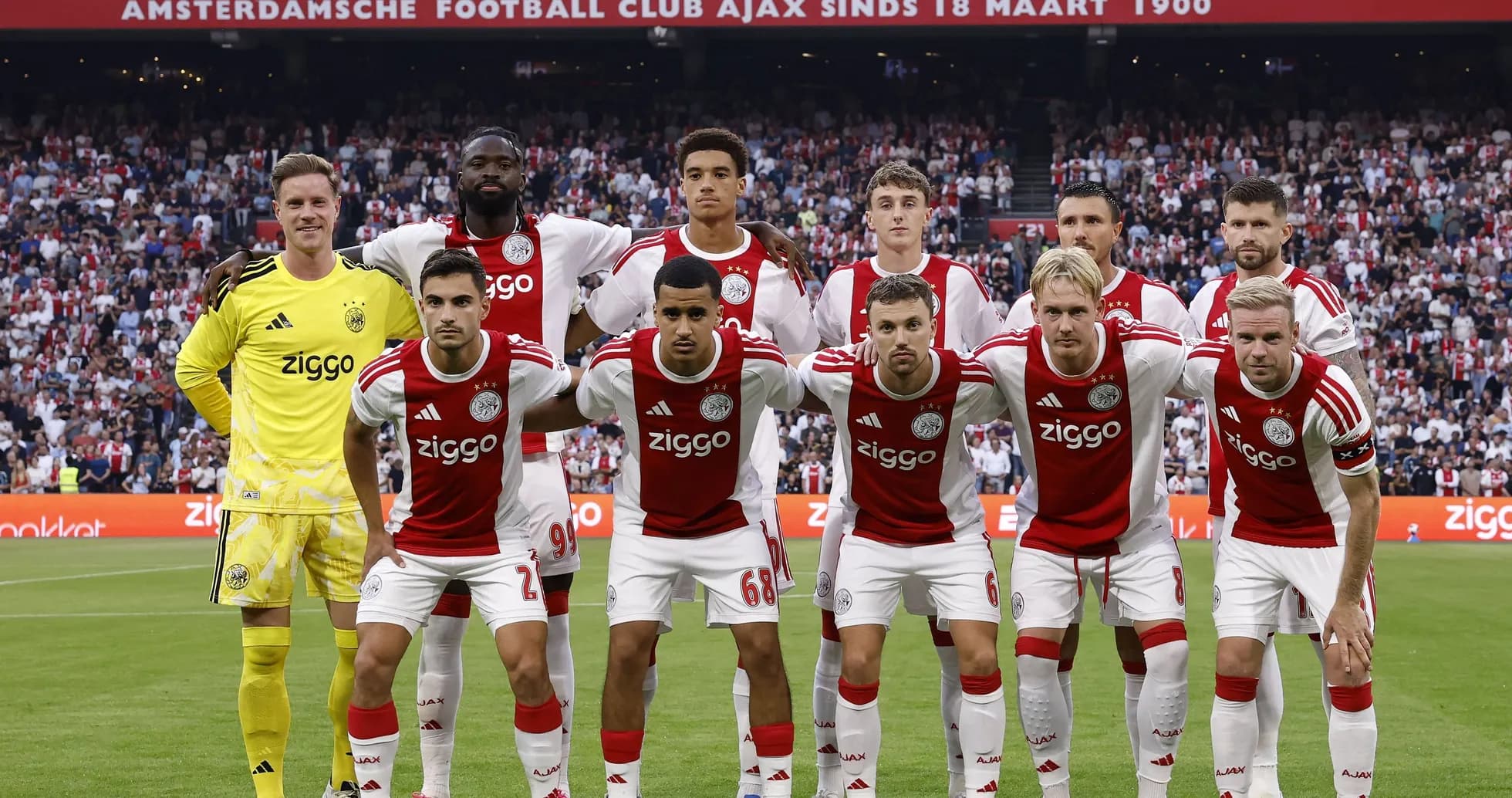
The sporting director sat down with ESPN NL after a ferocious transfer window in which the Amsterdam club, battered in recent seasons, went hunting for elite experience. Marc-André ter Stegen. Sofyan Amrabat. Julian Brandt. Big names. Big reputations. All choosing a side that is still very much under construction.
For Cruyff, that decision starts with the badge.
“When you mention the name Ajax, you can see from their eyes that they are very interested,” he said. The club, he argued, still carries a weight that cuts through any recent struggles. “We have to get back to the top. Senior players want to compete and perform at their peak right now.”
That urgency has shaped his entire approach. Cruyff did not sell a data project or a glossy presentation. He sold a human one. He described how he prefers to speak to targets on a personal level, building one-to-one connections instead of drowning them in tactical diagrams and statistics.
One deal, in particular, lit him up: Julian Brandt.
The German playmaker’s arrival was orchestrated in near silence. No leaks, no slow drip of rumours. Ajax worked in the shadows and then dropped the news on a Friday evening, catching even seasoned observers off guard.
“For once, we as a club showed that we determine when information comes out,” Cruyff said. It was a small victory in an era of hyper-connected transfer gossip, but for him, a symbolic one. He even reached for one of Johan Cruyff’s most famous lines to explain the mindset: “If you don’t shoot, you will never score. Sometimes you just have to try.”
The shot, in this case, was a recruitment strategy that has drawn plenty of outside noise.
Critics have questioned whether Ajax are stretching their wage structure by filling the squad with seasoned internationals, even if many arrive without transfer fees. Cruyff pushed back hard. In his view, the real danger lies not in salaries but in writing huge cheques between clubs.
“This is not risky at all,” he insisted. “The biggest risk is paying expensive transfer fees from club to club. Eight of eleven new players arrived for free or on loan.”
That statistic underpins his argument: by leaning on free agents and loans, Ajax buy flexibility. If a signing fails, there is no sunk transfer fee weighing down the balance sheet. If it works, they have imported top-level quality at a fraction of the market cost.
The numbers behind the window, Cruyff stressed, support that logic. Sales revenue has significantly outstripped expenditure, even without the cushion of Champions League income. The books, he maintains, remain healthy.
Of course, the other side of that equation is painful for supporters. Ajax continue to lose gifted youngsters to richer predators. Mika Godts’ move to Paris Saint-Germain is the latest reminder of where the Eredivisie sits in the European food chain.
Cruyff did not try to dress it up. He accepted that reality head-on, framing Dutch football as a launchpad for talents who inevitably catch the eye of Europe’s superclubs. The challenge, as he sees it, is to keep refreshing the squad while still aiming for silverware, not simply survival.
That test starts immediately.
A radically reshaped Ajax now walks into De Topper against PSV, a club Cruyff openly describes as having “established stability.” PSV know exactly who they are. Ajax are trying to show who they can be.
The gap in continuity is clear. The gap in ambition, he insists, is not.
Cruyff expects this Ajax to fight for every trophy on offer, regardless of how many new faces have just walked through the door. “We have taken a big step in the right direction,” he concluded. “Our job now is to prove it tangibly on the pitch.”
The talking is done. The rebuild will now be judged in Eindhoven, in Amsterdam, and across a season that will reveal whether Ajax’s gamble on experience and flexibility is a masterstroke—or an expensive reset still waiting for its first real win.