.svg&w=384&q=75 "GoalGist logo")
James McClean Critiques Derry City After European Exit
James McClean did not kick a ball on Thursday night. He didn’t need to. His absence from the pitch said plenty. What he did and said around it said even more.
Left out of the matchday squad for Derry City’s 1-0 home defeat to Rijeka – a result that sealed a 2-0 aggregate loss and dumped them out of the Conference League – the 37-year-old watched his club’s European campaign end with a whimper.
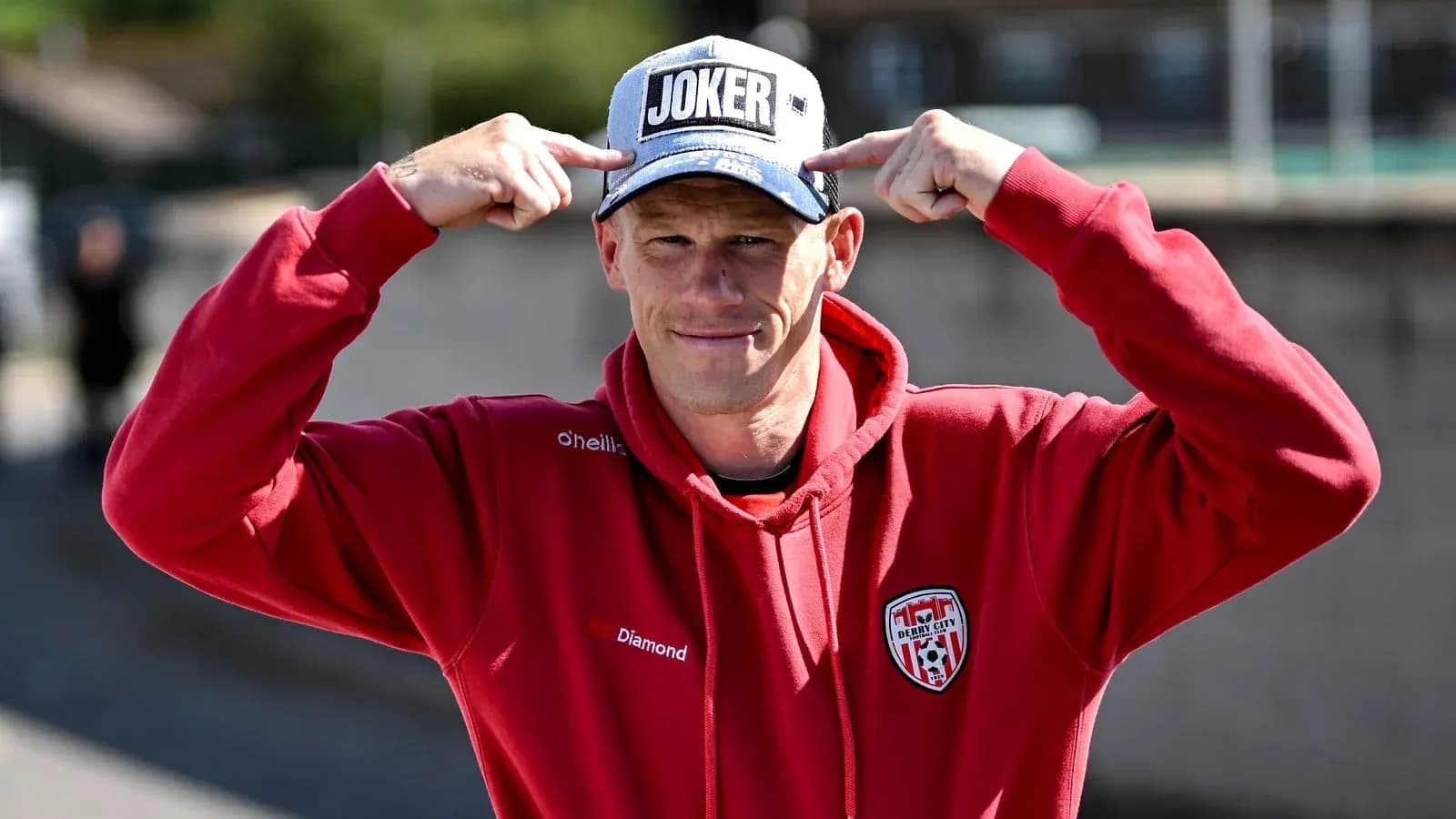
He arrived in a Derry hoodie, but it was the baseball cap that caught the eye. One word, in bold: “JOKER”.
On a night when Shelbourne and Bohemians both progressed in Europe, Derry went the other way. Again.
“We played four, lost four”
This was supposed to be a club on the rise under Tiernan Lynch, runners-up in the league in 2025 and battle-hardened by a wild Europa League tie against CSKA Sofia earlier in the summer. They had gone toe-to-toe with the Bulgarians, losing 5-3 on aggregate in a fiery contest overshadowed by serious crowd trouble sparked by the visiting supporters at the Brandywell.
That performance carried a sense of promise. Rijeka, conquerors of Shelbourne in last year’s Europa League, offered another stern test. Instead, they provided a harsh reality check.
Four European games. Four defeats.
McClean, an unused substitute in the first leg in Croatia and omitted altogether for the return, went to his own platform once the damage was done. On Instagram, he made it clear where he felt the blame did not lie.
“Rovers, Bohs, Shels, Larne have all progressed through ties in Europe this year. We played four, lost four,” he wrote.
“And sorry, it needs to be said, we have every much as good, if not better, a squad on paper [as those clubs].
“If you watch the games, the lads aren't losing these games based on lack of effort. So clearly there is an issue somewhere.
“Given [I] am around it every day and have the CV to give my opinion, I think I'll give it whether anyone likes it or not.
“If you don't like it, then you'll excuse me for not caring about your opinion, given that 99.9% that have a lot to say have never played a professional game in their lives.”
No ambiguity there. The players, in his view, are not the problem. The “issue” lies higher up, or deeper in.
A homecoming gone sour
McClean’s return to his hometown club ahead of the 2026 season was billed as a statement signing, a decorated former Ireland international coming back to drive Derry towards trophies and group-stage nights under the lights.
Instead, the campaign has unravelled.
Derry are languishing in sixth place, nowhere near the title conversation, their domestic form mirroring their European collapse. The squad that McClean insists is “as good, if not better” than their rivals on paper has misfired badly on grass.
He has not escaped scrutiny either. By his own standards, it has been a poor season, his influence patchy, his frustration increasingly visible. The cap. The posts. The tone.
Hints of that discontent had already surfaced. Speaking on RTÉ’s World Cup coverage, McClean had alluded to promises made and not kept, to a reality that jarred with the sales pitch that lured him home.
“My family have enjoyed being home. Probably not so much myself if I'm being honest,” he said.
“You have a lot of conversations on the phone. Then you come home and realise what you hear on the phone is not what you see in reality.”
Those lines land differently now, framed by a European campaign that never got going and a public broadside aimed squarely at the club’s direction.
Questions Derry can’t dodge
The contrast with their rivals is stark. Shamrock Rovers, Bohemians, Shelbourne and Larne have all found a way to navigate European ties this year, to turn tight margins into progress. Derry, by McClean’s own blunt tally, “played four, lost four”.
Lynch and his staff now face uncomfortable questions. If effort is not the problem, as one of their most high-profile players insists, what is? Preparation? Tactics? Recruitment? Culture?
McClean has chosen his moment and his platform. At 37, with a substantial career behind him and a “CV” he is not shy about referencing, he knows exactly how his words will land in a city that idolised him long before he came home.
Derry wanted his edge, his standards, his refusal to accept mediocrity. They have it now – in full glare, and on the back of another empty European summer.

