.svg&w=384&q=75 "GoalGist logo")
Jamal Musiala's Journey: From Injury to Recovery
Jamal Musiala has spent the last year fighting battles most fans never see.
First it was the ankle – broken at the 2025 FIFA Club World Cup, six months gone in an instant. Plates, screws, rehab rooms instead of roaring crowds. He clawed his way back, squeezed in 24 appearances across the Bundesliga, German Cup and Champions League, chasing rhythm that never quite settled.
He still made it to the 2026 World Cup, still pulled on his country’s colours on the biggest stage. The touches were there, the elegance on the ball remained, but the final punch, the end product, often went missing. A player known for electric surges and sharp finishes was still searching for his full spark.
Bayern had pencilled him in as a central figure for 2026-27. Their No.10, their creative heartbeat. Instead, the season has opened with Musiala spending more time under bright hospital lights than stadium floodlights.
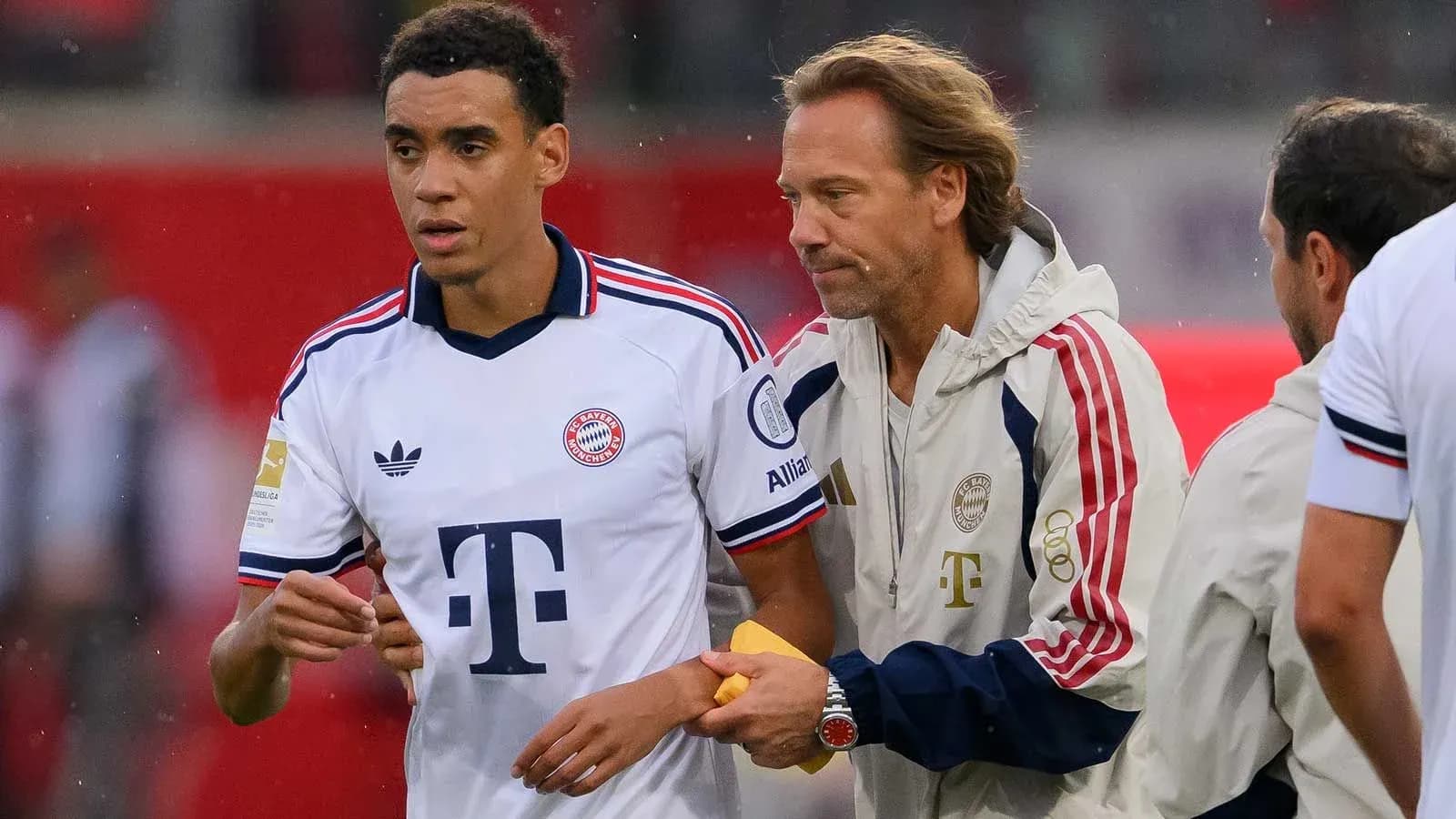
He fainted during a friendly against RB Leipzig. A worrying sight, but initially brushed off as a one-off. Then came Heidenheim, and he collapsed again. This time, nobody could pretend it was nothing.
Musiala chose to explain it himself. On social media, he laid out the diagnosis with a calm that belied the fear such words can carry: temporary, brief, but easily treatable absence seizures caused by a neurological dysfunction. Episodes like those in Leipzig and Heidenheim, he admitted, “seem scary at first glance” – but, as he put it, they are currently just part of his everyday life.
He stressed he is receiving “excellent medical treatment” and remains “very optimistic”. He namechecked FC Bayern, his family, his friends – all standing beside him, all helping him through a chapter no 21-year-old expects to read, let alone live.
Around him, the football world has paused. The debate about form, goals and assists has gone quiet. Dietmar Hamann, never shy of an opinion, has parked the tactical talk.
“Obviously, after his injury, when he came back in January, he didn't find the form he had before,” the former Germany midfielder told GOAL, speaking in association with BetVictor Online Casino. The screws and metal plate in Musiala’s foot were long blamed for that dip. Those have now been removed in the summer. The question of what comes next, Hamann admits, can wait.
“I struggle to talk about the footballing side of it because I think the most important thing now is for him to get healthy,” he said. Only once these issues are under control, he believes, will the rest “take care of itself”.
Can Musiala reach the level he hit two or three years ago? “At the moment nobody knows,” Hamann added. But then he voiced what every Bayern supporter, every neutral admirer, quietly feels: “We all hope so.”
That hope is shared by the man now charged with shaping Germany’s future.
Jurgen Klopp has only just taken over the national team, yet one of his first significant conversations was not about tactics or systems, but reassurance. He didn’t call Musiala directly. Instead, he sent a voice message.
“He doesn’t know me at all and doesn’t have my number,” Klopp explained. “I think if I had called him, he wouldn’t have answered for three days because he wouldn’t have recognised my number.” Musiala replied. The line of communication was open.
Klopp knows the weight of expectation that already sits on the young midfielder’s shoulders. He also understands how fragile a career can feel at a moment like this.
“He’s in a situation that you wouldn’t wish on anyone, especially not a young guy like him,” Klopp said. The good news, as he underlined, is that “everything should turn out fine, everyone agrees on that”. Crucially, he has told Musiala that this diagnosis “wouldn’t have any impact on the national team”.
That message matters. It removes the fear of being forgotten.
Inside Bayern, the feedback has been just as encouraging. Klopp revealed that Vincent Kompany, now in charge at the Allianz Arena, has been glowing in his assessment. After the metal plate and screws came out, Kompany told him, Musiala looked “incredible”, back to his old self – “or even better” – before these new health concerns surfaced.
Now the emphasis has shifted again. Not to the next game, but to time.
“What’s important now,” Klopp insisted, “is that he is given the necessary time, and that he gives himself that time as well.” Young players, he pointed out, rarely lack drive. Their problem is impatience. And impatience is the one thing Musiala cannot afford.
The good news for him: he is, in Klopp’s words, “at the perfect club, in the perfect environment” to handle this kind of challenge. Bayern can wait. Germany can wait. The message from the national coach to his No.10 could not be clearer.
“Son, first get healthy, and then the door is open for you.”
The rest of the story – the dribbles, the goals, the nights when Musiala takes over a game again – will only be written if this chapter is handled right. For now, the football world holds its breath and does the one thing it can: wait to see if one of its brightest talents can reclaim the stage on his own terms.