.svg&w=384&q=75 "GoalGist logo")
Iran National Team Prepares in Turkey for Unique World Cup
Iran’s national team slipped into Turkey on Monday, not for a friendly or a fleeting stopover, but for a long, uneasy wait before a World Cup unlike any they have known.
They will be there for weeks, sharpening tactics and fitness, while a different kind of tension builds thousands of kilometres away. The tournament is being co-hosted by the United States, which, alongside Israel, began bombing Iran on February 28, igniting a wider war across the Middle East. Against that backdrop, a training camp suddenly feels like the calm eye of a storm.
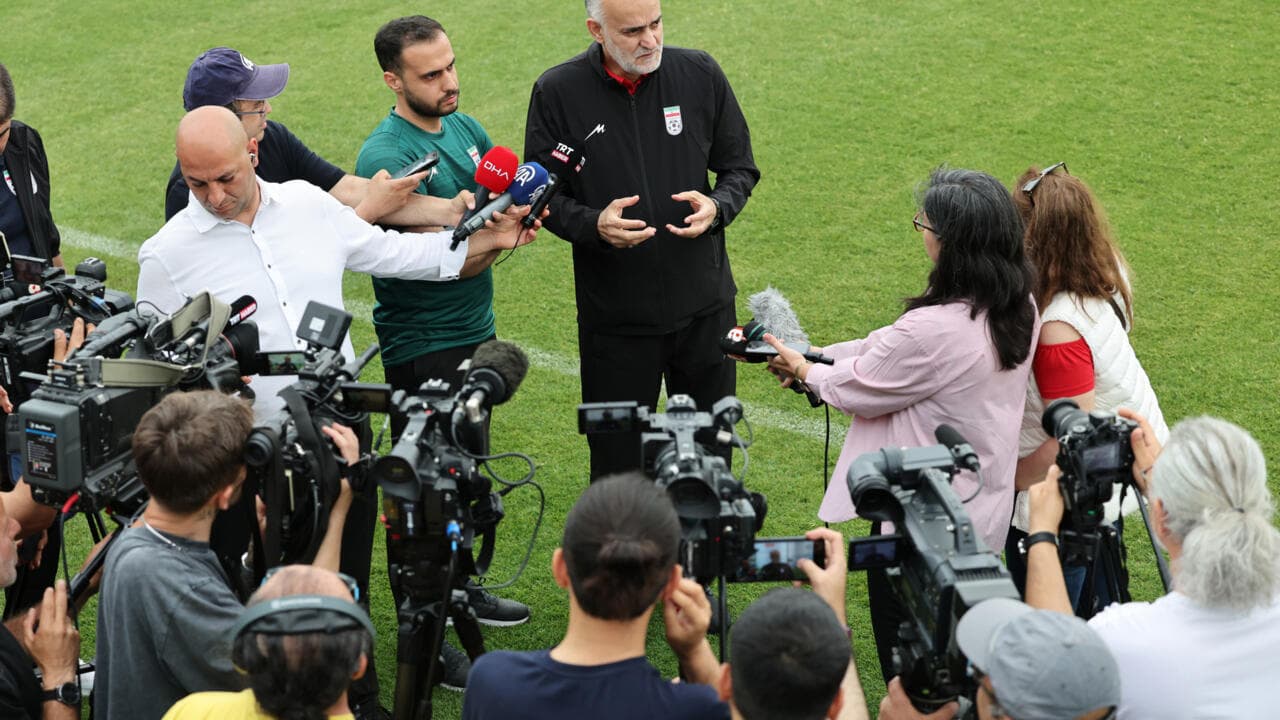
Inside the camp, the message from the top is one of order and control. “Everything will proceed properly according to the protocols and what FIFA has stipulated,” said national team director and federation vice-president Mehdi Mohammad Nabi, underlining that the football side of the operation will follow the book.
He pointed to the machinery already in motion on the other side of the Atlantic. “Inside the United States, they also have committees in place, including a security committee that cooperates with FIFA and is responsible for security matters. In past years we've experienced all of this and we're fully informed about how these security committees operate at every World Cup we've participated in. In this regard, we're very confident and we have a clear plan.”
The words are calm. The reality is not.
Iranian officials have already confirmed that players and staff still do not have visas for the US. For a World Cup host, that is not a minor administrative delay; it is a central obligation. The squad now intends to submit applications at the Canadian embassy in Turkey, turning this camp into both a sporting base and a diplomatic waiting room.
And there is no guarantee everyone gets through the door.
“We’re not certain yet that all the players and staff will receive US visas,” Mohammad Nabi admitted, before reminding the hosts of their responsibilities. “One of the rules that applies to the host country is that they must provide guarantees, according to FIFA's statutes and the regulations of the competition. One of their commitments is the visas: they have to grant the necessary visa facilities to all the teams that have qualified for the World Cup. And FIFA has made arrangements so that the host country will provide the necessary cooperation to teams like Iran in this area.”
The subtext is clear: Iran expect FIFA and the organisers to deliver on those promises, even in the middle of a conflict involving the host nation itself.
While the paperwork hangs in the air, the football schedule is already etched in stone.
Iran will open their Group G campaign against New Zealand in Los Angeles on June 15. A demanding start, but at least a familiar kind of challenge. Belgium await next, also in Los Angeles, a step up in pedigree and pressure. Then comes Egypt in Seattle, a match that could define whether this trip becomes a sporting triumph or a story of what might have been.
The team will be based in Tucson, Arizona, during the World Cup, a desert hub from which they hope to launch a deep run into the knockout rounds. If, that is, they are allowed to cross the border and take their place on the biggest stage.
For now, Iran train in Turkey, plan for New Zealand, Belgium and Egypt, and trust that football’s rules will hold firm in a world where almost nothing else around them does.