.svg&w=384&q=75 "GoalGist logo")
Harry Kane's Evolution: From Goals to Leadership
Thierry Henry leaned back in the Fox studio and almost winced as he described it. Not the pressure. The technique.
“Striking with the inside of the foot, almost wrapping the ball while the body is off-balance,” he said of Harry Kane’s second goal against the Democratic Republic of the Congo. “Do you know how hard it is to generate power then? At the end of the game? To redirect it like that? If I did that now, I’d break my back.”
When one of the greatest finishers of his generation sounds that impressed, you stop and look again.
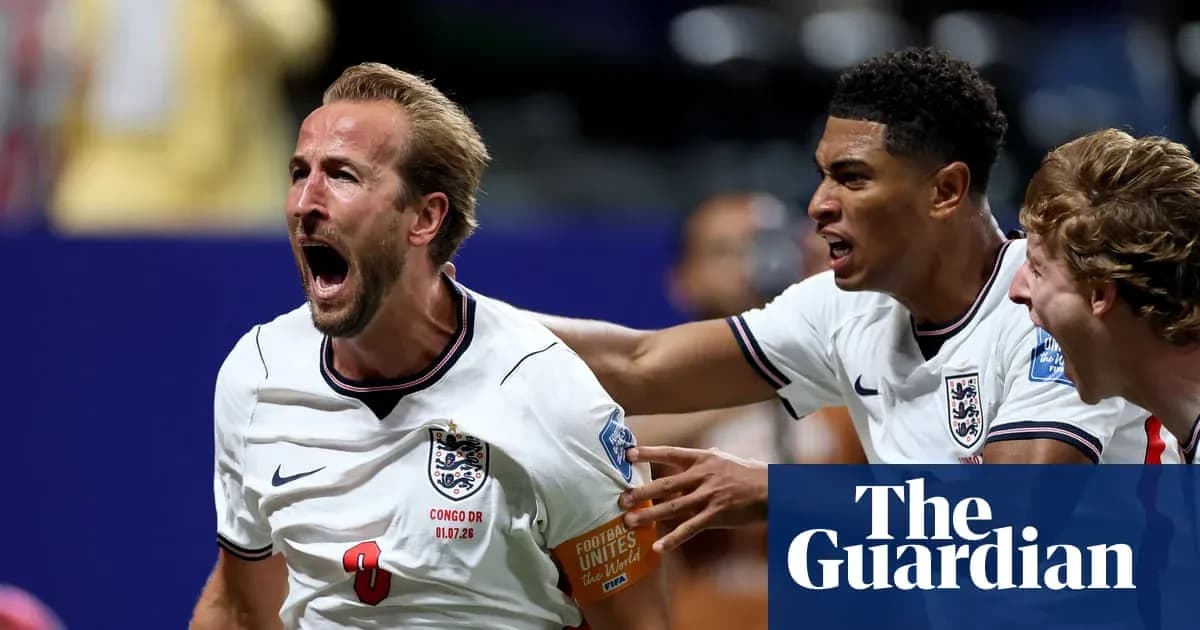
Kane’s strike was exactly that kind of goal. A shot that looked improvised in real time but revealed layers of calculation on the replay. He didn’t just swing a leg. He rotated through his whole frame, arms whipping for extra force, body accepting the fall that would follow. For a split second, everything – balance, timing, power – had to align.
It did. And it kept England alive.
A captain at full power
Kane has called it one of his favourite England goals. No surprise. It was the defining act of a night that could easily have gone the other way.
First came the equaliser, a clever header that rescued England from a grim situation against the DRC. Then came the winner, that brutal, arcing finish that tore into the corner and sent Gareth Southgate’s side into the last 16 against Mexico.
Strip away the noise and you are left with a simple truth: Kane is the reason England are still at this World Cup. He is also, indirectly, the reason Thomas Tuchel remains in work at Bayern Munich. His season has become a running argument in his favour every time the conversation turns to England’s greatest player.
Where does he sit in that hierarchy? The numbers scream for attention. Those two goals against the DRC were his 83rd and 84th for his country, in just 118 caps. He is miles clear as England’s all-time leading scorer. He has five goals from England’s first four games here, right in the hunt for another Golden Boot, and he has already passed Gary Lineker’s World Cup tally.
This is not a striker living off reputation. This is a modern great still climbing.
On the Stick to Football podcast this week, Gary Neville, Roy Keane, Ian Wright and Jill Scott kicked around the old debate. Kane alongside Bobby Moore and Sir Bobby Charlton in England’s top three. It did not feel outlandish. Not anymore.
The missing chapter
Yet one thing still hangs over him. Moore lifted the World Cup as captain in 1966. Charlton won the Ballon d’Or that same year. Their iconic moments arrived when it mattered most.
Kane’s story at major tournaments has always had a jagged edge. He has often reached them short of peak fitness, faded in the closing stages, or watched as the decisive moment slipped away.
He was subdued in the Euro 2020 final. In Qatar, he dragged England to the brink against France in the quarter-final, then blasted a late penalty over the bar that could have made it 2-2. The image followed him. So did the criticism when he was substituted in the Euro 2024 final defeat to Spain.
The narrative was set: Kane was slowing.
Look at this season and that line falls apart. He has 72 goals for club and country. Seventy-two. He is in the Ballon d’Or conversation. At this World Cup, he has covered 43,433 metres – more than any other England player. The data doesn’t just show a poacher. It shows an athlete at full capacity, still stretching himself.
“The best I’ve felt in my career,” Kane said. That was not a throwaway line. He talked about a conscious decision at the start of the season to push his fitness to another level, to hunt for marginal gains in recovery, to stay available. He acknowledged the role of luck with injuries, but the work is obvious.
The move to Bayern has helped. The winter break in Germany has allowed his body to reset. Bayern’s domestic dominance has given him the luxury of rest that was rarely available in the Premier League. The result is on the pitch: a centre-forward who can sprint, press, drop off, and still arrive in the box with enough energy to whip a winner into the top corner in the 90th minute.
The evolution of a nine-and-a-half
Kane’s finishing has always been elite. What separates this version of him is everything else. No striker in the game drops off the front line and threads passes between defenders quite like he does. He has turned the No 9 role into something more layered, more cerebral.
The second goal against the DRC was about power, but it also underlined how he has built that power. His body shape, the way he used his core, the freedom to throw himself into the strike knowing his frame could handle the impact – this is an athlete who has invested in every detail.
He studies his numbers after every game. Distance covered. Sprints. Output. He likes what he sees.
“If you’ve got the leaders training and running like I do, it only helps,” he said. “I’m willing to run more and do whatever it takes to help the team.”
That mindset has dovetailed with Jude Bellingham’s rise. Between them, they have dragged an imperfect England side through the group and into the knockouts. The rest of the team has not always kept pace. The wingers have flickered without truly catching fire. The midfield looks tired. The defence has swayed under pressure. Right-back has turned into an injury minefield.
Yet England are still here. Largely because Kane is.
Next comes Mexico in Mexico City, the Azteca looming with its history, its heat, its altitude and its noise. It is the kind of setting that tests not just lungs but nerve.
“There is not much we could do with altitude training,” Kane admitted. England did 10 days of heat work in Florida to acclimatise, but the altitude is another problem. To prepare properly, they would have needed to base themselves in Mexico for a long stretch. That was never realistic for a long tournament.
So they accept the disadvantage. They look for small tricks, marginal aids. Then they get on with it.
“We’re professional athletes. We have to deal with adversity every now and then,” Kane said. If England win there, if they grind their way through the thin air and the roars of a home crowd, the achievement will feel different. Bigger. Harder earned.
Kane talks about peaking at the right time. Kyle Walker, watching from the outside now, pointed to the DRC game and said there is a strange joy in winning when you have played badly. Kane agreed.
“You very rarely see the team come out of the gates hot and then sustain that all the way through to the end,” he said. Tournament football is a slow burn. Combinations take time. Rhythm builds in awkward bursts. There is no perfect script.
“You might need to grind it out. You might need to find a difficult way to win.” England’s captain is not chasing a fantasy of flawless football. He is chasing survival, then momentum.
A louder voice
Kane has always led by example. Now he leads with his voice too.
After the win over the DRC in Atlanta, he pulled his teammates into a huddle on the pitch. Cameras zoomed in. This is not something he naturally enjoys. “Sometimes I feel like it can look a little bit staged,” he admitted.
But the message mattered more than the optics. He wanted them to savour the moment. To avoid what happened after the Panama game at the 2018 World Cup, when England cruised to a big win, topped the group, and barely celebrated. As if it were routine. As if such days were guaranteed.
“It’s easy as an England player sometimes to take things for granted,” he said. He has seen too much of the other side – the near misses, the collapses, the tears – to treat knockout qualification as a footnote.
The aim now is to write new memories, not just revisit old scars. Kane has been doing that his whole life. Against the DRC he had to park his anger at being denied a first-half penalty, a decision he still cannot quite believe.
“It’s a clear penalty,” he insisted. He described the push in the back, the race to the ball, the split-second choice between leaping over Lionel Mpasi and risking a nasty injury if he kept his leg planted. The contact came. He went down. Nothing given. No help from VAR.
“I was really surprised it wasn’t given,” he said. “In the end it doesn’t matter because we won.”
That line tells you where his focus is now. Not on personal injustice, not on the missed calls or the old failures, but on what comes next.
The numbers, the goals, the records – they already place Kane among England’s greats. What happens in Mexico, and beyond, will decide if he leaves as their greatest of all.