.svg&w=384&q=75 "GoalGist logo")
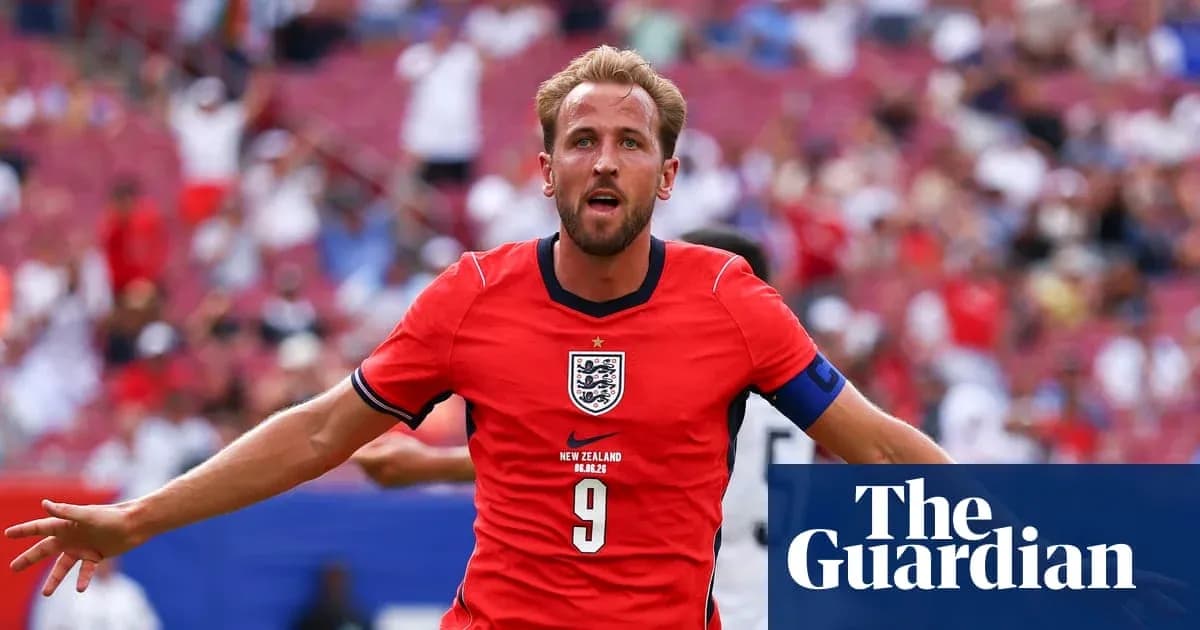
Harry Kane: Bayern Munich's Best Transfer Ever
Uli Hoeness has never been shy with a superlative. The Bayern Munich president has spent a lifetime reaching for the biggest words in the room. So when he walked out of the DFB-Pokal final and declared Harry Kane “the best transfer the club has ever made” after the Englishman’s hat-trick in a 3-0 win, it sounded like classic Hoeness theatre.
A month later, with the champagne flat and the confetti swept away, the line still stands. Inside Bayern, no one is rowing back. “He absolutely is the best we’ve had,” says one senior figure. No wink. No caveat.
From nearly man to centrepiece
Kane’s transformation in the public imagination has been as ruthless as his finishing. Not long ago, he was the great nearly man of his generation: a forward of formidable numbers, but without a trophy, dragging his way through Euro 2024 and looking as though the peak might already be behind him. To many outside England, his Golden Boot at Russia 2018 felt like a technicality rather than a coronation.
Le Journal du Dimanche’s verdict – “top goalscorer despite not having scored from the quarter-finals on” – caught the mood. Kane’s six most productive years at Tottenham risked being filed under noble failure: a relentless worker, a fine striker, but ultimately a story of effort outstripping reward.
That file has been shredded in Munich.
When Time selected the faces of this World Cup, the usual deities appeared: Lionel Messi, Cristiano Ronaldo, Neymar, Kylian Mbappé, Lamine Yamal, Jude Bellingham. This time, Kane stood among them, no longer the diligent understudy but part of the main cast. The move to Bayern, the €100m leap into unfamiliar territory, has dragged him into football’s very top tier.
“When we bought him for more than €100m, that was new territory for us and a crazy risk,” Hoeness admitted. “But he’s paid back every single euro. Not just because he scores so many goals, but because he is a role model in the dressing room.”
A foreign star who feels local
Hoeness loves the goals, of course. What really animates him, though, are the stories. Kane with an arm around a rattled youngster. Kane lingering after training to talk, to listen. Kane, still grappling with German lessons written into his contract, yet cutting through any language barrier because half the dressing room speaks English and Vincent Kompany runs most of the football in it.
Hoeness, a World Cup winner from an era when defenders kicked first and apologised never, also admires the punishment Kane absorbs. Week after week in the Bundesliga, centre-backs whack into him. He gets up, again and again. “I think you’d have to cut off his head or his arm to stop him playing,” Hoeness says. It sounds extreme, but it fits the evidence.
Within the squad, the impact is being measured against only two modern benchmarks: Manuel Neuer and Thomas Müller. Both are Bayern lifers, both legends. For an Englishman in his thirties to walk into that environment and command similar reverence is remarkable.
The cliché of the British player abroad – baffled by the culture, homesick, half-in and half-out – has not landed here. The Kane family did not decamp to Bavaria immediately, which raised some eyebrows, but the full move has been decisive. Kane and his wife, Kate, have settled into a rural home once owned by Lucas Hernández, near the affluent suburb of Grünwald. The children – Ivy, Vivienne, Louis and Henry – ski in winter, embracing the Bavarian rhythm. Kane, contractually banned from hurtling down the slopes, contents himself with Alpine trips to Garmisch.
He has even leaned into the quirks. At a fan day in Kirchweidach, a village of 2,000 near the Austrian border, he stirred soup in a local wedding tradition symbolising union with Bavaria and took part in a skittles-style game using litre beer steins instead of bowling balls. “A bit crazy,” he called it with classic British understatement. He did it all anyway, smiling.
A striker re-forged in Munich
Bayern knew they were signing a world-class forward. They did not quite expect this. Since finally ending his trophy drought with the Bundesliga title in 2025 – the first of two league crowns and a DFB-Pokal so far – Kane has not plateaued. He has surged.
He looks leaner, sharper, more explosive than at any point in his career. The numbers are frightening. The quality of the goals, even more so.
His strike against Atalanta in the Champions League sits near the top of any personal highlight reel: a drag-back and swivel that erased two defenders in one movement, followed by the kind of clean, ruthless finish that has become his calling card. Yet the second goal in that DFB-Pokal final may say more about who he is now.
Eighty minutes gone, game still alive. Kane collects the ball outside the box and whips a vicious curling effort against the bar. Most strikers would watch and groan. Kane doesn’t. As the rebound drops, he is already moving, already thinking. Another drag-back, another turn, a pocket of space conjured from nowhere, and then the finish. One chance becomes two. The second one kills the final.
This is not just a poacher in the six-yard box. This is a complete forward, dictating games from everywhere.
The numbers place him in rare company. With 61 goals for Bayern, he is the only player in Europe’s major leagues currently matching the absurd output of Messi and Ronaldo in their imperial phases. Only Erling Haaland, also alongside him on that Time photoshoot, is remotely close. Ronaldo once hit 66 in a season, Messi 73. After England’s game against New Zealand in Tampa, Kane sits on 67.
And still he spends large chunks of matches dropping into what is effectively a No 6 position, collecting the ball deep, launching attacks. His passing range now rivals his finishing. The assist for Luis Díaz in the Champions League semi-final first leg against Paris Saint-Germain – a sweeping, precise delivery that opened the defence – showed why Thomas Tuchel is expected to lean heavily on Bayern’s blueprint at this World Cup.
From overlooked prospect to Ballon d’Or contender
At Tottenham, Kane’s Ballon d’Or candidacy never got off the ground. The goals were there, the performances too, but the late-stage Champions League nights and the trophies that shape the narrative were missing. In Munich, those elements have finally aligned.
Now he is firmly in the conversation. How loud his case becomes depends, as ever, on the World Cup. Yet the arc of his career feels unmistakable: a slow burn towards a defining summer, the late bloomer edging towards a moment of destiny. In football’s race between hares and tortoises, Kane has always been the latter. The finish line is coming into view.
It was never obvious he would get this far. Spurs youth coaches remember a teenager who did not look like elite material. Slightly overweight by academy standards. Not quick. Not the cleanest technically. “You would never have thought that he would be what he is now,” one recalls.
Then came the growth spurt at 14, the incremental technical gains, the striking technique that began to separate him. The most telling detail? His capacity to absorb information. Any instruction – gym work, finishing drills, positional tweaks – only needed to be delivered once. It stuck.
The early senior years were not glamorous. A bleak loan at Norwich brought an ugly, high-profile miss on debut against West Ham and a half-time substitution in an FA Cup defeat to non-league Luton. Between those low points, he was dropped to the under-21s and barred from taking penalties because he was not considered reliable enough.
Leicester offered little respite. During their 2013 Championship playoff semi-final against Watford, Kane and Jamie Vardy both started on the bench for both legs. At that stage, neither looked destined to become a Premier League icon.
Even at Spurs, he did not immediately convince. Mauricio Pochettino’s first impressions in pre-season 2014 were lukewarm. Kane remembers the conversation vividly. “We had our body fat test done and I was the highest in the team, something like 18%,” he said. He went to see Pochettino, who told him straight: the numbers were too high, the effort not quite there. Then came the twist. “He told me: ‘You can be the best striker in the world.’”
Back then, it sounded like motivational overreach, the kind of line a manager uses to jolt a young player awake. Just as Hoeness’s “best transfer ever” felt, at first, like another grand flourish.
Both men may have undersold it.
Because now, in Bavaria, with medals in his pocket and the World Cup looming, Harry Kane is no longer chasing his reputation. He is defining it.