.svg&w=384&q=75 "GoalGist logo")
Group J: Messi's Last Stand and the Challengers
Anyone treating Group J as Argentina’s victory parade hasn’t learned the lesson of Lusail. In 2022, the eventual world champions walked into their opener against Saudi Arabia a goal up at half-time and walked out stunned, beaten, and briefly ridiculed. They did not score a first-half goal again in the group stage. They regrouped, they grew, and they lifted the trophy.
The warning is clear. Nothing is handed to you at a World Cup. Not even when Lionel Messi is on your side.
This time, the champions land in North America with the weight of history on their shoulders and a cluster of dangerous, wildly different challengers at their feet. Austria, hard-running and meticulously drilled. Algeria, finally back and armed with an ageing but still glittering Riyad Mahrez. Jordan, first-timers with nothing to lose and a star forward carrying a nation’s imagination.
This is not a soft landing. It is a test of nerve, memory and ambition.
Algeria: Petkovic’s Return to the Big Stage
Algeria have waited eight long years to hear their anthem at a World Cup. The last time they were here, in 2014, they dragged Germany to extra time in the last 16 and left Brazil with their reputation enhanced and their supporters wondering how far they might go next time.
Next time never came. Until now.
Vladimir Petkovic is the man who has dragged them back. The Bosnian and Herzegovinian coach knows tournament football. With Switzerland, he reached the 2018/19 Nations League finals and the quarter-finals of Euro 2020, knocking out Turkiye and France before losing to Spain on penalties. He understands structure, he understands tension, and he understands how to make a team awkward to play against.
He also has goals. Mohamed Amoura tore through CAF qualifying with 10 strikes, seven more than anyone else in Algeria’s group, including a hat-trick at home to Mozambique. At Wolfsburg, his season split in two: eight goals in his first 19 Bundesliga games, then 11 without scoring. If he arrives in the mood from autumn rather than spring, Group J will feel it.
Around him, the squad carries an unmistakably European sheen. Four Bundesliga players. Houssem Aouar, once capped by France and schooled at Lyon and Roma, now an experienced midfield link. Amine Gouiri, fit again and fresh from a brace in a 7-0 friendly demolition of Guatemala in March. Nabil Bentaleb, the former Tottenham midfielder now at Lille, adds bite and know-how.
In goal, there is Luca Zidane, son of Zinedine, at his first World Cup after recovering from a broken jaw and chin with Granada. Out wide, Anis Hadj Moussa arrives off a superb season at Feyenoord, where he produced 14 goals and seven assists and played like a man who expects to be noticed.
Rayan Ait-Nouri’s year at Manchester City never quite caught fire. He started the first three matches of the season, then slipped to the fringes between an ankle injury and AFCON commitments, before Pep Guardiola handed him a run of seven straight starts in February and March. That rhythm, late but welcome, could matter.
At the centre of it all stands Mahrez. Captain, talisman, serial winner. Now at Al-Ahli in the Saudi Pro League, he needs eight more goals to become Algeria’s all-time leading scorer. He already has 38 goals and 43 assists from 113 caps, an international career draped in the 2019 AFCON title and defined by that stunning Leicester City title run in 2016 and the treble with Manchester City in 2023.
He is 35. He is not done.
Algeria’s group-stage finale against Austria has the feel of a playoff in all but name. With both sides expected to beat Jordan and eight third-placed teams going through, Les Fennecs have every right to believe this will be the second time they step into the knockout rounds. Fifth World Cup. One more chance to turn promise into something lasting.
Argentina: Chasing the Ghosts of Brazil 1962
No one has defended the World Cup since Pelé’s Brazil did it in 1962. That is the scale of Argentina’s ambition.
Lionel Scaloni arrives in North America as the architect of the most successful modern era in Argentina’s history. Copa America 2021. World Cup 2022. Copa America 2024. He is the only coach in the nation’s history to win both the Copa and the World Cup, the man who finally ended a 36-year wait for that third star.
The squad he brings is familiar, almost comfortingly so. Emiliano Martinez, the goalkeeper who turned penalty shootouts into theatre in Qatar, keeps his place. Cristian Romero and Lisandro Martinez anchor a defence that mixes aggression and composure. In midfield, Rodrigo De Paul, Alexis Mac Allister and Enzo Fernandez form a trio that can scrap, press and create with equal enthusiasm. It is one of the standout midfields in the competition.
Up front, Scaloni has options. Julian Alvarez, the shapeshifter, can play wide, as a nine, or floating off the main striker. Lautaro Martinez leads the line, a pure centre-forward with a relentless work rate and a striker’s instinct for chaos in the box.
Angel Di Maria has gone, his international story closed after the 2022 triumph. The romantic subplot of Franco Mastantuono, the teenage Real Madrid midfielder, has been shelved too, his omission the biggest surprise of the squad announcement.
All of which leaves the spotlight exactly where everyone expected it to be.
On Messi.
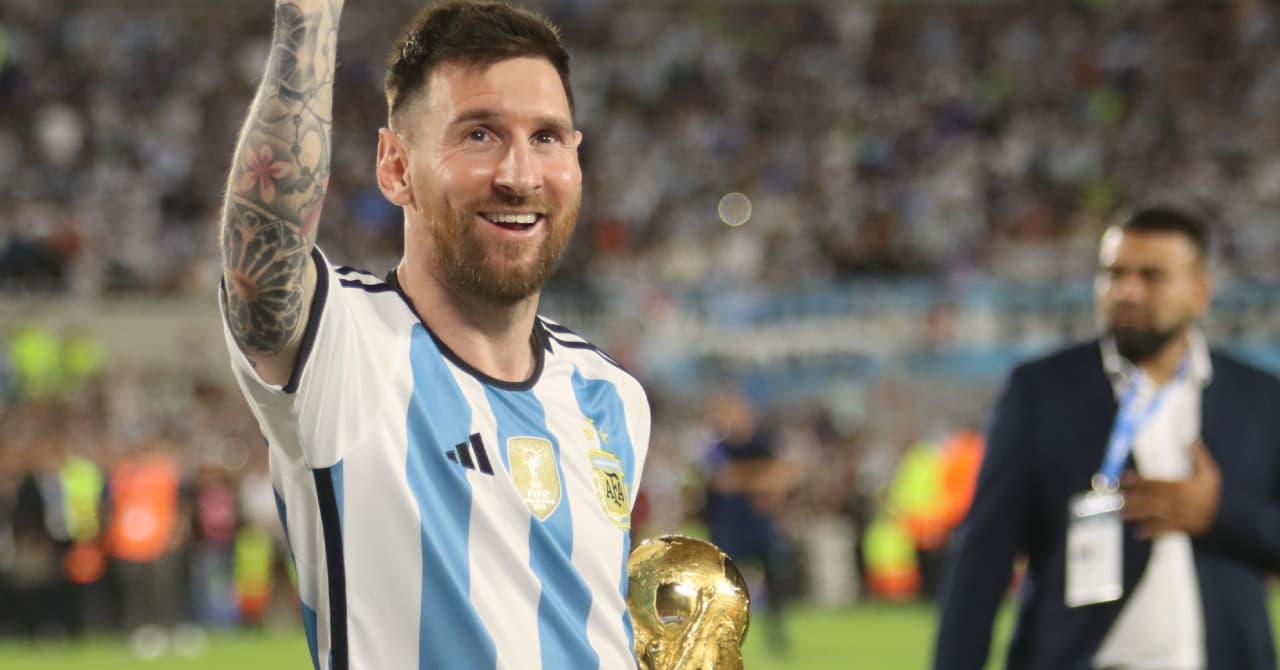
His hamstring scare with Inter Miami in May briefly rattled Argentina’s calm, but Scaloni’s early assessments were relaxed, and Messi is expected to start the opener against Algeria in Kansas City. He arrives for a record sixth World Cup. There will not be a seventh. He finished CONMEBOL qualifying as top scorer with eight goals and remains, at 38, the axis around which everything still turns.
This is more than a footballer at a tournament. His presence in North America is a cultural event, a farewell tour wrapped inside a title defence. Argentina should control Group J. The real story, as ever with them, will begin once the knockouts arrive and the jeopardy sharpens.
For now, the mission is simple: avoid another Saudi Arabia moment, top the group, and give their captain a path that might just end with him lifting the trophy again.
Austria: Rangnick’s Relentless Machine
Austria arrive as World Cup underdogs in name only. The badge may not intimidate, but the football will.
Ralf Rangnick has transformed the national side, imposing the high-pressing, high-octane style that has followed him throughout his career. Since taking charge, he has rebuilt the structure, the identity, the belief. The results are already on the board.
At Euro 2024, Austria reached the last 16 and, more tellingly, finished ahead of France and the Netherlands in their group. They then punched their ticket to North America and now bring what is arguably their strongest squad since that third-place finish in 1954.
The spine is pure Bundesliga. Fourteen of the 26 players are based in Germany, many of them products of the Red Bull network Rangnick helped design. RB Leipzig’s Christoph Baumgartner, Xaver Schlager and Nicolas Seiwald are the heartbeat of the midfield, conditioned in a system that mirrors their coach’s demands.
Marcel Sabitzer, with 95 caps, adds authority and a knack for big moments from Borussia Dortmund. Konrad Laimer, now at Bayern Munich, provides relentless running and tactical discipline in wide midfield roles.
David Alaba, at 33, captains the side, the veteran presence who has seen everything. At the other end of the age spectrum, Carney Chukwuemeka has nailed his colours to Austria rather than England, while PSV Eindhoven’s Paul Wanner, also 20, has the talent to use this World Cup as a launchpad.
Up front, Marko Arnautovic, 36, travels as vice-captain and record scorer with 47 goals from 132 caps. He knows this could be his last dance on the major stage, and that knowledge often sharpens the edges of a striker’s game.
The standout, though, is Baumgartner. He arrives in the form of his life. Thirteen goals and 10 assists in the Bundesliga this season mark him out as one of the most productive central midfielders in Germany. His late runs, his timing between the lines, his composure in tight spaces: these are the weapons that can tilt tight group games.
Austria will not sit back. They will press, they will harry, they will try to drag opponents into a physical and mental storm. The opener against Jordan in Santa Clara is their launchpad. From there, Rangnick’s side look the most likely to harry Argentina at the top of the group and to stand toe-to-toe with Algeria in what could become a de facto shootout for second.
Jordan: Newcomers With Nothing to Fear
Every World Cup needs a debutant that refuses to play the role of tourist. Jordan intend to be that team.
They earned this, finishing second in their AFC third-round group behind South Korea and ahead of Iraq, Oman, Palestine and Kuwait. No backdoor, no fluke, just consistency across a demanding campaign.
On the touchline stands Jamal Sellami, a Moroccan coach with a strong domestic pedigree and a continental title on his CV after guiding Morocco’s local-national team to the 2018 African Nations Championship. He has spoken openly of trying to mirror what his countrymen did in Qatar, when Morocco became the first African and Arab nation to reach a World Cup semi-final.
It is a bold ambition. It is also the kind of target that can galvanise a dressing room.
Thirteen of Jordan’s 26 players are home-based, which gives them something many more storied nations lack: familiarity. Combinations are well-worn, relationships are settled, and the patterns of play are ingrained. At a tournament where some squads take weeks to click, that cohesion can be an edge.
There has been pain too. Striker Yazan Al-Naimat, a key attacking figure, suffered an ACL injury in December and misses out. His absence strips away one obvious outlet.
The defence will lean on captain Ehsan Haddad of Al-Hussein, the voice at the back, and Yazan Al-Arab, one of the few players based outside the Middle East, who brings experience from FC Seoul.
But the hopes, the dreams, the possibility of something unforgettable? Those rest with one man.
Mousa Al-Tamari, of Rennes, is the finest footballer Jordan has produced. The first Jordanian to play in Ligue 1, he carries the nickname “Jordanian Messi” at home, a label that hints at his dribbling and creativity but also at the expectations he shoulders. This is his stage. If Jordan are to shock anyone in this group, he will almost certainly be at the heart of it.
The schedule gives them a sliver of opportunity. Austria in Santa Clara in the opening game: their most realistic chance of a result, a fixture where a draw would echo far beyond the group. Anything they prise from Algeria would be historic. And then comes Argentina at AT&T Stadium in Dallas, a night that will be the biggest in Jordanian football history regardless of the stakes.
Messi on one side. Al-Tamari on the other. A debutant nation under the lights, finally part of the story.
Group J offers Argentina a path they should navigate, but not one they can stroll. Algeria arrive with scars and ambition. Austria come with a plan and lungs of steel. Jordan bring hunger and a star chasing his own kind of immortality.
Messi wants to walk away with the trophy in his hands. The question is simple: who in this group dares to trip him before he even reaches the knockouts?