.svg&w=384&q=75 "GoalGist logo")
Ghana vs England: Tactical Insights for World Cup Clash
Ghana escaped. Just.
Ranked 73rd in the world and 39 places below Panama, the Central Americans were supposed to be fodder for the Black Stars in their World Cup opener. Instead, Ghana staggered through long spells, clung on, and needed a late tactical reset from Carlos Queiroz – plus sheer bloody-minded determination – to squeeze out a 1-0 win.
They will not get away with that against England.
This is uncharted competitive territory. Ghana and England have met only once at senior level, a 1-1 friendly at Wembley in 2011. On Tuesday, the stakes are very different: group favourites, tournament favourites, and a Ghana side still trying to work out what it wants to be.
Queiroz has problems to solve. Some are about personnel. Some about structure. Some about big names who no longer fit the roles they once owned.
The Jordan Ayew question
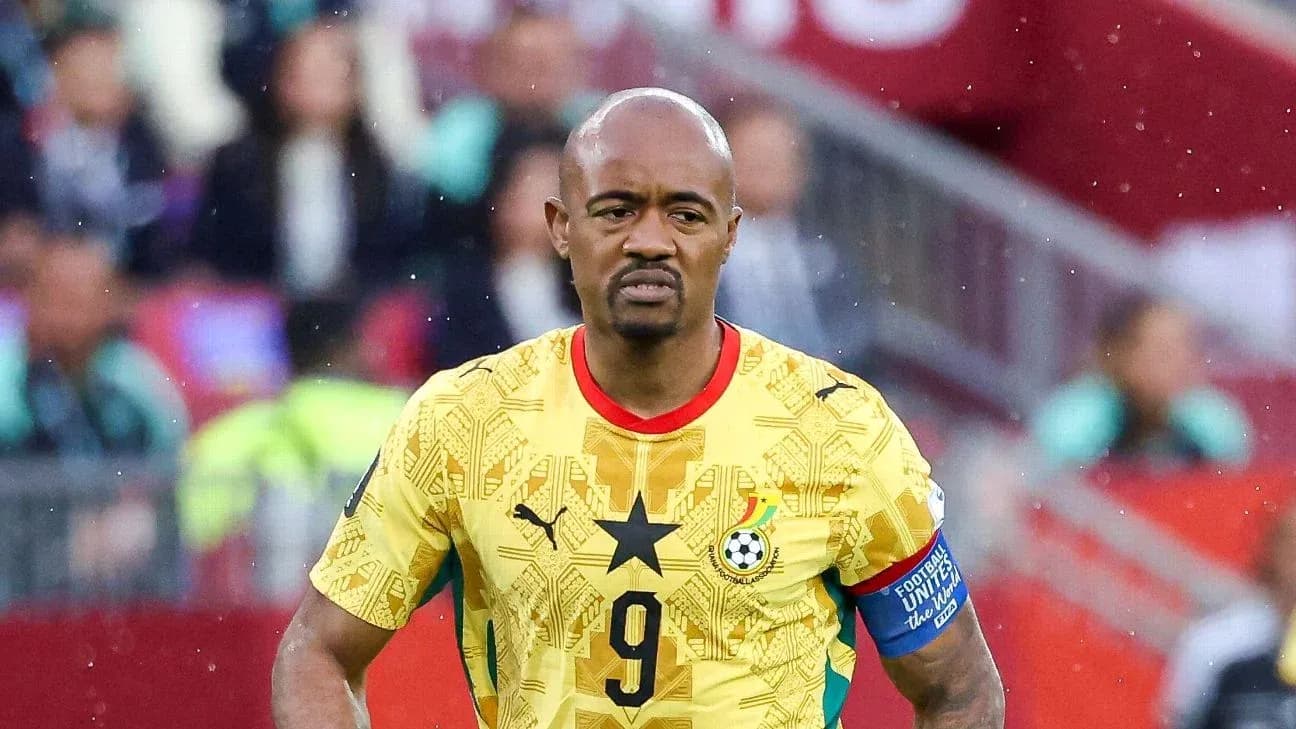
Jordan Ayew is the heartbeat and the headache.
He is the most experienced player in the squad, the captain, the son of Abedi Pele, and now part of a tiny, elite group of Ghanaians to play at three World Cups after appearances in 2014 and 2022. More than 100 caps bring authority, memory, and a deep feel for the shirt.
Against Panama, none of that looked like enough.
Ayew’s lack of pace was ruthlessly exposed. When he did receive the ball, his choices too often dragged Ghana backwards. One moment summed it up: Antoine Semenyo slipped him a pass, burst into space towards goal, and waited for the return. Ayew had time. He had room. He had options. Instead, he drove straight into traffic and lost the ball.
Panama never punished those errors. England will.
A static centre forward against this England back line is asking for trouble. Brandon Thomas-Asante, who created Caleb Yirenkyi’s winner, offers the opposite profile: sharp, mobile, aggressive. He lacks Ayew’s experience and has never faced this calibre of opponent in an international tournament, but he can at least stretch defenders.
So Queiroz stands at a crossroads. Drop his captain? Bench his most seasoned voice in the dressing room on the eve of the biggest group game? That feels unlikely. Start him again as the lead striker? That feels reckless.
There is a middle road.
Ayew’s best moments against Panama came when he drifted deeper, connected play and operated between the lines rather than trying to run in behind. In those pockets, his game intelligence still shines. He can see angles, slip passes, and attack the spaces in front of the defence instead of trying to race past it.
An advanced midfield role suits him now. From there, he can link midfield to attack, dictate the tempo in the final third and let the runners do the sprinting.
Picture a front unit with Ayew tucked in behind Semenyo and one of Thomas-Asante or Abdul Fatawu. That shape gives Ghana pace on the flanks and through the middle, while Ayew orchestrates. England’s full-backs are the soft underbelly; Ghana’s quick forwards can probe those areas, with Ayew threading the passes instead of being the one asked to chase them.
His leadership stays on the pitch. His legs are protected. His brain becomes the weapon.
Partey’s return to the engine room
If there was any doubt about Thomas Partey’s importance, Panama erased it.
Elisha Owusu struggled badly in midfield, often swamped by Panama’s runners and passing angles. He was not helped by Ghana’s first-half shape, which left him exposed and chasing rather than screening. The game simply moved too fast around him.
Partey changes that dynamic instantly.
He should walk straight back into the XI alongside the impressive Yirenkyi. Against an England midfield boasting Jude Bellingham and Declan Rice – fresh from dismantling Croatia 4-2 – Ghana cannot afford to spend 90 minutes chasing shadows. They need periods where they dictate where the game is played.
Partey gives them that. With him and Yirenkyi sitting as a double pivot, Ghana can close central channels, slow England’s surges through midfield and force Rice to think more about defending than about stepping into advanced positions.
That has a domino effect. If Rice drops deeper, Bellingham has less freedom to roam unchecked. If Ghana can hold the ball in spells rather than simply survive, Ayew can operate higher up, linking play instead of dropping all the way back to help build from deep.
Partey is also crucial for another reason: discipline in front of the back four. Against Panama, gaps appeared in those central areas, inviting trouble. England will not need a second invitation.
Hitting England where it hurts
England’s 4-2 win over Croatia sent a message about their attacking power. It also exposed a few cracks.
Both Croatian goals came from situations where England’s defensive structure frayed, especially out wide. Reece James was criticised for losing his man on one of the goals. On the other flank, Nico O’Reilly impressed going forward but still looked raw defensively, a “work in progress” when dragged into one-on-one duels.
That is where Ghana must go to work.
Semenyo’s direct running and physical strength can bully full-backs, forcing them to turn and defend facing their own goal. Thomas-Asante brings relentless movement and aggression, forever darting across the line and into channels. Fatawu and Ernest Nuamah can isolate defenders, attack from wide and stretch England’s back line horizontally.
Croatia hurt England most when they broke quickly, before the defence could settle into shape. Ghana have the pace and the physicality to do the same. The key is speed of thought as much as speed of feet: win it, turn, and go.
If Queiroz’s side fall into a slow, methodical rhythm, England’s defenders will reset, Rice will slide across to plug gaps, and those wide spaces will close. If Ghana attack with tempo and intent, they can drag England’s back four into uncomfortable territory.
No more slow starts
The Panama game told its own story. For an hour, Ghana were second best.
Panama controlled possession, carved out the better chances and forced the Black Stars into reactive football. Ghana only began to look like themselves after Queiroz reshaped the side, moved Semenyo centrally and injected more energy into the press with second-half substitutions.
That pattern cannot repeat against Thomas Tuchel’s England.
The Three Lions showed against Croatia that they can be rattled when pressed high and early. Croatia’s aggressive approach unsettled them, forced errors in midfield and at the back, and opened up chances. They scored twice before half-time and repeatedly found holes in England’s defensive structure.
England still hit back with two first-half goals of their own. That is the warning. Sit off them, as Ghana did against Panama, and the game could be gone before Queiroz has a chance to adjust.
Ghana have to start at the tempo they finished with in their opener. Press the ball. Contest every second ball. Turn the match into a physical, mental grind. Make it a war of attrition, not a training exercise for England’s ball-players.
The cost will be high. Legs will burn. Concentration will be tested. But Queiroz has already framed this World Cup in those terms: “We have to suffer; there is no other way.” A result, he said, “is very expensive.” His players, he insisted, are ready to pay.
Now they have to prove it from the first whistle, not the 60th minute.
Survive the dead ball storm
There is one area where England already look like the tournament’s standard-setters: set pieces.
On the opening matchday, they produced the highest non-penalty expected goals and the most shots on target from dead-ball situations. Harry Kane’s second goal against Croatia came from a simple, brutal truth: he was left unmarked from a Rice corner and punished it.
Ghana cannot repeat that kind of lapse.
Whether Lawrence Ati-Zigi recovers in time after his first-half collision against Panama or Benjamin Asare keeps the gloves, the message is the same: every corner, every wide free kick, every long throw must be treated as a crisis moment.
The first job is to stop giving those chances away. That means cutting out cheap fouls around the box, closing down crosses earlier and tightening those central gaps that tempted Panama forward. This is another area where Partey’s positional sense and screening become non-negotiable.
Inside the area, switching off is fatal. England’s movement at corners is rehearsed and relentless. Markers cannot be lost, blocks cannot go unchallenged. One lapse, one mismatch, and Kane will punish it.
Then there are penalties. With Kane, the margin for error is almost non-existent. His run-up is a psychological battle as much as a technical one; he studies goalkeepers, reads their tells, and adjusts in the moment. Asare and Ati-Zigi must do the same homework. Guessing blind is not an option.
Ghana’s route to an upset is narrow but real. Use Ayew’s brain, not his legs. Restore Partey to anchor the fight. Attack England’s flanks with pace. Start fast, not cautiously. Treat every set piece as if the tournament depends on it.
Because against this England side, it just might.

