.svg&w=384&q=75 "GoalGist logo")
Germany's World Cup Heartbreak: Klopp and Nagelsmann Face Pressure
Germany’s World Cup ended in the cold, brutal way that scars a football nation for years: a penalty shootout, a stunned silence, and a familiar inquest into what went wrong.
Paraguay sent the four-time world champions home with a 4-3 win on penalties after a 1-1 draw in Boston, handing Germany their first-ever shootout defeat at a World Cup and igniting an immediate debate over Julian Nagelsmann’s future. Within minutes, one name dominated the conversation. Jurgen Klopp.
He wanted no part of it.
Klopp steps away from the spotlight
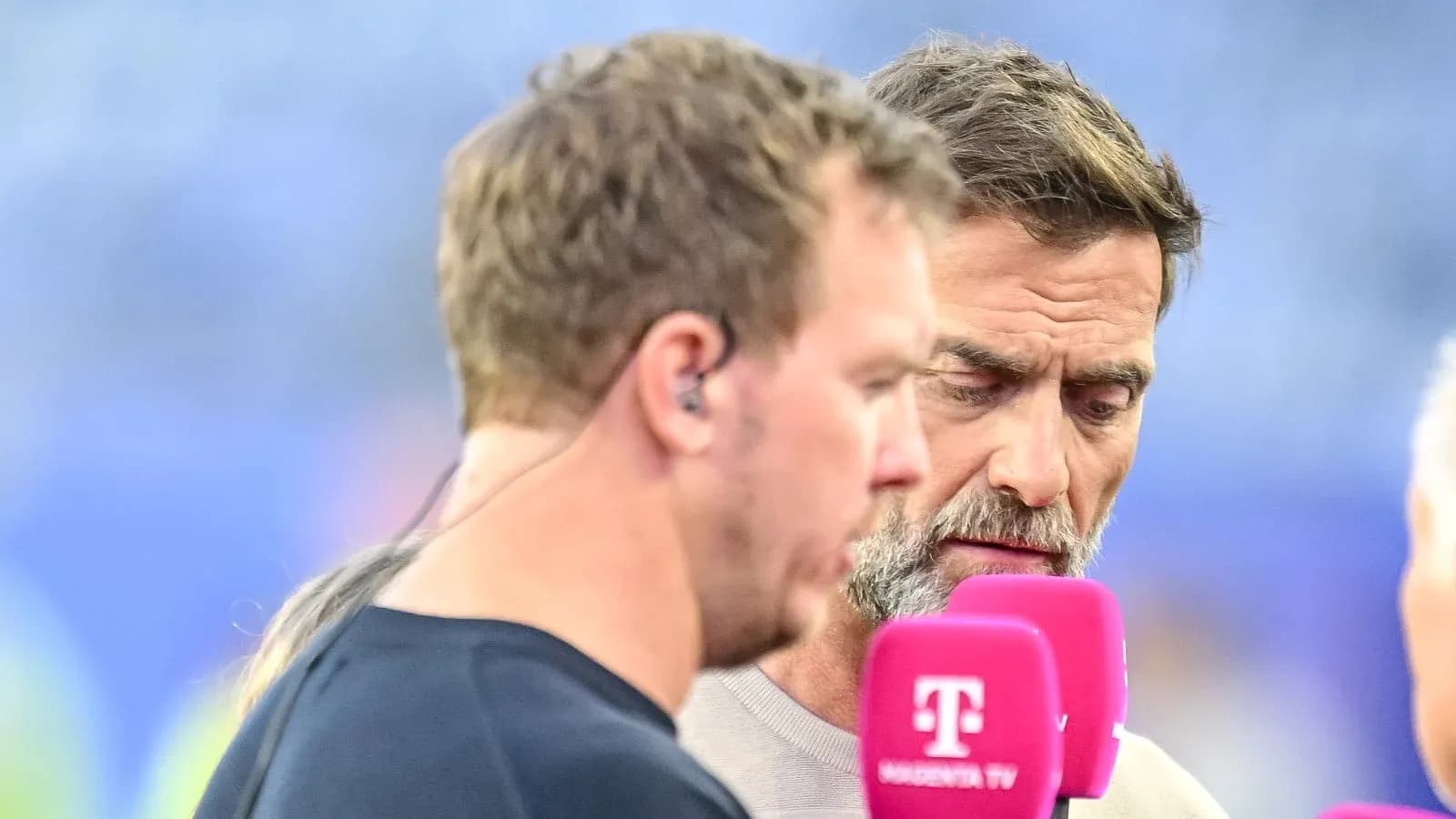
Now head of global soccer at Red Bull, the former Liverpool manager watched the collapse as a pundit on MagentaTV. The cameras turned to him, the obvious candidate, the man many in Germany have long imagined in a national-team tracksuit.
He batted it away.
“I haven’t thought about that yet,” Klopp said, in quotes carried by Bild. He spoke like a man who knew the storm was coming and had already decided not to step into it.
“I’ve often been in that situation myself as a coach, where a big dream has been shattered. I understand that when people talk about the national coach, my name is mentioned. But it’s not the right moment to talk about it, especially not with me.
“I have a job that I really enjoy. And as far as I know, it’s not a part-time job. The fact is, Germany was eliminated today, and this is not the moment for me to think about Jurgen Klopp’s future.”
The message was clear: don’t drag him into this. Not tonight.
Another tournament, another autopsy
Germany had arrived in the knockouts as Group E winners, despite a 2-1 defeat to Ecuador in their final group game. The old power still looked fragile, but there was enough talent, enough history, to believe they would at least grow into the tournament.
Instead, they ran into a fiercely disciplined Paraguay side and their own old demons.
Julio Enciso struck first, giving Paraguay the lead and turning the match into a test of German nerve. Kai Havertz, so often the man carrying the emotional weight of this generation, dragged them back into it, levelling to make it 1-1 and forcing the contest into extra time.
Germany thought they had found their escape route there. Jonathan Tah rose to head home what looked like the winner, only for VAR to cut the celebrations short and chalk it off. The tension tightened. The clock drained away. Penalties loomed, and with them, the kind of jeopardy Germany once relished.
That aura has gone.
Havertz missed. Nick Woltemade missed. Paraguay blinked too – Antonio Sanabria and Fabian Balbuena both squandered chances to win it – but the momentum had shifted. When Tah sent his effort off target in sudden death, Jose Canale stepped up and buried Germany’s World Cup with one clean strike.
A first World Cup shootout defeat. Another early exit. Another cycle of doubt.
Nagelsmann refuses to walk
If Klopp wanted distance, Nagelsmann walked straight into the line of fire.
He faced the media with the elimination still raw and made one thing plain: he would not resign.
“I’m not one to run away,” he said in his post-match press conference. “It’s not the first time, but it’s been happening for a while now that we’ve been delivering tournaments like this and yes, there are certainly a few basic things that I don’t want to go into now.
“I’m not one of those people who sits here and says, ‘I’m resigning now, just because we’ve been eliminated’. If the DFB wants me to continue then I’ll continue and if they don’t want me to, then they can tell me that.”
It was a defiant stance from a coach who knows the numbers and the narrative are turning against him. Germany’s recent tournament record is now a grim pattern, not a blip. Yet Nagelsmann made it clear he sees the problems as deeper than one man on the touchline.
Havertz’s apology and a dressing room under strain
On the pitch, the players looked shattered. Havertz, again at the heart of the story, sounded emotionally drained.
“I’m a little lost for words. This is my second World Cup and both times it came to nothing,” the Arsenal forward told FIFA’s website. “All I can do is apologise. I thought we didn’t play bad football at the last few tournaments, but something was always missing. And it was the same today.
“We have to take a hard look at ourselves, especially the players, and I’m leaving the coach out of that.”
No excuses. No deflection. A brutal admission that this generation has yet to deliver when it matters most.
Gakpo’s goal, and a night of raw emotion
On a different field, in a different kind of agony, Cody Gakpo lived through a moment that went far beyond football.
The Netherlands forward, playing just days after he and his partner Noa van der Bij revealed that their baby son Elijah had died during pregnancy, scored against Morocco in Guadalupe in the last 32. Crysencio Summerville slipped him through, and Gakpo did what he has done so often for club and country: he took control.
He pounced on the ball, drove forward and smashed a low finish into the net. The celebration never came. Instead, he sank to the turf, overwhelmed, as team-mates rushed to surround and embrace him.
Van der Bij had written on Instagram: “With broken hearts, we share the devastating news that our baby boy passed away during pregnancy. Thank you for your love and support. Elijah Raphael Gakpo, forever loved, forever our son.”
Gakpo’s own message was simple and stark: “This is an incredibly difficult time for our family. We kindly ask for our privacy and space. Thank you for your understanding.”
For a while, his goal looked like it would decide the tie. Then, one minute into stoppage time, Issa Diop struck to level for Morocco. The Dutch never recovered their grip. Morocco held their nerve in the shootout, winning 3-2 and turning Gakpo’s night into a haunting mix of personal catharsis and sporting heartbreak.
A nation waiting for answers
Germany now stands at another crossroads. A coach under pressure but unwilling to walk. A generation that keeps falling short. A superstar coach in Jurgen Klopp, politely but firmly refusing to be dragged into the national debate.
The DFB must decide whether to double down on Nagelsmann or rip up the plan again. Because for all the talk of progress and promise, the cold truth is simple: Germany keep going home early. How long can a football superpower live with that?