.svg&w=384&q=75 "GoalGist logo")
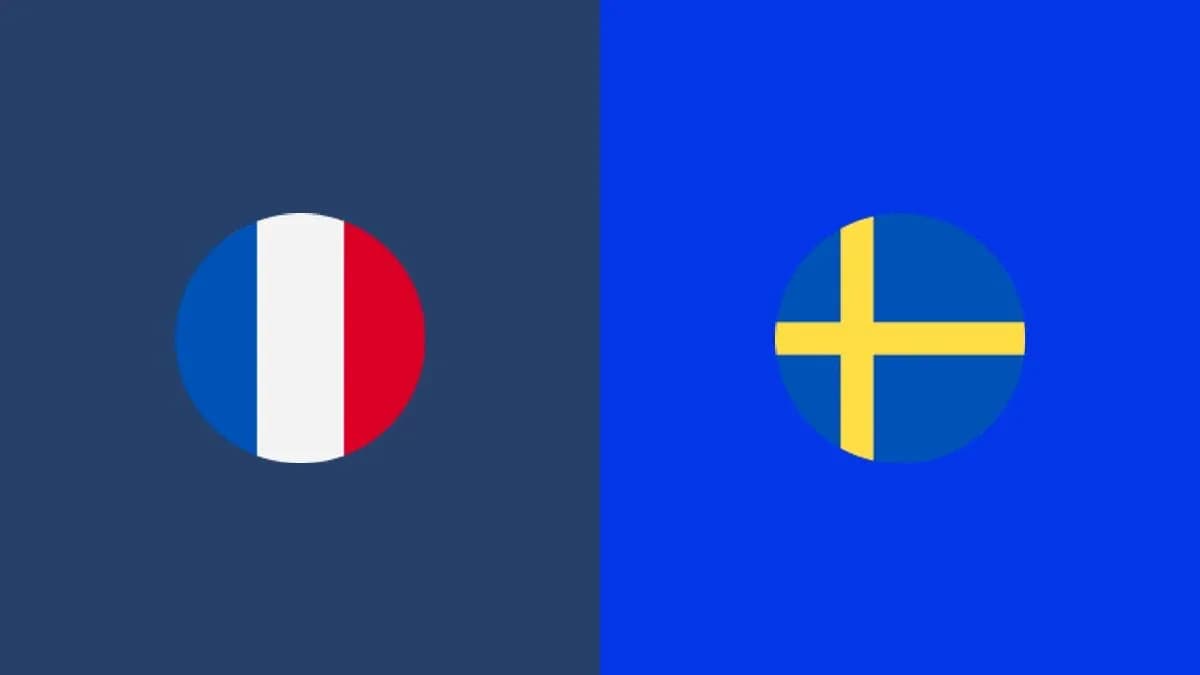
France vs Sweden: Deschamps' Last Dance in World Cup Knockout
On a humid New Jersey night, under the lights of the New York New Jersey Stadium, France step into a familiar arena: the World Cup knockout rounds, the pressure, the expectation, the feeling that anything less than a deep run is failure.
Opposite them stand Sweden. Bruised, unpredictable, and still somehow here.
Kick-off is set for 30 June 2026 at 21:00 GMT, 17:00 EST. For Didier Deschamps, it is the start of the end. For Graham Potter, it is the kind of assignment that can make a reputation or shred one in 90 frantic minutes.
Deschamps’ farewell mission
France arrive with the swagger of a heavyweight who has barely broken sweat. Three games in Group I, three wins: 3-1 against Senegal, 3-0 over Iraq, 4-1 versus Norway. Ten scored, two conceded. The numbers tell one story. The manner tells another.
They have looked ruthless. Efficient. Cold.
Kylian Mbappé remains the obvious headline act, but it was Ousmane Dembélé who stole the final group-stage show. His hat-trick against Norway was a reminder that Les Bleus have weapons everywhere. Mark one star out of the game and another steps forward. Behind them, Michael Olise and Désiré Doué drift into pockets, twist markers, and drag defensive lines into places they do not want to go.
Deschamps, who has confirmed he will step down after this tournament, has built his latest French side on a familiar spine. Aurelien Tchouaméni and Adrien Rabiot form a disciplined, almost stubbornly controlled double pivot. They slow games down when France need calm, then snap them back to life with one vertical pass or a quick switch to isolate Mbappé wide.
This is not a team improvising its way through a tournament. It is a machine with defined roles and clear patterns, sharpened by years of late-June pressure.
Sweden: chaos, scars, and a puncher’s chance
Sweden’s path could hardly be more different. They limped out of Group F with four points and a goal difference that reads like a warning sign: seven scored, seven conceded.
They were hammered 5-1 by the Netherlands. Then they answered with a 5-1 win of their own against Tunisia. Finally, they clawed a 1-1 draw with Japan that was just enough to sneak them through as one of the best third-placed sides.
This is a team that veers between the exhilarating and the exposed.
Potter’s side are not built to suffocate opponents. They are built to spring. Anthony Elanga, fresh from a long-range strike against Japan, carries blistering pace. Alexander Isak drifts, links, and finishes. Viktor Gyökeres runs channels and crashes into centre-backs. When Sweden break, they do it with intent and with numbers.
The problem lies behind them. Seven goals conceded in three group matches, with a 5-1 beating from an elite side still fresh in the memory, is hardly ideal preparation for facing Mbappé and company.
Defensive dilemmas on both benches
At the back, both managers have decisions that could define the tie.
For France, William Saliba remains the key concern. The Arsenal centre-back was rested against Norway due to a back issue, but all signs point to him playing through the pain here. Deschamps knows that a settled partnership of Saliba and Dayot Upamecano, flanked by Jules Koundé and Lucas Hernández, offers the best chance of keeping transitions under control and protecting Mike Maignan.
France’s one recurring flaw has been the occasional lapse when they lose the ball high up the pitch. If the counter-press is half a second late, space opens. Against a front line as quick as Sweden’s, that gap can become a runway.
Sweden’s problems are more structural. Isak Hien is out injured, ripping a hole in the heart of Potter’s defence. The response is drastic but necessary: Victor Lindelöf is expected to drop from midfield into central defence, anchoring a back three likely to include Gabriel Gudmundsson and Gustaf Lagerbielke.
That change has a domino effect. With Lindelöf stepping back, Tottenham’s teenage prodigy Lucas Bergvall is in line to assume greater responsibility in midfield. It is a bold call. Bergvall’s talent is obvious, but asking him to patrol the engine room against Tchouaméni and Rabiot is a different kind of examination.
Styles that clash, not blend
The tactical contrast could hardly be sharper.
France want control. They want the ball, the territory, and the rhythm. Tchouaméni and Rabiot sit, Olise and Doué drift inside, Dembélé stretches one flank, Mbappé terrorises the other. The idea is simple: overload the half-spaces, isolate the full-backs, and force Sweden’s defensive line into constant, draining decisions. Step up and leave space behind, or drop off and invite wave after wave.
Sweden’s answer is to refuse the script. They will not try to match France pass for pass. Their best route is direct and vertical. Win the ball, find the first forward run, and go.
Elanga’s pace is the release valve. Isak and Gyökeres can both hold the ball and turn defenders. One accurate pass behind Koundé or Hernández, one mistimed step from Upamecano, and Sweden are racing through on Maignan.
The pressure on Oliver Zetterström will be immense. The Swedish goalkeeper must command his area, deal with crosses towards Mbappé and Dembélé, and stay composed when France fire from distance. His full-backs and wing-backs cannot switch off for a second; any slack tracking against Dembélé or Olise and the game could disappear quickly.
Likely line-ups and the fine margins
On paper, the likely XIs underline the imbalance in pedigree but also the potential for chaos:
Likely France XI vs Sweden
Maignan; Koundé, Upamecano, Saliba, Hernández; Tchouaméni, Rabiot, Olise, Dembélé, Doué; Mbappé
Likely Sweden XI vs France
Zetterström; Lagerbielke, Lindelöf, Gudmundsson; Bernhardsson, Bergvall, Ayari, Stroud; Elanga, Gyökeres, Isak
France’s squad depth reads like a who’s who of European football. Behind the starting eleven, Deschamps can turn to N’Golo Kanté to lock a game down, Marcus Thuram or Jean-Philippe Mateta to offer a different profile up front, or young creators like Rayan Cherki and Bradley Barcola if the match demands fresh invention.
Sweden do not have that luxury, but they do have options that fit their identity. Taha Ali and Gustaf Nilsson provide alternative threats in attack, while Ken Sema and Mattias Svanberg can reshape the midfield if Potter needs more legs or more control.
Form, history, and the weight of expectation
The form guide is blunt. France have won four of their last five, losing only a pre-tournament friendly to Ivory Coast. In competitive action here, they have been clinical and largely untroubled.
Sweden’s last five tell a more volatile story: one win, two draws, two defeats, ten scored, ten conceded. The highs are high, the lows alarming.
History leans France’s way. Their last meeting, in November 2020, ended 4-2 to Les Bleus in the UEFA Nations League. Sweden did claim a 1-0 win in Stockholm earlier that year, and the World Cup qualifying ties in 2016 and 2017 were split by home advantage. Across the most recent five clashes, France have three wins to Sweden’s one.
France also arrive as group winners, top of Group I. Sweden have come through the side door, third in Group F. That difference shapes the narrative, but not the outcome. Not yet.
One slip, and everything changes
This is the reality of the Round of 32. A perfect group stage buys you nothing if you freeze when the margins tighten. A chaotic, nerve-ridden journey can be forgotten in an instant if you land the punch that floors a favourite.
Deschamps knows this terrain. He has navigated it as player and coach, lifting trophies and surviving storms. This is his last World Cup with France. Every knockout tie now carries the weight of a farewell tour.
Potter steps into it as the disruptor. His Sweden side are flawed, patched up, and reshaped on the fly. They also carry speed, belief, and the kind of nothing-to-lose edge that can turn a night like this into a shock.
France are expected to advance. To dominate. To impose their will.
But if one long ball clears Tchouaméni, if one turnover leaves Saliba and Upamecano sprinting towards their own goal with Elanga, Isak, and Gyökeres in full flight, the World Cup could be staring at its first seismic upset of the knockouts.