.svg&w=384&q=75 "GoalGist logo")
France Dominates Norway Without Deschamps Amid Armband Controversy
France marched through their final group game at the 2026 World Cup without the man who has defined their modern era. Didier Deschamps stayed away on Friday after the death of his mother, leaving longtime assistant Guy Stéphan to lead a team that responded with a ruthless 4-1 dismantling of Norway.
It was a night loaded with emotion before a ball had even been kicked. The French Football Federation had planned a visible tribute to their absent manager’s mother, asking permission for the players to wear black armbands. According to The Athletic’s Amy Lawrence, FIFA rejected the request.
That was only the start of the confusion.
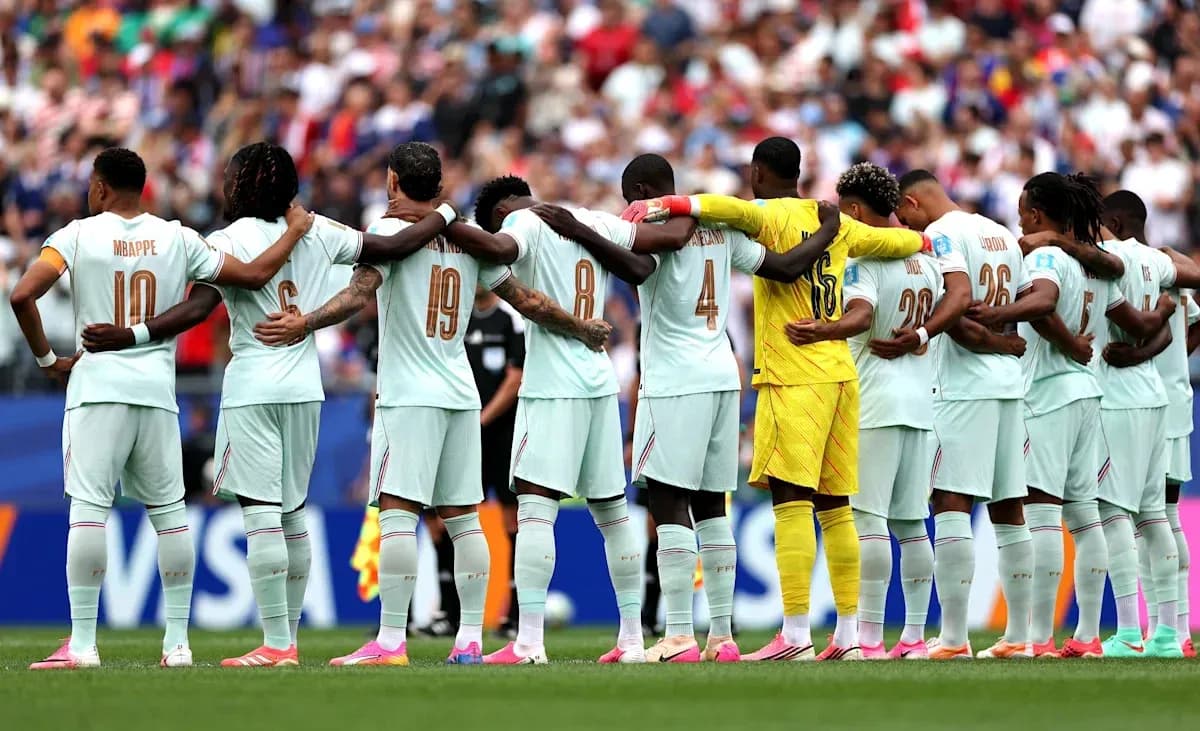
Journalists were initially told by the FFF that there would be a minute’s silence in memory of Deschamps’ mother. Minutes later, the federation issued a clarification: the silence had been designated by FIFA for the victims of the deadly earthquake in Venezuela, not as a personal tribute to the France coach’s family.
So France stepped into a strangely subdued pre-match atmosphere, their coach in mourning at home, their planned gesture blocked, their message muddled. Once the whistle blew, the players supplied the clarity.
Stéphan, Deschamps’ trusted lieutenant since 2012, took charge on the touchline and watched a performance that could hardly have paid a stronger professional tribute. France tore into Norway, playing with the authority of a side that has grown used to carrying the weight of expectation on the biggest stage.
Ousmane Dembélé, the reigning Ballon d’Or winner, lit up the night. Operating with a freedom that Norway simply could not contain, he struck a blistering hat trick – the second-quickest in World Cup history – to rip the contest away from the Scandinavians. Each goal felt like a statement: of individual brilliance, of collective power, and of a squad unwilling to let off-field turbulence knock them off course.
Kylian Mbappé, locked in his own Golden Boot duel, buzzed around the Norwegian back line, stretching play and forcing defenders into desperate decisions. Between them, France’s two superstars underlined why this squad arrived at the tournament as one of the clear favorites and why that status has not shifted.
By the final whistle, the 4-1 scoreline reflected not just superiority, but control. Three games, three wins, maximum points in the group. No Deschamps on the bench, yet the imprint of his 12-year reign still visible in the discipline, the aggression, and the relentlessness.
Deschamps’ tenure has already delivered a World Cup title in 2018 and a runner-up finish in 2022. This campaign is unfolding under a familiar glare, the expectation that France should not just contend, but dominate. On this evidence, that burden still sits comfortably on their shoulders.
The immediate reward for their perfect group stage is a round-of-16 tie against a third-place qualifier at MetLife Stadium in New Jersey on Tuesday. The stakes now rise, the margins tighten, and the emotional backdrop remains raw.
France have shown they can win without their manager present. The next question is sharper: when Deschamps returns to the dugout, can this team turn a powerful start into another era-defining run?

